
Asteromyrtus symphyocarpa
Asteromyrtus symphyocarpa
Description
Growing requirements
Asteromyrtus symphyocarpa is a notable woody plant belonging to the Myrtaceae family, native to tropical regions of Northern Australia and New Guinea. This evergreen tree or shrub is highly valued for its unique morphological structure and its ability to thrive in diverse tropical habitats.
The plant requires well-draining soil and typically thrives in full sun exposure. It is known for its versatility, showing a good tolerance for poor soil conditions, provided that moisture levels are sufficient during the initial stages of establishment. It prefers acidic to neutral soil environments.
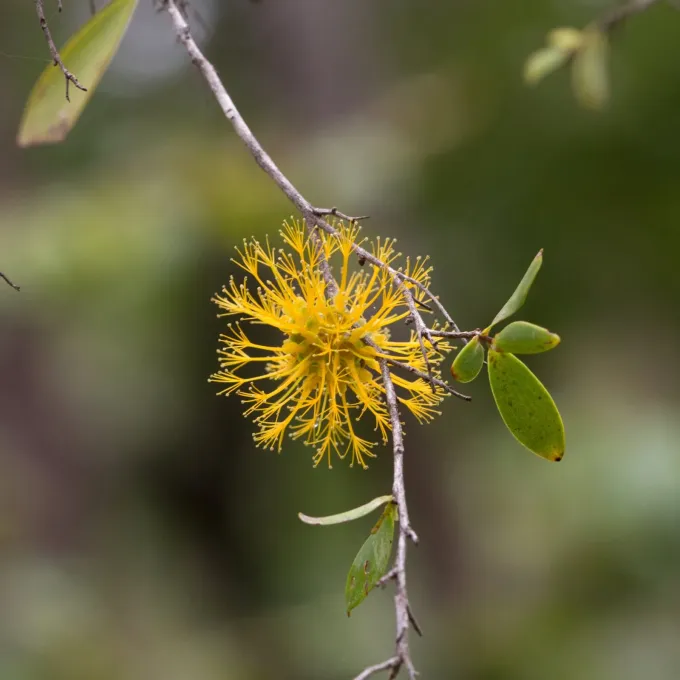
Botanically, this species is distinguished by its leathery, oil-bearing leaves and clusters of fragrant flowers. The most distinct feature is its fruit development, where individual fruits coalesce into woody, cluster-like formations, providing a unique appearance that makes it a popular choice for botanical collections.
Climatic requirements are strictly tropical or subtropical, as the species is sensitive to frost and prolonged cold periods. Consistent rainfall or controlled irrigation is necessary to support its growth, making it an ideal candidate for reforestation efforts in humid tropical zones.
In terms of хозяйственное usage, the species serves as an ornamental plant in landscaping and provides critical habitat for local pollinators. It is increasingly studied for its ecological value in stabilizing soil and providing essential resources for native fauna in coastal and woodland areas.
Main diseases and pests
The primary threats to the health of Asteromyrtus symphyocarpa include fungal root infections induced by poor drainage and waterlogged conditions. Additionally, it can be susceptible to standard Myrtaceae pests such as scale insects and leaf-miners, which are generally managed through integrated pest control practices.