
Aspasia epidendroides
Aspasia epidendroides
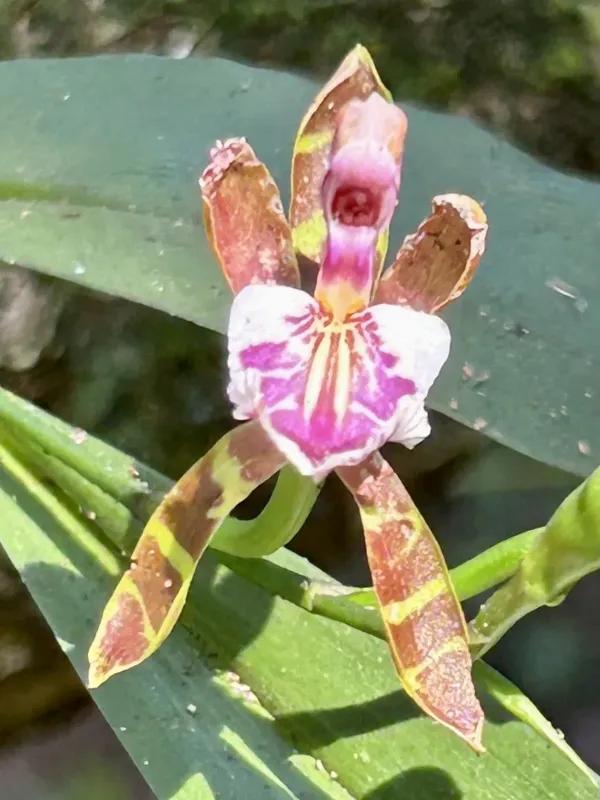
Description
Growing requirements
Aspasia epidendroides is a tropical orchid species belonging to the Orchidaceae family, native to the humid forests of Central and South America. As an epiphyte, it naturally grows on tree trunks, deriving nutrients from atmospheric moisture and organic debris.
For successful cultivation, the plant requires a stable climate with a significant diurnal temperature variation. Maintaining temperatures between 20°C and 26°C during the day and ensuring a slight cooling effect at night is vital for the development of healthy pseudobulbs.
The choice of substrate is fundamental to prevent root suffocation. A mixture of pine bark, charcoal, and perlite provides the necessary drainage and aeration. Unlike terrestrial plants, this orchid needs its roots to be well-ventilated to avoid anaerobic conditions.
Bright, indirect light is necessary for this species to bloom effectively. In a greenhouse setting, providing about 50-70% shade is recommended to prevent leaf scorching while ensuring that the plant receives enough energy for photosynthesis.
Moisture management requires a balanced approach. The plant should be watered thoroughly, allowing the medium to reach a point of near-dryness before the next application. Humidity levels should be consistently maintained between 60% and 75% to mimic their native forest environment.
Main diseases and pests
Spider mites are a common pest in indoor environments where the air is too dry. They feed on the underside of leaves, causing a loss of green color and reduced vitality, which can eventually lead to the plant's decline if left unmanaged.
Root rot, often caused by the Rhizoctonia fungus, thrives in waterlogged, compacted media. The primary symptoms include black, mushy roots and yellowing foliage, necessitating immediate repotting and the use of systemic fungicides.
Scale insects can be difficult to detect, often appearing as small brown bumps on the leaves or stems. Manual removal with a cotton swab dipped in alcohol, followed by an application of insecticidal soap, is the standard control protocol.
Bacterial soft rot can occur if water remains trapped in the center of new growths for an extended period. This disease is aggressive and requires prompt excision of the infected tissue and application of antiseptic agents to contain the infection.
Preventative care is the best strategy against pests and diseases. This includes regular hygiene, such as removing dead foliage, ensuring proper spacing between plants to maximize airflow, and maintaining strict sterilization standards for all cutting tools.