
Pallas's asparagus
Asparagus pallasii
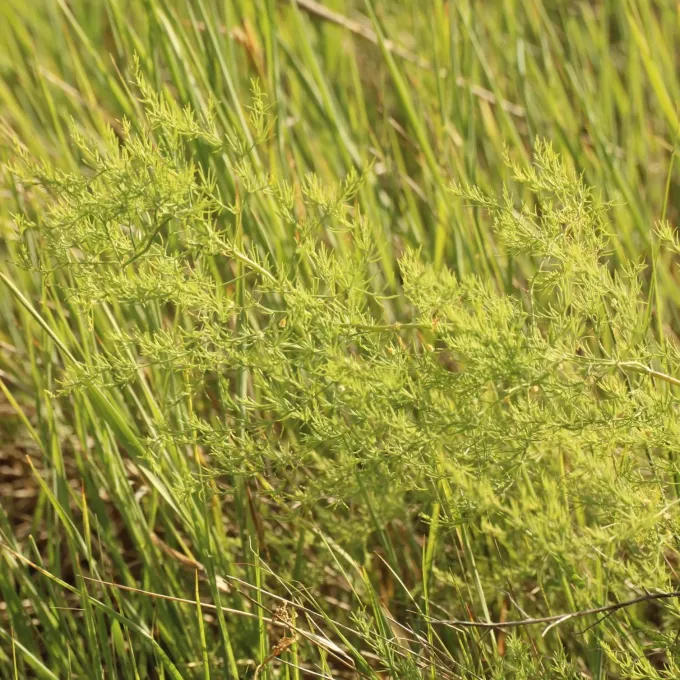
Description
Sowing dates
Pallas's asparagus (Asparagus pallasii) is a perennial member of the Asparagaceae family, native to arid regions where it has adapted to harsh environmental conditions.
Seed propagation is the primary method of reproduction, requiring a period of cold stratification to break dormancy and ensure high germination rates.
Sowing in cultivated conditions is typically performed in late autumn or early spring, burying seeds at a depth of 2 to 3 centimeters in well-drained soil.
The plant establishes a significant underground rhizome system, which is why spacing during planting should be generous to accommodate future growth.
Seedlings develop slowly during the initial growing season, requiring steady attention to irrigation and weed control until the root system is fully mature.
Growing requirements
This species is highly drought-tolerant, naturally thriving in sandy and stony soils where water retention is naturally low but drainage is excellent.
Sunlight exposure is a critical requirement for this plant; it prefers open areas with minimal shading to sustain its vigorous vegetative growth.
The plant is remarkably hardy, surviving extreme temperature fluctuations, ranging from intense summer heat to severe winter frosts common in its habitat.
Soil aeration is vital, as heavy or waterlogged soils are detrimental to the roots, often leading to rapid decay and plant collapse.
While adapted to poor soils, the species responds well to light fertilization, which supports the density of the cladodes and overall plant health.
Main diseases and pests
The asparagus beetle is a common pest that poses a significant threat to young shoots, causing defoliation if left untreated during the active growing season.
Fungal diseases, such as rust and Fusarium wilt, can become problematic when environmental conditions involve high humidity or poor ventilation.
Root rot is often a consequence of poor irrigation management or stagnant water, making the plant susceptible to soil-borne pathogens.
Proactive monitoring and the removal of infected debris are essential strategies to maintain the health of the asparagus stand.
- Asparagus beetle: major defoliator of young asparagus plants.
- Rust fungus: causes lesions on the cladodes and stems.
- Fusarium wilt: triggers vascular damage leading to plant death.