
St. Peter's wort
Ascyrum stans
Description
Growing requirements
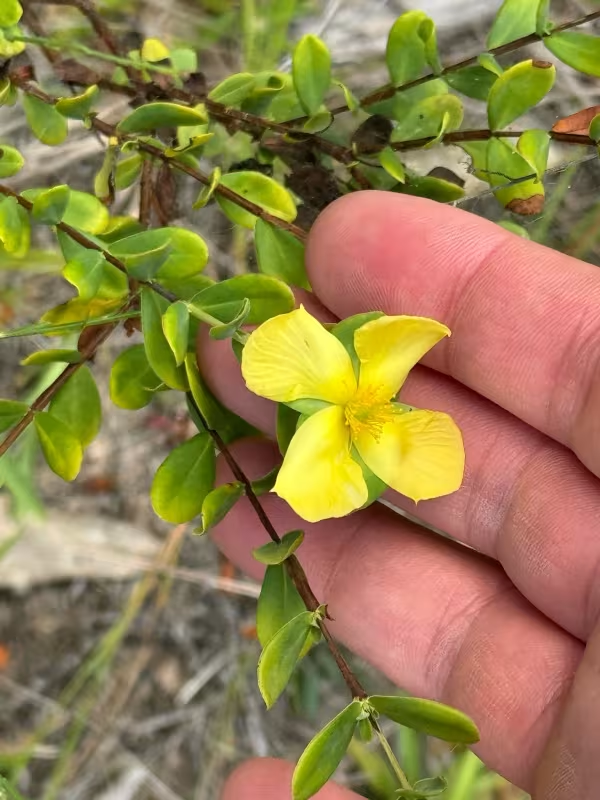
Ascyrum stans, frequently referred to as St. Peter's wort, is a perennial subshrub belonging to the Hypericaceae family. It is a distinctive plant known for its four-petaled yellow flowers and stiff, upright habit that gives it a unique place in botanical classification.
Originating from the southeastern United States, this species thrives in varied habitats ranging from woodland margins to sandy coastal plains. Its natural distribution is a testament to its hardiness and ability to occupy niche environments within its native range.
The cultivation requirements for Ascyrum stans are focused on providing a well-drained, acidic soil environment. While it is tolerant of various soil textures, the plant performs best when provided with consistent moisture levels and adequate organic amendments to support root health.
Regarding climate, the plant prefers warm, temperate conditions where it can receive sufficient sunlight for maximum flowering potential. In regions with harsher winters, providing a protective mulch layer is essential to maintain the structural integrity of the plant over the dormant season.
The agricultural and landscape value of this crop lies in its potential for naturalistic planting schemes and low-maintenance ground cover. Its resistance to common environmental stressors makes it an excellent choice for restoration projects and garden beds that require minimal intervention.
Main diseases and pests
Disease management for Ascyrum stans primarily involves the control of fungal infections such as leaf spots or stem blights, which typically occur in poorly ventilated areas. Maintaining adequate space between plants is a key preventive measure against these fungal issues.
Pest challenges are usually limited, though aphids and spider mites can occasionally affect the plant during stressful, dry weather conditions. Regular inspection and the use of insecticidal soaps are generally sufficient to manage minor infestations without the need for harsh chemicals.