
Arthrostylidium schomburgkii
Arthrostylidium schomburgkii
Description
Growing requirements
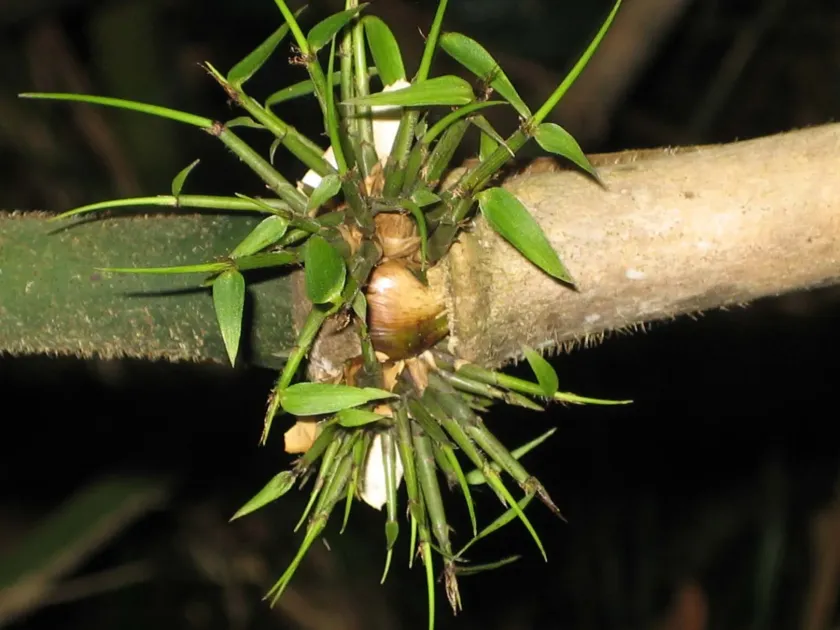
Arthrostylidium schomburgkii is a species of woody bamboo belonging to the Poaceae family, native to tropical regions of South America. It is characterized by its slender, erect culms that grow in dense clumps, contributing to the biodiversity of local ecosystems.
The climate requirements for this culture are centered on tropical conditions with high humidity and constant warm temperatures. It lacks frost resistance, which necessitates its cultivation within strictly defined tropical latitudes to avoid damage to the rhizome system.
Soil preferences involve well-drained, nutrient-rich soils that support rapid rhizome expansion. While the plant requires significant moisture, it is sensitive to waterlogged environments, requiring adequate drainage systems for large-scale agricultural plantations.
Agrotechnical practices focus on managing spacing to ensure optimal light penetration, which is vital for the development of sturdy, marketable culms. Periodic cleaning of old or damaged stems helps promote the growth of new, healthy biomass within the plantation.
The primary economic uses of this bamboo include the construction of traditional structures, the manufacture of tools, and high-quality fiber production. Its capacity for rapid biomass accumulation makes it an essential crop for sustainable development projects in tropical areas.
Main diseases and pests
The crop is occasionally susceptible to bamboo-specific mites that target the foliage, causing a reduction in photosynthetic capacity. Additionally, root rot fungi can emerge in poorly managed soils with insufficient aeration, potentially destroying entire sections of the bamboo stand.