
Arthraxon hispidus
Arthraxon hispidus
Description
Sowing dates
Sowing should take place when the soil temperature has warmed up significantly, usually in late spring or early summer. Planting too early in cold soil can result in poor germination rates and stunted early growth.
Seeds should be broadcast or drilled at a very shallow depth, ideally no more than one centimeter deep. Maintaining soil moisture during the first few weeks after sowing is crucial to ensure successful establishment.
Seedbed preparation should involve light harrowing to provide a soft medium for the roots to penetrate. As the plant propagates through both seeds and stem nodes, early density is important to ensure uniform coverage of the field.
Fertilizer application, particularly nitrogen, can significantly boost the vegetative growth of Arthraxon hispidus. However, applications should be managed carefully to ensure steady growth rather than excessive, weak foliage.
Weed management is essential during the establishment phase. Once the carpet of Arthraxon hispidus closes in, it is highly effective at outcompeting most annual weeds due to its rapid spreading habit.
Growing requirements
Arthraxon hispidus, commonly known as small carpetgrass, is an annual grass species belonging to the Poaceae family. Native to parts of Asia, this plant has spread to various regions worldwide due to its adaptive nature in humid climates.
The plant thrives in moist environments, including stream banks, marshes, and agricultural fields. It prefers well-drained but consistently moist soils, which support its rapid spreading and root development from stem nodes.
As a warm-season crop, Arthraxon hispidus requires plenty of sunlight and high temperatures to achieve maximum growth. It is highly sensitive to frost, which limits its growing cycle to the warm periods of the year in temperate climates.
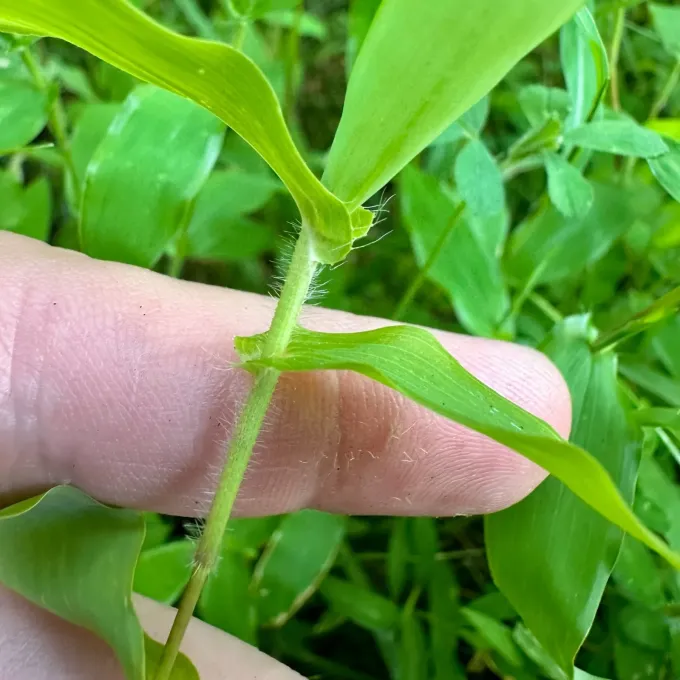
Botanically, it is characterized by its trailing stems that are covered in fine hairs (hirsute). The leaves are relatively broad for a grass of its type, and the inflorescence consists of spikes that emerge in late summer.
Agriculturally, this grass is valued for its potential in fodder production. Its high biomass yield makes it a candidate for livestock grazing or hay production, provided it is managed to prevent it from becoming overly invasive in non-target areas.
Harvesting
Harvesting for forage should occur during the pre-flowering stage or early blooming. This timing ensures the best balance of nutrients, particularly protein and soluble carbohydrates, before the stems turn fibrous.
For hay production, the cut grass must be dried thoroughly. Given its affinity for moisture, drying may take longer than with other dry-land grasses, requiring periodic turning to prevent spoilage and ensure stability in storage.
Machinery used for hay harvesting, such as sickle bar mowers, is effective for this crop. Adjusting the cutting height is vital to keep the base of the plant intact, allowing for potential secondary regrowth if the season remains warm.
If the goal is seed collection, harvest should be delayed until the seed heads have fully matured and begun to dry on the stem. Careful handling during harvest is necessary to prevent excessive shattering of seeds.
Post-harvest residues can be integrated into the soil as green manure. The rapid decomposition of Arthraxon hispidus tissues contributes positively to soil organic matter, aiding in the maintenance of field fertility.