
Arpophyllum giganteum
Arpophyllum giganteum
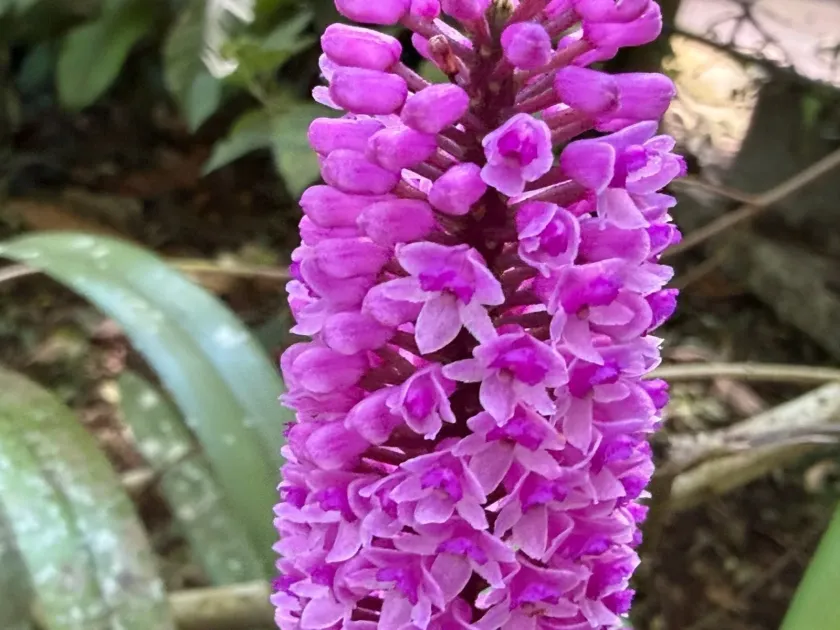
Description
Growing requirements
Arpophyllum giganteum, commonly known as the giant hyacinth orchid, is an epiphytic species belonging to the Orchidaceae family. It originates from the cloud forests of Mexico and Central America, thriving in high-altitude environments.
The plant is distinguished by its leathery leaves and long, dense, cylindrical flower spikes that bloom into numerous small, vibrant pink or purple flowers. It requires a stable environment that mirrors the cool, moist conditions of its natural habitat.
Regarding light requirements, Arpophyllum giganteum prefers bright, filtered light. Too much direct sun can scorch the foliage, while insufficient light will prevent the orchid from producing its signature spikes.
The substrate must be exceptionally well-draining, as the roots are sensitive to waterlogging. Standard potting mixes for epiphytes, consisting of bark, perlite, and charcoal, are highly recommended to ensure adequate gas exchange.
Watering should be frequent during the growing season, but the roots must be allowed to dry slightly between waterings. Maintaining high ambient humidity is crucial, especially in indoor settings or greenhouses.
Main diseases and pests
The primary threats to Arpophyllum giganteum include root rot and fungal infections caused by overly wet substrate and poor air circulation. These conditions are usually detrimental to the health of the plant.
Pests such as scale insects and mealybugs can pose a significant challenge. These insects feed on the plant's sap and can quickly cause stunted growth or the yellowing of leaves if left untreated.
Spider mites are another common pest that thrives in environments where humidity is neglected. They can be identified by fine webbing and discoloration on the underside of the leaves.
Bacterial spot and leaf rot are potential threats if water sits on the leaves for too long. It is essential to ensure that water is applied directly to the base or substrate rather than the foliage.
- Regular inspection for signs of infestation in leaf axils.
- Use of neem oil or systemic insecticides for pest control.
- Ensuring proper ventilation to prevent fungal outbreaks.