
Arjona tandilensis
Arjona tandilensis
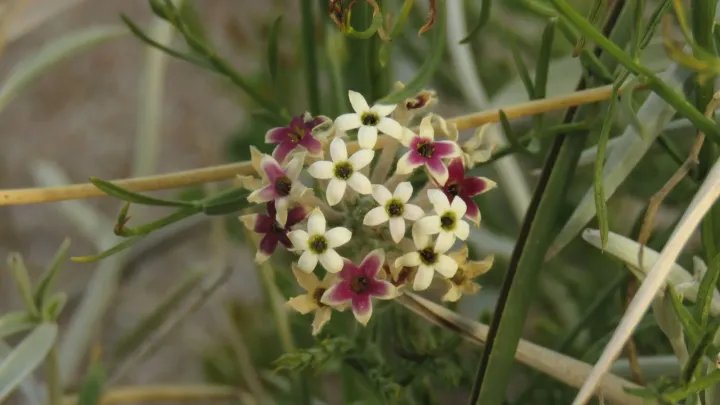
Description
Growing requirements
Arjona tandilensis is a perennial herbaceous plant belonging to the Santalaceae family. It is distinct for its hemiparasitic nature, which allows it to thrive in specific ecological niches by forming root connections with host plants to obtain water and essential nutrients.
The native distribution of this species is confined to the mountainous regions of Argentina, specifically the Tandilia mountain range. This plant is evolutionarily adapted to rocky terrain and open slopes, where competition for nutrients is high, necessitating its parasitic strategy.
Morphologically, the plant is characterized by a persistent rootstock and simple, narrow foliage. This structure supports its survival in environments that often experience intense solar radiation and periodic water scarcity, common in the high-altitude regions of its range.
Regarding cultivation requirements, the species demands highly permeable, mineral-rich soils with excellent drainage. Because it is a root hemiparasite, its successful growth is strictly dependent on the presence of appropriate host plants, making it a challenging species for standard horticultural practices.
While Arjona tandilensis is not currently utilized as a mainstream agricultural crop, it remains a subject of significant interest in conservation biology and native plant restoration. Protecting this species is vital for maintaining the ecological balance of the unique Argentinian landscapes it inhabits.