
Aristotelia serrata
Aristotelia serrata
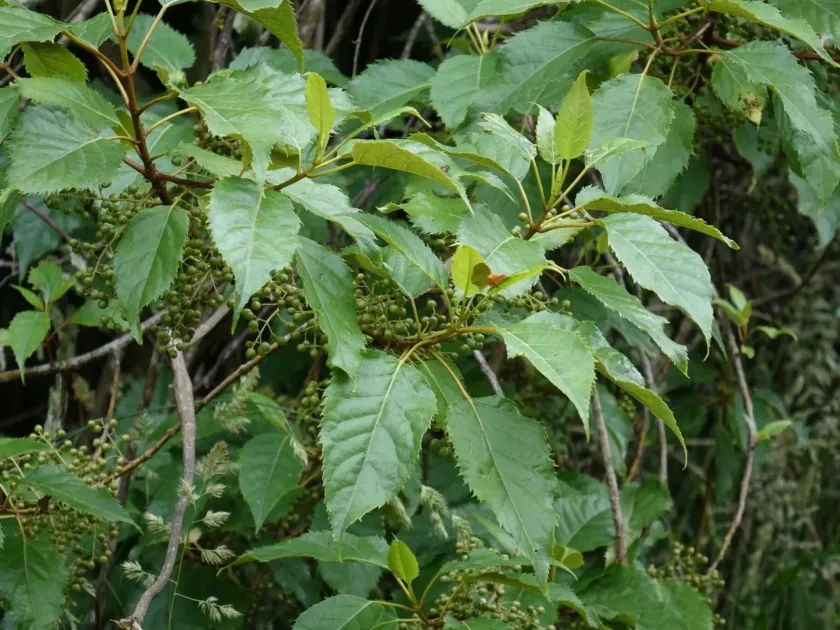
Description
Growing requirements
Aristotelia serrata, commonly known as makomako or New Zealand wineberry, is a fast-growing deciduous tree or shrub belonging to the Elaeocarpaceae family. It is native to the forests of New Zealand, flourishing in temperate, moist environments.
The plant thrives in fertile, well-draining soils with a neutral to slightly acidic pH. It requires consistent moisture levels and performs best when protected from extreme, drying winds and harsh direct sunlight, particularly in its juvenile growth stages.
Botanically, it is recognized by its thin, serrated leaves and its ability to rapidly colonize disturbed landscapes. This pioneer species adaptability makes it an interesting subject for ecological restoration and potential berry production projects.
Agrotechnical management requires sufficient space for the tree to spread its branches, as the wood is notably brittle and prone to snapping under heavy wind pressure. Pruning is essential to maintain a healthy structure and encourage productive fruit-bearing shoots.
Propagation is primarily successful via seeds, which require stratification, or through softwood cuttings during the active growing season. Ensuring the site has adequate drainage is critical, as the roots are sensitive to waterlogging and soil compaction.
Yield
The crop is highly valued for its small, edible berries which transition from red to dark purple or black upon ripening. These berries are increasingly sought after as a superfood due to their high anthocyanin and antioxidant content.
Yield capacity is dependent on light exposure and plant maturity, with well-managed trees producing heavy clusters of fruit. Harvest requires careful timing to ensure berries are picked at their peak of nutritional density and flavor.
Commercial applications involve the production of concentrates, powders, and extracts for the nutraceutical and food industries. The fruit is also traditionally utilized in local culinary contexts, reflecting its long history of usage in its native range.
Improving yield stability often involves selection programs aimed at developing varieties with more uniform ripening times and larger fruit size. Consistency in irrigation during the berry development phase is vital for fruit quality.
Post-harvest handling is sensitive due to the soft nature of the berries; immediate cooling or processing is recommended to prevent degradation of bioactive compounds. Mechanized harvesting is challenging and often requires purpose-built equipment.
Main diseases and pests
Leaf-eating insects and aphids are the most common pests affecting the foliage of A. serrata, potentially impacting the plant's overall vigor and photosynthetic ability if left untreated. Regular scouting is necessary for early detection.
Fungal infections, particularly root rot, can occur if drainage systems fail or during prolonged periods of heavy rainfall. Providing adequate spacing for air circulation between plants is a primary preventive measure.
Avian pests pose a significant threat to the fruit crop, as makomako berries are a favored food source for many bird species. Using bird-proof netting is an effective and common practice in productive orchards.
Weed competition during the establishment phase can severely restrict growth. Maintaining a clean cultivation area around the base of the plant is recommended to ensure access to essential nutrients and soil moisture.
Frost damage to new shoots in the early spring can affect the overall blooming success. Strategic planting in sheltered areas or using row covers in colder zones can help mitigate these risks to the harvest.