
Apodanthes caseariae
Apodanthes caseariae
Description
Growing requirements
Apodanthes caseariae is a highly specialized parasitic plant that belongs to the Apodanthaceae family. It is not an agricultural crop and serves no commercial or food purposes, remaining a subject of purely botanical and ecological interest.
The plant is native to the tropical rainforests of Central and South America. It functions as an obligate parasite, living almost entirely hidden within the tissues of its specific host trees, which belong to the genus Casearia.
Lacking chlorophyll, Apodanthes caseariae cannot perform photosynthesis. It derives all necessary water, minerals, and organic compounds directly from the host plant's vascular system, ensuring its survival through a complex internal root-like structure.
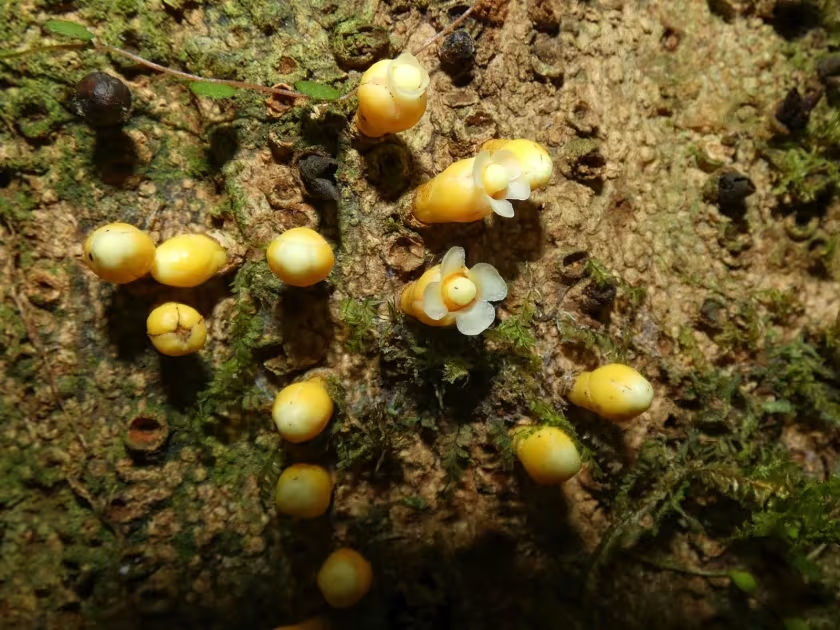
The species requires a stable, humid tropical climate to thrive. It is extremely sensitive to micro-environmental conditions, particularly air humidity, which is vital for the development of its flower buds that emerge through the host's bark.
The plant's existence is cryptic, meaning it remains invisible to the observer until the short flowering period. This evolutionary strategy allows the plant to conserve energy while effectively utilizing the host's resources for reproduction.
Main diseases and pests
The primary threat to the survival of Apodanthes caseariae is the rapid deforestation and loss of habitat in tropical regions. Since it is dependent on specific hosts, the removal of Casearia trees directly threatens its local population.
Climate change and shifts in regional precipitation patterns disrupt the delicate balance between the parasite and the host. Any change in the host tree's physiology negatively impacts the energy supply to the parasite.
Fungal pathogens affecting the host tree represent a significant biological threat. If a tree's conductive tissues become blocked due to disease, the parasite loses its primary source of nourishment and eventually dies.
The lack of genetic diversity and the restricted geographic range make this plant vulnerable to local extinctions. Environmental degradation often outpaces the species' ability to adapt to new conditions in neighboring areas.
Due to its high specificity, the survival of this plant is intrinsically linked to the overall health of the tropical forest ecosystem. Conservation efforts focused on preserving Casearia species are essential for the continued existence of this parasite.