
Apluda mutica
Apluda mutica
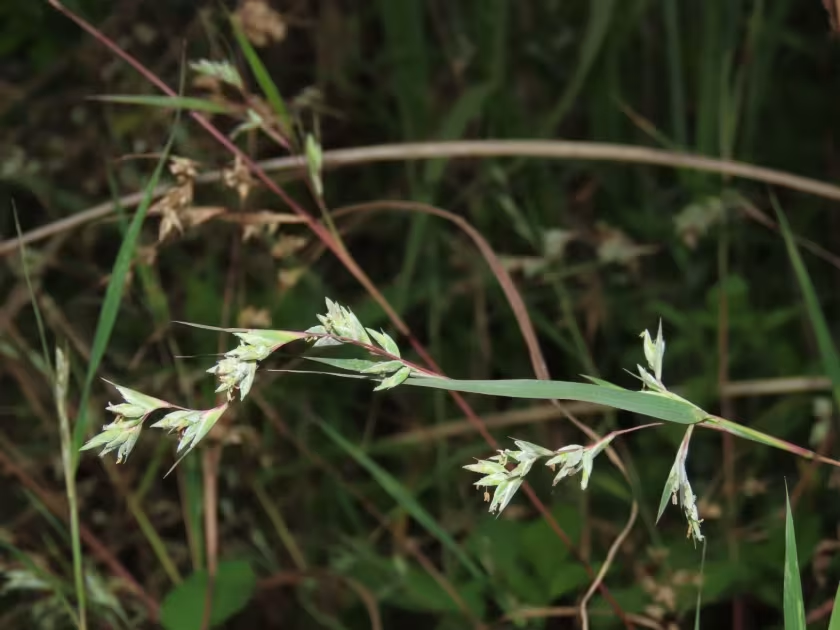
Description
Growing requirements
Apluda mutica, commonly known as giant cane or simply apluda, is a perennial grass species belonging to the Poaceae family. It is a robust plant that forms dense clumps and is widely distributed across tropical and subtropical regions of Asia and the Pacific.
The plant thrives in varied environments, displaying remarkable adaptability to different soil types, ranging from sandy loams to rocky substrates. It is a heliophilous species, requiring full sun exposure to achieve maximum biomass production.
Regarding climate, this grass prefers high temperatures and consistent rainfall, although it exhibits a degree of drought tolerance once the root system is well-established.
Soil nutrient requirements for Apluda mutica are moderate, but productivity significantly increases with proper nitrogen and phosphorus supplementation in agricultural settings.
Botanically, the species is highly polymorphic, which provides a significant genetic base for selecting strains with improved palatability and structural integrity for livestock feeding.
Yield
The primary agricultural use of Apluda mutica is as a forage source for cattle and other ruminants. It is suitable for both intensive grazing and the production of hay if harvested before the flowering stage.
Its rapid regrowth capability allows for multiple harvests per growing season, provided that the grazing pressure is managed correctly to avoid overutilization of the apical meristem.
In addition to livestock production, the grass serves an important role in soil conservation. Its deep, fibrous root system makes it an excellent choice for stabilizing embankments and preventing erosion.
The nutritional profile of the plant is considered adequate for sustainable animal production, especially when integrated into rotational grazing systems with other legumes or grasses.
Commercial yields depend heavily on management practices; optimizing the time between cuts is essential for maintaining the balance between quality (high protein) and quantity (total biomass).
Main diseases and pests
Apluda mutica is susceptible to various fungal pathogens, particularly rusts and smuts, which thrive under conditions of high relative humidity and poor air circulation within the canopy.
Insect pests, including various species of grasshoppers and stem borers, can cause localized damage, particularly in younger stands that have not yet reached full physiological maturity.
Effective management includes regular monitoring and strategic mowing to prevent the buildup of pest populations, which is safer than relying solely on chemical interventions.
Cultural practices such as clearing debris after the growing season are recommended to reduce the overwintering sites for both fungal spores and insect larvae.
Disease resistance varies among different populations, highlighting the importance of choosing resilient local varieties when establishing new forage plots.