
Anvillea garcinii
Anvillea garcinii
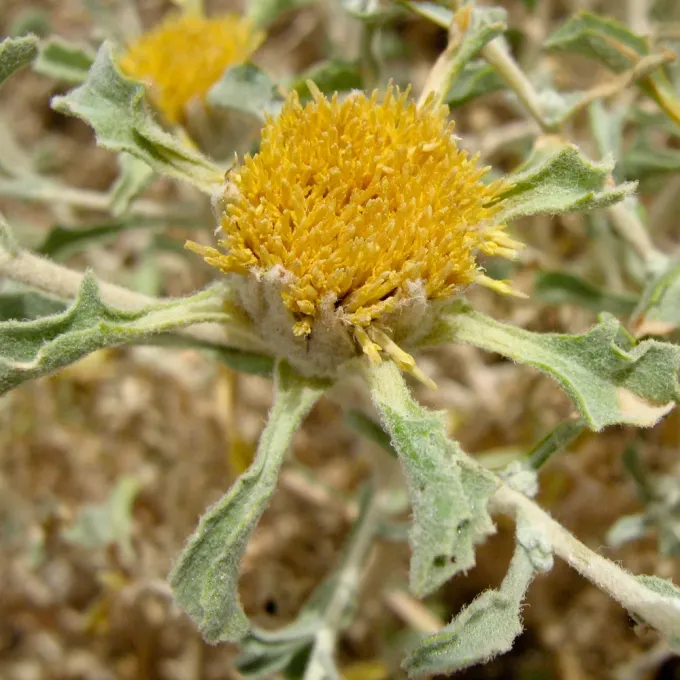
Description
Growing requirements
Anvillea garcinii is a perennial subshrub belonging to the Asteraceae family. This species is native to the arid regions of North Africa and the Middle East, serving as a primary example of a desert xerophyte.
The plant is specifically adapted to environments with extreme heat and minimal precipitation. Its physical structure consists of woody stems and dense, greyish foliage that effectively reflects sunlight and reduces water loss.
For successful cultivation, the soil must provide excellent drainage. Sandy or stony soils with low organic matter content are preferred. Any attempt to grow this crop in heavy clay or waterlogged areas typically results in failure.
Growth requirements emphasize high solar exposure. The species thrives in full sun, and its metabolism is optimized for high temperatures, often exceeding 40 degrees Celsius in its natural habitat.
Economically, Anvillea garcinii is recognized for its medicinal potential, specifically for the secondary metabolites extracted from its flowering parts, which exhibit anti-inflammatory and antiseptic properties.
Main diseases and pests
Due to its specialized evolutionary pathway, Anvillea garcinii exhibits strong natural resistance to typical agricultural pests. Most insects avoid consuming the plant due to its complex chemical profile.
The most significant threat to this crop is inappropriate hydration. Excessive water, especially when applied to the foliage or standing in the rhizosphere, triggers root decay and lethal fungal infections.
In greenhouses or controlled environments, high humidity levels can facilitate the development of mold, which is generally not a threat in the plant's native desert environment.
Pest management is rarely necessary, though rare instances of spider mite infestations may occur if the temperature is improperly regulated. Natural biodiversity usually keeps populations balanced in wild stands.
Producers must focus on strictly maintaining arid conditions. Regular soil aeration and avoiding overhead irrigation are the primary cultural practices used to prevent disease outbreaks.