
Antidesma bunius
Antidesma bunius (L.) Spreng.
Description
Growing requirements
Antidesma bunius, commonly known as bignay, is an evergreen tree or shrub belonging to the Phyllanthaceae family. In its natural habitat, it can grow quite tall, but it is often maintained at a manageable height in agricultural systems.
This species thrives in humid tropical climates and requires well-drained, fertile soil to reach its full production potential. It shows significant adaptability to various soil types, provided that waterlogging is prevented through proper site selection.
It prefers sunny locations, though young specimens benefit from partial shade during their establishment phase. The plant is sensitive to cold temperatures and frost, restricting its viable growing zones to tropical and subtropical regions worldwide.
Regular irrigation is essential for maintaining plant vigor and fruit set, especially during drier seasons. High humidity promotes healthy foliage development and reduces the stress levels in trees during peak growing periods.
Agricultural maintenance involves structural pruning to keep the canopy open, which improves airflow and light penetration. Applying balanced NPK fertilizers according to soil analysis helps sustain consistent yields over the tree's lifespan.
Yield
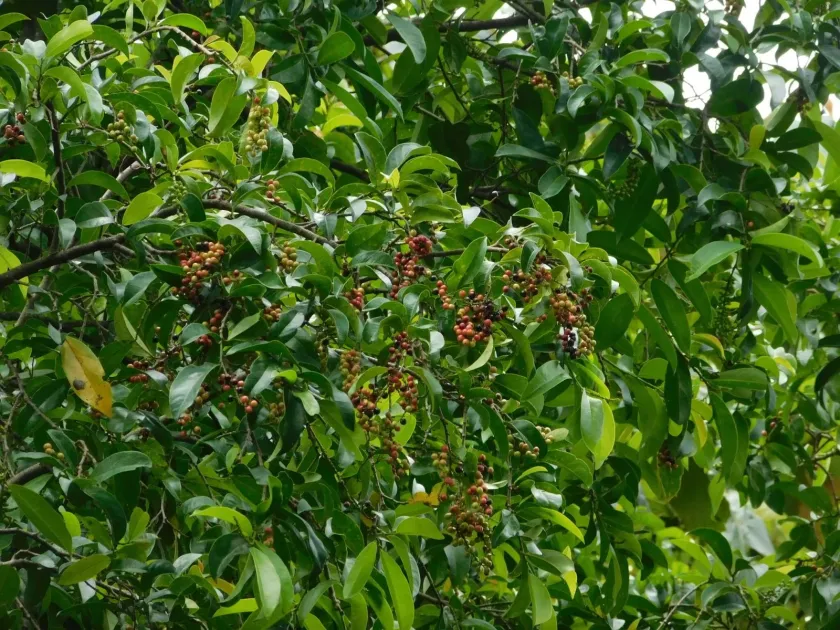
Antidesma bunius is highly productive, bearing small, round fruits that hang in long, decorative clusters. These clusters often display a vibrant spectrum of colors as individual fruits ripen at different times.
The flavor profile of the fruit ranges from tart to sweet depending on its maturity level. Due to their high antioxidant content, the berries are processed into jams, juices, wines, and jellies on a commercial scale.
Beyond the fruit, the leaves of this species are edible and are used in various traditional culinary preparations. Their medicinal properties are also recognized in herbal practices for treating inflammatory conditions.
The wood of the tree is dense and durable, making it useful for small-scale carpentry and tool production. This multi-purpose utility makes it a valuable plant for integrated tropical agroforestry systems.
Research into selecting high-yield varieties is ongoing, aiming to improve uniform ripening and ease of harvest. Such advancements are crucial for the economic viability of bignay plantations.
Main diseases and pests
Common pests affecting Antidesma bunius include aphids and scale insects that settle on young shoots and foliage. Integrated pest management strategies are recommended to keep populations below economic damage thresholds.
Fungal diseases, such as leaf spot or powdery mildew, can emerge if the orchard environment is too humid or poorly ventilated. Maintaining proper spacing between trees is a primary preventive measure against spread.
Root system health is vital, and soil-borne pathogens can be a risk if irrigation practices are inconsistent or if the soil lacks sufficient drainage. Maintaining soil pH levels is essential for overall plant resilience.
Biological control agents, including predatory insects, are often effective in managing outbreaks. This approach supports sustainable practices and minimizes the need for synthetic pesticide applications in fruit production.
Regular monitoring and the prompt removal of infected branches (sanitation pruning) serve as the foundation for orchard health. This limits the inoculum potential for various bacterial and fungal pathogens.
Harvesting
Harvesting Antidesma bunius is a delicate task due to the uneven ripening of fruits within a single cluster. Pickers usually perform selective harvesting by hand to ensure only the fully mature berries are collected.
The optimal time for harvest is determined by the skin color of the berries, which changes from green to red and finally to a deep, dark purple or black when fully ripe and sweet.
Post-harvest shelf life is relatively short, necessitating immediate processing or cooling to prevent deterioration. The fruits are prone to bruising, so gentle handling during transport is critical for quality control.
Modern post-harvest technologies, such as quick-freezing, allow producers to store the yield for longer periods. This helps in managing supply chains and meeting the demand for processed fruit products throughout the year.
Future agricultural efforts are focused on breeding clones that ripen more uniformly. This shift could significantly increase efficiency and reduce labor costs associated with the traditional, repetitive harvesting process.