
Anthocercis viscosa
Anthocercis viscosa
Description
Growing requirements
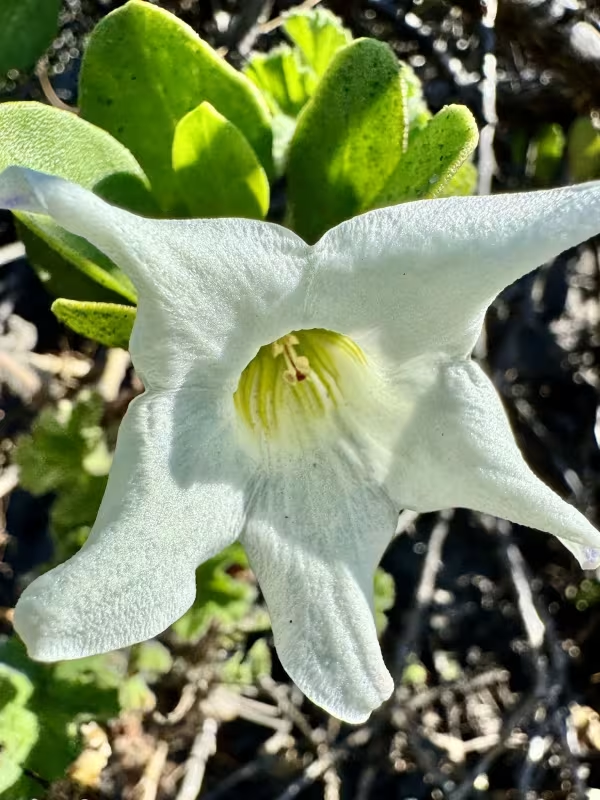
Anthocercis viscosa, commonly known as sticky-leaved shrub, is a perennial plant belonging to the Solanaceae family. Native to the coastal regions of Western Australia, it has evolved to thrive in challenging environments characterized by sandy, nutrient-poor soils.
The species is strictly adapted to Mediterranean-like climates with hot, dry summers and mild, wet winters. When introduced to other regions, it requires excellent drainage to survive, as stagnant water is detrimental to its health and often leads to root fungal infections.
Morphologically, the plant features glandular hairs that produce a viscous, sticky exudate. This adaptation is a survival mechanism that helps the plant retain moisture and protects it from excessive transpiration under direct, intense sunlight.
Cultivation practices focus on providing full sun exposure and minimal fertilization, as the species is accustomed to low-nutrient substrates. Over-fertilization can result in weak, spindly growth that reduces the aesthetic value and robustness of the shrub.
Its primary use is in xeriscaping and ornamental horticulture within arid climates. Due to its hardiness, it is sometimes utilized in coastal restoration projects to stabilize dunes and prevent soil erosion in degraded landscapes.