
Anodendron parviflorum
Anodendron parviflorum
Description
Growing requirements
Anodendron parviflorum is a woody climbing vine belonging to the Apocynaceae family. It is natively distributed across South and Southeast Asia, flourishing in dense tropical rainforest environments where it utilizes larger trees to reach the canopy.
This species is well-adapted to humid, equatorial climates characterized by high temperatures and significant annual rainfall. It does not survive in regions with frost or prolonged cool periods, which strictly dictates its geographical cultivation range to the tropical zone.
The plant requires deep, fertile, and well-drained soils to support its vigorous vertical growth. In a plantation setting, providing structural supports is essential to prevent the stems from tangling on the ground, which can increase the risk of disease and lower overall biomass quality.
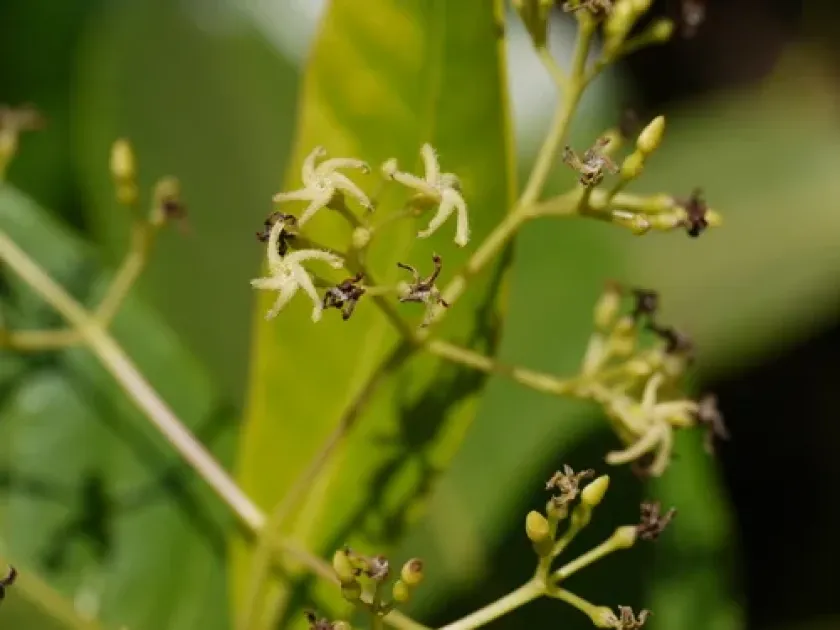
Botanically, Anodendron parviflorum features opposite leaves and small flowers, which are characteristic of the Apocynaceae family. The stems contain a milky latex, and the plant exhibits rapid vegetative growth during the peak rainy season when humidity is at its highest levels.
Maintenance of this crop involves managing light levels and spacing, as the vine can be quite invasive if not properly trained. Proper spacing ensures adequate air circulation, which is vital for maintaining the health of the foliage and preventing excessive humidity buildup near the roots.
Main diseases and pests
Common threats to Anodendron parviflorum include soil-borne pathogens such as Pythium and Phytophthora, which thrive in poorly drained substrates. Controlling soil moisture is the primary preventative measure to ensure root health and plant longevity.
Pests such as spider mites and aphids are frequently observed on the young, tender growth of the vine. These pests extract sap from the plant, causing chlorosis and potentially stunting the vine's development if left untreated for extended periods during the growing cycle.
Management of pest outbreaks typically involves a combination of mechanical removal of infested parts and the application of organic or synthetic pesticides. It is crucial to monitor the underside of the leaves, as these are the primary sites for initial pest colonization.
Fungal infections can also be managed by maintaining a clean field environment, which involves the removal of dead organic material that can serve as a substrate for mold and bacteria. Pruning is recommended to eliminate overcrowded stems and improve exposure to natural sunlight.
Agricultural personnel should be aware that the milky sap of Anodendron parviflorum can cause skin irritation. Proper personal protective equipment should be used during harvest and maintenance to prevent allergic reactions or contact dermatitis when handling the cut vines.