
American hogpeanut
Amphicarpaea bracteata
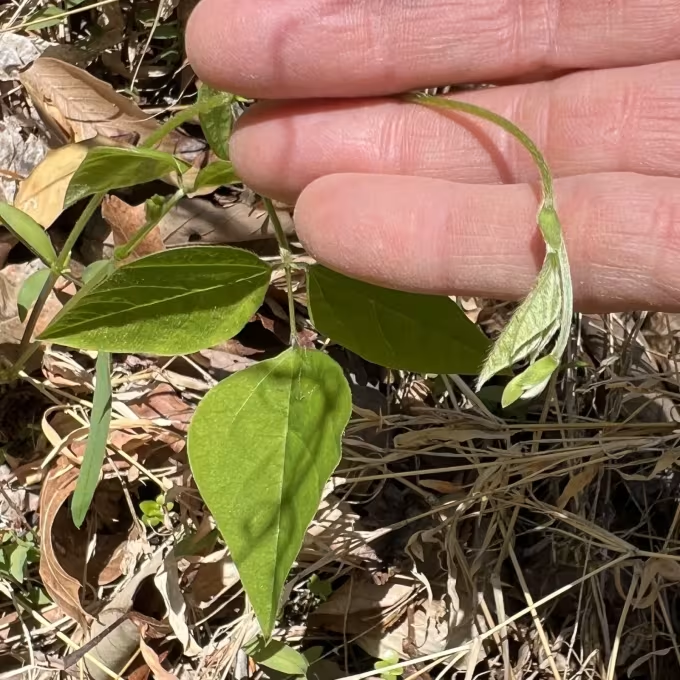
Description
Sowing dates
Amphicarpaea bracteata is a warm-season legume that requires well-warmed soil for optimal germination. Sowing should be scheduled for late spring, once soil temperatures consistently exceed 15-18 degrees Celsius, to ensure rapid establishment.
The seeds possess a hard coat, which necessitates scarification or soaking prior to planting to enhance field emergence rates. Sowing depth should be managed carefully, usually between 3 and 4 centimeters, to provide sufficient moisture for the seeds.
Row spacing is typically set at 45 to 60 centimeters, allowing for adequate plant development and easier weed control. Because the plant produces both aerial and subterranean seeds, maintaining an appropriate plant density is crucial for maximizing total reproductive output.
Inoculation with compatible Rhizobium bacteria is highly recommended during the sowing process. This ensures effective nitrogen fixation, which significantly improves plant vigor and reduces the need for synthetic nitrogen fertilizers.
Selecting clean, high-quality seed lots is essential for successful cultivation, as the plant grows slowly in the early seedling stage and can easily be suppressed by competitive weed species in the field.
Growing requirements
As a member of the Fabaceae family, the American hogpeanut thrives in fertile, well-drained loam soils. It prefers a neutral to slightly acidic pH level, which supports the symbiotic bacteria essential for nitrogen fixation.
The crop is remarkably shade-tolerant, making it an excellent candidate for agroforestry systems or intercropping between rows of taller tree crops. It can maintain productivity even in partial shade conditions where other legumes might fail.
Consistent moisture is required during the early to mid-growing season to support the development of vegetative biomass. However, the soil must be well-drained, as waterlogged conditions can lead to the rot of the sensitive subterranean fruit.
The plant requires a sufficiently long frost-free season to complete its life cycle. Since it must produce both above-ground flowers and below-ground cleistogamous flowers, a steady accumulation of heat units is necessary for full maturation.
Adequate soil structure is beneficial for the development of subterranean pods. Sandy loam or loose-textured soils are preferred, as they facilitate easier root penetration and easier harvesting of the buried seed crop.
Yield
The American hogpeanut is unique because it provides a dual-yield system: protein-rich aerial biomass for livestock feed and starchy, nutrient-dense underground seeds. This makes it a versatile crop for multi-purpose agricultural use.
The aerial foliage serves as high-quality forage, containing high levels of digestible protein comparable to other common legumes. Harvesting for forage is best timed at the peak of the flowering period to maximize nutritional quality.
The underground seeds, often referred to as hogpeanuts, are a valuable resource due to their protein and starch content. These seeds represent a significant stored energy source that remains viable in the soil until harvest.
The plant is known for its ability to improve soil nitrogen levels through its nitrogen-fixing symbiosis. This characteristic makes it a valuable rotational crop that prepares the field for subsequent demanding species.
Maximizing yield requires a balance between harvesting forage and allowing enough biomass to remain for the successful development of the underground seed crop, which is essential for natural reseeding and future yield.
Main diseases and pests
Root rots caused by soil-borne fungal pathogens are the primary concern for this crop, especially in poorly drained or overly wet soils. Proper field selection and drainage management are key preventative measures.
Leaf-feeding insects, such as beetles and caterpillars, can significantly damage the aerial parts of the plant during the mid-summer months. Monitoring is required to determine if intervention with organic pest controls is necessary.
Weed competition during the first few weeks of growth is the greatest threat to overall yield. Early-season mechanical weeding or the use of mulch can significantly reduce the pressure from invasive grasses and broadleaf weeds.
Powdery mildew can occasionally affect the foliage during periods of high humidity and poor air circulation. Planting at appropriate densities and ensuring good inter-row airflow are effective strategies to prevent outbreaks.
Nematode infestation is a potential threat to the subterranean pods, which can affect seed quality. Rotating the crop with non-host species is the most sustainable approach to managing soil-borne nematode populations.
Harvesting
Harvesting should be done in stages; the aerial biomass can be cut for hay or green manure in mid-summer, while the subterranean pods must be harvested near the end of the growing season before the soil freezes.
Specialized equipment, such as modified potato diggers, is required to mechanically retrieve the underground seeds from the upper layer of the soil. The soil should be relatively dry to ensure clean and efficient harvesting of the pods.
After collection, the underground seeds must be cleaned to remove soil and organic debris, followed by thorough drying to a moisture content of 12-14%. This prevents mold development during storage.
Storage should be in cool, dry, and well-ventilated areas to protect the nutritional integrity of the harvested seeds. Proper storage is critical if the seeds are intended for use as future planting stock or as a high-value feed supplement.
Given the labor-intensive nature of harvesting underground seeds, this crop is currently better suited for smaller-scale agricultural operations or specialized niche markets where the product can command a premium price.