
Amomyrtus luma
Amomyrtus luma
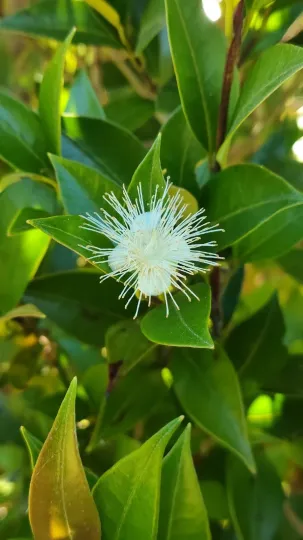
Description
Sowing dates
Propagation of Amomyrtus luma is mainly achieved through seeds or cuttings. Seeds require stratification to increase germination rates, as they possess a thick seed coat that hinders rapid development under natural conditions.
Sowing should be done in a light, well-drained substrate with high organic content. The optimal time for nursery sowing is the spring season, when stable positive temperatures are established and daylight hours increase.
For cuttings, semi-hardwood shoots collected at the end of the summer season are used. Successful rooting requires maintaining high humidity and a soil temperature of approximately 22–24 degrees Celsius.
Young seedlings require shade from direct sunlight during their first year. Transplanting to the permanent site should take place after the root system has sufficiently matured, usually after two or three years of growth.
Planting density depends on the purpose of cultivation; for ornamental use or fruit production, the spacing between seedlings can range from 3 to 5 meters.
Growing requirements
Amomyrtus luma belongs to the Myrtaceae family and is an evergreen plant that prefers a temperate maritime climate. The crop is highly sensitive to severe frost, so its cultivation range is limited to regions without harsh winters.
The plant thrives in deep, fertile soils with a neutral or slightly acidic reaction. A critical requirement is the absence of water stagnation, as the root system is sensitive to waterlogging and prone to fungal rot.
Good lighting is required for normal growth, although young specimens can tolerate partial shade. Mature trees are capable of withstanding short dry periods, but regular watering is essential when growing for fruit production.
The crop prefers sites protected from strong and cold winds. In regions with extreme weather conditions, cultivation in protected ground or the establishment of windbreak belts around the plantation is recommended.
Fertilizers should be applied in spring during the active growth period. Preference is given to complex mineral fertilizers with high nitrogen in the early season and phosphorus-potassium blends in the second half of summer.
Yield
The economic use of Amomyrtus luma focuses on the production of edible fruits, prized for their unique flavor and aroma. Fruit bearing typically begins 5 to 7 years after planting, depending on care conditions.
Yield depends on the age of the tree and pollination conditions. The flowers of this plant are honey-bearing and actively attract pollinators, which significantly increases fruit set in commercial orchards.
The fruits are small dark berries that are harvested as they reach full maturity. They can be consumed fresh or processed into jams, liqueurs, and various confectioneries.
The wood of this plant is also highly valued for its hardness and durability. It is used in carpentry and for crafting small artisanal items, serving as an additional vector for economic exploitation.
Regular sanitary pruning stimulates the development of fruit buds and facilitates harvesting by providing better access to the inner parts of the canopy.
Main diseases and pests
The main threats to Amomyrtus luma are fungal diseases that thrive in high humidity. The most common issue is leaf spot, which requires treatment with appropriate fungicides.
Root rot can occur if the site is poorly drained. Prevention consists of monitoring irrigation and using loose soil mixes with added sand or perlite to improve drainage.
Among pests, sucking insects such as scale insects and mealybugs pose the greatest danger. They damage young shoots, leading to leaf deformation and a decrease in the plant's overall immunity.
For pest control, biological insecticides or oils are effective, acting on the insects without leaving harmful residues in the fruits. Regular inspection of the undersides of leaves is essential.
General management must include the timely removal of dead or diseased branches to improve canopy aeration, which minimizes the risk of infection spreading within the planting area.
Harvesting
Harvesting is performed manually, as the fruits are quite delicate and easily damaged by mechanized methods. The optimal time is when the berries acquire their characteristic dark color and become soft to the touch.
Harvesting is spread out over time, as fruit maturation on the tree is uneven. Multiple passes per tree are often required to collect the berries at their peak ripeness.
Immediately after harvest, the fruits should be stored in a cool place or a refrigerated chamber to maintain their market quality. Fresh berries have a short shelf life and are usually processed within 24 hours.
Care must be taken during harvest not to damage fruit buds for the following year. Avoid using ladders if the tree has not reached significant height.
Packaging should be done in perforated containers that allow for air circulation to prevent the development of mold during transport to the market or processing facility.