
Ammi majus
Ammi majus L.
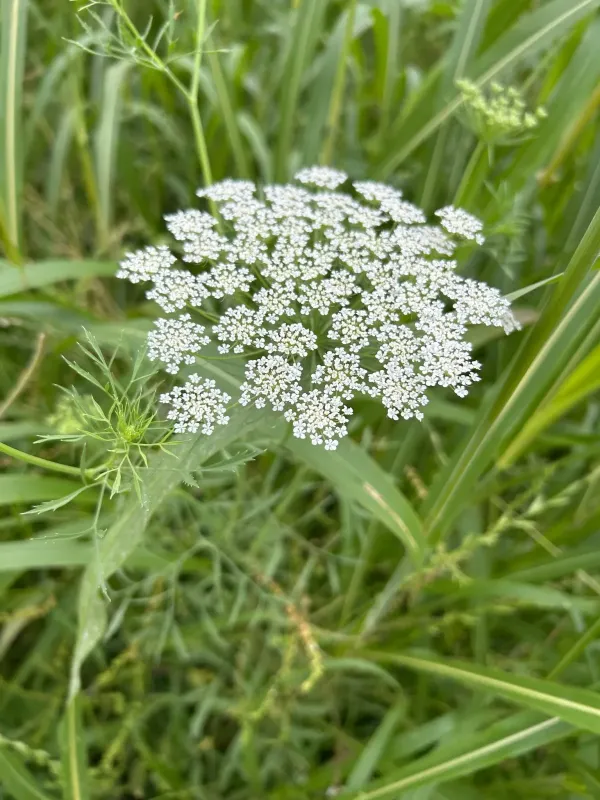
Description
Sowing dates
Ammi majus, commonly known as greater ammi, is an annual herbaceous plant belonging to the Apiaceae family, often cultivated for its medicinal properties.
Seeds are typically sown in the spring once the soil temperature consistently reaches 8–10°C, ensuring optimal conditions for germination.
Due to the presence of essential oils in the seeds, soaking them prior to sowing can significantly improve germination rates and uniformity of emergence.
The standard sowing method involves row planting with spacing of 45–60 cm to facilitate mechanical maintenance and ensure adequate airflow between plants.
Proper depth is crucial; seeds should be sown at a shallow depth of approximately 0.5–1 cm to avoid exhaustion of the seedling before emergence.
Growing requirements
Greater ammi thrives in locations with full sun exposure, which is essential for the accumulation of active compounds, particularly furanocoumarins.
The crop prefers well-drained, fertile, loamy soils with a neutral pH, avoiding compacted or waterlogged areas that may cause root diseases.
While the plant shows moderate drought tolerance, adequate moisture is critical during the budding and flowering phases to maximize biomass.
Balanced fertilization, with a focus on phosphorus and potassium, is recommended to support robust plant growth and chemical quality.
The plant is sensitive to late spring frosts, which necessitates careful monitoring of local weather patterns before deciding on the final sowing date.
Yield
The yield of Ammi majus is primarily determined by the number of flowering umbels and the quality of the harvested seeds for industrial extraction.
Under optimal agronomic conditions, growers can expect dry seed yields ranging from 0.8 to 1.5 tonnes per hectare, depending on the region and soil quality.
The concentration of medicinal components is highest in crops grown in warm climates with high solar intensity throughout the vegetative period.
Effective yield management requires minimizing field losses during harvest, as the small seeds are prone to shattering if handled improperly.
Post-harvest processing, including controlled drying, is essential to maintain the integrity of active ingredients and ensure high market value.
Main diseases and pests
The primary pests affecting Ammi majus include aphids and plant bugs, which can damage developing flower stalks and reduce overall plant vigor.
Powdery mildew is a prevalent fungal disease that flourishes in conditions of high humidity, particularly when plants are spaced too closely together.
Root rots can be a significant issue in poorly drained fields, leading to stunted growth and premature plant death during the growing season.
Weed competition is most critical in the early seedling stage, as the plant exhibits slow initial growth and is easily overwhelmed by invasive species.
Integrated pest management, including regular crop rotation and the use of appropriate fungicides, is necessary to mitigate these threats effectively.
Harvesting
Harvesting should occur when the umbels have turned brown and the seeds are fully mature to ensure the highest yield of quality raw material.
Two-phase harvesting, involving swathing and subsequent threshing after a short drying period in the field, is the preferred method for large-scale production.
Field drying allows the seeds to mature uniformly, but caution must be taken to prevent moisture buildup that could lead to fungal growth.
Mechanical threshing requires precise calibration of drum speed to prevent the cracking or damaging of the delicate seeds during the process.
The final product must be cleaned of debris and stored in a cool, dry place at a moisture content of no more than 12% for long-term stability.