
Amesiella minor
Amesiella minor
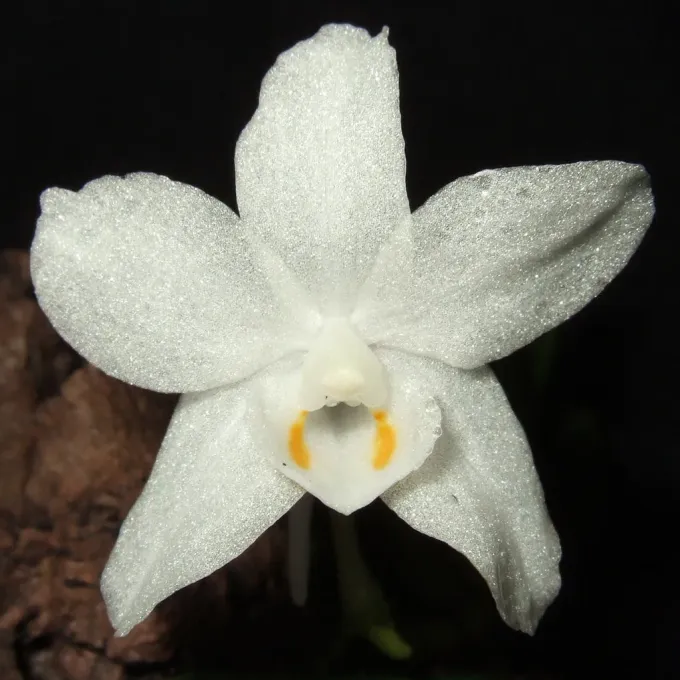
Description
Growing requirements
Amesiella minor is a miniature epiphytic orchid species belonging to the Orchidaceae family. It is native to the Philippines, specifically found in the mountainous forests of Luzon, where it thrives in cool, humid conditions on the branches of canopy trees.
The core of its agrotechnical requirements involves mimicking its native high-altitude environment. It requires a significant diurnal temperature variation, with cool nights ideally ranging from 15°C to 17°C, which is essential to trigger the plant's metabolic cycles and flowering.
As an epiphyte, the species demands an airy and porous root environment. Cultivators typically mount these plants on pieces of bark or cork, or house them in open slatted baskets. A small amount of live sphagnum moss can be used to hold minimal moisture near the roots.
Light intensity for this species should be bright but strictly diffused. Avoid direct exposure to afternoon sun, as the delicate foliage is highly susceptible to tissue necrosis. A light-colored shading or sheer curtain is recommended if the orchid is kept on a bright windowsill.
Hydration management requires high ambient humidity, ideally around 75% or higher. Regular misting or the use of an ultrasonic humidifier is beneficial, though one must ensure that water does not accumulate in the leaf axils, which can lead to bacterial rot.
Main diseases and pests
The primary health threats for Amesiella minor are related to cultural errors, particularly overwatering in low-light conditions. This environment promotes the growth of various pathogenic fungi that manifest as root and crown rot, which can prove fatal quickly.
Insect pests, most notably spider mites, thrive in environments with low humidity. Additionally, scale insects may infest the underside of the leaves. Routine monitoring and immediate application of appropriate horticultural oils or systemic pesticides are necessary to maintain plant vigor.