
Early wintercress
Barbarea verna (Mill.) Asch.
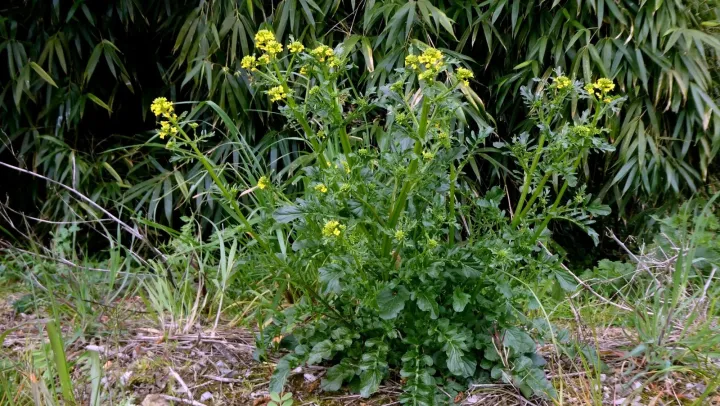
Description
Sowing dates
Early wintercress (Barbarea verna) is a herbaceous biennial plant belonging to the Brassicaceae family. In regions with a mild climate, sowing is typically carried out in late summer or early autumn to ensure a harvest of fresh greens early the following spring.
For spring and summer production, seeds are sown immediately after the soil warms up, as the crop is known for its cold tolerance. The optimal sowing depth is 1–2 centimeters, which facilitates quick and uniform emergence.
The plant exhibits excellent winter hardiness, making winter sowing an effective agricultural practice. Planting density should be sufficient to form a tight rosette of leaves, which helps suppress weed growth in the field.
A biological feature of wintercress is its ability to develop rapidly at moderate temperatures, allowing it to be used as a companion crop. Careful timing of sowing helps to prevent premature bolting of the plants.
For green vegetable production, a succession planting method is practiced with an interval of 2–3 weeks. This ensures a stable supply of fresh produce throughout the entire growing season.
Growing requirements
Early wintercress is demanding regarding soil moisture levels, preferring well-drained, fertile loams with a neutral pH. Waterlogging negatively affects root system development and can lead to plant rot.
The crop is light-loving but can tolerate partial shade, which allows it to be successfully grown in various climate zones. The optimal temperature range for active growth is 15–20 degrees Celsius.
Regular irrigation is essential for high-quality greens, especially during dry periods of vegetation. Moisture deficits cause leaves to become coarse and reduce their culinary appeal.
The soil should be prepared in advance, with organic fertilizers applied in the autumn to provide necessary nutrients. Maintaining a clean, weed-free field is critical, as the crop is sensitive to competition during the early stages of growth.
The crop responds well to nitrogen fertilizers, which accelerate biomass production. However, excessive fertilizer can decrease the plant's resistance to certain diseases.
Yield
The yield of Early wintercress depends directly on the agronomic background and the timeliness of harvesting. When all growing conditions are met, a significant volume of marketable produce can be obtained per unit area.
The leaf rosette can provide multiple cuttings per season if selective harvesting is applied. This significantly increases the total productivity of the crop compared to a one-time harvest.
Productivity levels are also determined by planting density, where the optimal rate is achieved when plants do not suffer from nutrient deficiencies. When used as a green manure crop, the biomass reaches its maximum volume by the flowering phase.
In commercial production, maintaining the market quality of the produce during storage is a key factor. The use of modern irrigation systems allows for stabilized yields regardless of weather conditions.
The yield potential of the variety also depends heavily on the genetic characteristics of the seed material used. Choosing localized, high-performance varieties guarantees consistency in productivity.
Main diseases and pests
The primary pests for Early wintercress, as for most Brassicaceae, are flea beetles. They can destroy crops at the cotyledon stage if left unmanaged.
Caterpillars of the cabbage white butterfly and the cabbage moth also pose a serious threat by consuming leaf blades. Regular inspection of the plantings allows for early detection and timely intervention.
Among diseases, clubroot is the most common, affecting the root system and causing plant wilting. Crop rotation is the most effective way to prevent this disease.
Powdery mildew can occur in conditions of high humidity and poor air circulation. Removing infected plant debris and managing irrigation are effective control measures.
- Flea beetles
- Cabbage moth
- Clubroot
- Powdery mildew
- Downy mildew
Harvesting
Harvesting begins when the leaf rosette reaches the optimal size, typically 45–60 days after emergence. Leaves should be cut using a sharp tool, ensuring that the growing point is not damaged.
For market purposes, it is essential to harvest in the morning hours when plant tissues are fully saturated with water. This ensures the product remains fresh for a longer period post-harvest.
When used as a forage crop, harvesting should take place before the active flowering phase. At this point, the nutrient content of the green mass is at its peak.
The harvested produce requires immediate cooling to maintain its commercial appearance. Transportation should be carried out in ventilated crates to prevent overheating and decay.
After harvest, plant residues can be incorporated into the soil as organic fertilizer, which improves soil structure and enhances overall fertility for the next rotation.