
Amana edulis
Amana edulis
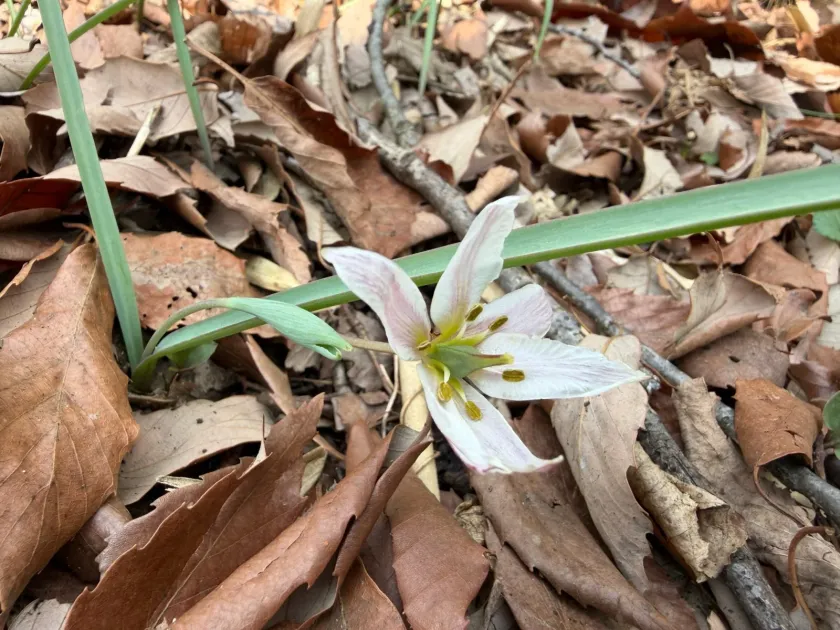
Description
Sowing dates
Amana edulis is an early-flowering ephemeral plant, which means the optimal time for planting bulbs in the soil is during the autumn season. In temperate climates, planting is carried out from September to October, allowing the plant to establish roots before the soil freezes.
The planting depth for the bulbs typically ranges from 5 to 10 centimeters, depending on the soil texture. It is crucial to ensure proper drainage at the bottom of the planting hole to prevent water stagnation, which is detrimental to this species.
Propagation of the crop is possible both vegetatively, through daughter bulbs, and generatively, through seeds. Growing from seeds takes significantly more time, as flowering only occurs in the 3rd to 5th year of the plant's life.
Seed material requires stratification in low-temperature conditions to mimic the natural development cycle. When sowing seeds in open ground, it is important to protect the seedlings from weed competition during the initial years of growth.
For vegetative propagation, bulbs are excavated after the vegetation cycle is complete, once the aerial parts have fully turned yellow. The selected planting material is dried in the shade and stored in a cool, dry place until the autumn planting season.
Growing requirements
The crop belongs to the Lily family and prefers open, well-lit areas with light, fertile sandy loam or loamy soils. The plant does not tolerate heavy clay soils that are prone to waterlogging.
Amana edulis is adapted to the climatic conditions of East Asia, including China, Japan, and Korea, where it grows on hillsides and in light woodlands. It requires a pronounced winter dormancy period at low temperatures.
The optimal pH level for successful vegetation is in the neutral to slightly alkaline range. Applying moderate amounts of organic fertilizers promotes the active formation of large bulbs and abundant flowering.
During the growing season, the plant requires moderate soil moisture; however, excess water can lead to bulb rot. In the summer period, when the aerial part dies off, the Amana enters a dormant state and requires dry storage conditions.
To improve yields, it is recommended to avoid sudden fluctuations in humidity during the spring. In agricultural cultivation, regular weeding is necessary, as the plant is not highly competitive against weeds.
Yield
The agricultural use of Amana edulis is focused on harvesting nutritious bulbs, which are traditionally consumed in East Asian countries. Yield depends on the age of the plantings and the level of agronomic management.
In its natural habitat, population density can be high, but in cultivation, it is necessary to maintain proper spacing between bulbs to prevent the spread of fungal diseases. Harvesting is carried out after the foliage has withered.
The nutritional value of the bulbs is due to their high carbohydrate and starch content. In culinary preparation, the bulbs are boiled or fried, acquiring a soft texture and a specific taste characteristic of many plants in the lily family.
In addition to the bulbs, in some regions, young leaves can also be eaten as an early vitamin-rich green. However, mass harvesting of the aerial parts is not recommended, as this weakens the bulb and reduces yield in the next season.
Commercial cultivation requires the creation of specialized beds with controlled soil composition, which allows for a significant increase in marketable product output compared to wild specimens.
Main diseases and pests
The most dangerous threats to Amana are fungal infections, such as gray mold (Botrytis), which affects the plant when drainage conditions are compromised and air humidity is excessive. Prevention involves disinfecting bulbs before planting.
Root rots caused by various pathogenic fungi can destroy a plantation in a short time if water stagnates. It is recommended to practice crop rotation and not return the crop to the same plot for at least 3–4 years.
Among pests, the onion fly and wireworms are the most dangerous, damaging the underground parts of the plant. Using insecticides at early stages of development can significantly reduce damage caused by these insects.
Nematode infestations are also possible, causing leaf deformation and stunted bulb growth. Affected specimens should be immediately removed from the plot and disposed of to prevent the spread of the pest.
To protect plantings during the spring from rodents that often damage succulent bulbs, special barriers or nets are placed at the bottom of the planting furrows.
Harvesting
The harvest period occurs at the end of spring or early summer, when the plant's life cycle is completed and the aerial parts begin to turn yellow and wither. Harvesting too early results in immature bulbs that do not store well.
Bulbs should be excavated carefully using a garden fork to minimize mechanical damage to the tissues. Damaged bulbs do not store well and are prone to rapid mold infection.
The harvested yield must be cleaned of soil and dried in a well-ventilated area protected from direct sunlight. After drying, the remains of stems and roots are carefully removed.
Bulbs are stored in crates with sand or dry peat at a temperature of approximately +5 to +10 degrees Celsius. Ensuring good ventilation is important to prevent fungal processes during dormancy.
Bulbs are sorted before storage, selecting the largest specimens for consumption and the smaller ones for future propagation. Adhering to storage regulations allows for the preservation of planting material until the next season without loss of quality.