
Thinleaf alder
Alnus tenuifolia
Description
Growing requirements
Thinleaf alder (Alnus tenuifolia) belongs to the Betulaceae family. It is a deciduous tree or shrub recognized for its vital ecological role as a nitrogen-fixing species, which significantly improves soil quality in riparian environments.
The species is native to western North America, spanning regions from Alaska down to California. Its natural distribution is closely tied to water bodies, where it thrives in moist soils along riverbanks, streams, and subalpine meadows.
In terms of growth requirements, this alder species demands high soil moisture and deep, nutrient-rich substrates. It is particularly well-adapted to cool-temperate climates and is often one of the first species to establish itself on disturbed, wet ground.
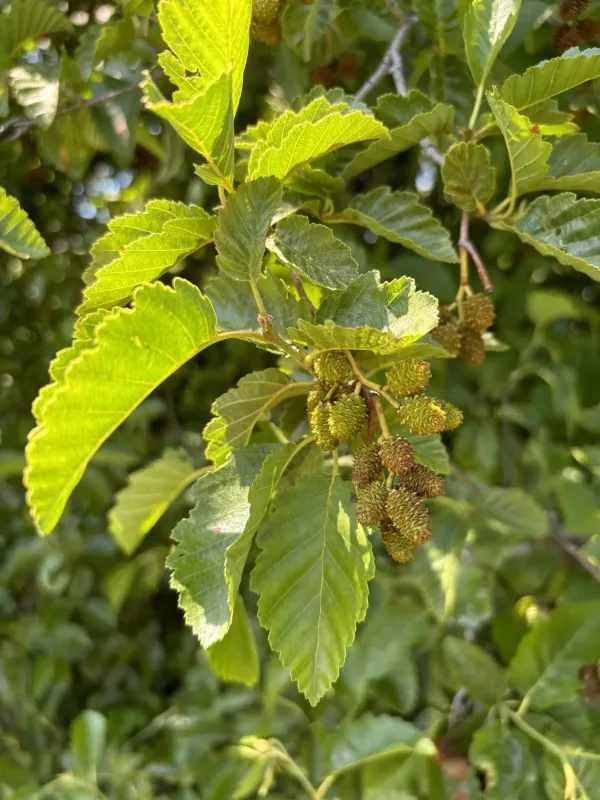
Botanically, it is characterized by its thin, serrated leaves and small, cone-like catkins. Its root system is exceptionally efficient at binding soil, which makes it a preferred plant for erosion control programs and watershed management.
The economic utility of Alnus tenuifolia includes firewood production and small-scale timber works. Because of its light, uniform wood, it is frequently used in craft industries and for historical furniture production in local regions.
Main diseases and pests
Common diseases affecting the thinleaf alder include leaf spot and various fungal cankers that can compromise the structural integrity of branches. These pathogens often thrive in areas with poor air circulation or excessive shade.
Insect pests, such as alder flea beetles and various species of defoliating moths, pose a persistent threat. Periodic inspection and integrated pest management are necessary to ensure the healthy development of young alder stands.