
Spath's Alder
Alnus spaethii
Description
Growing requirements
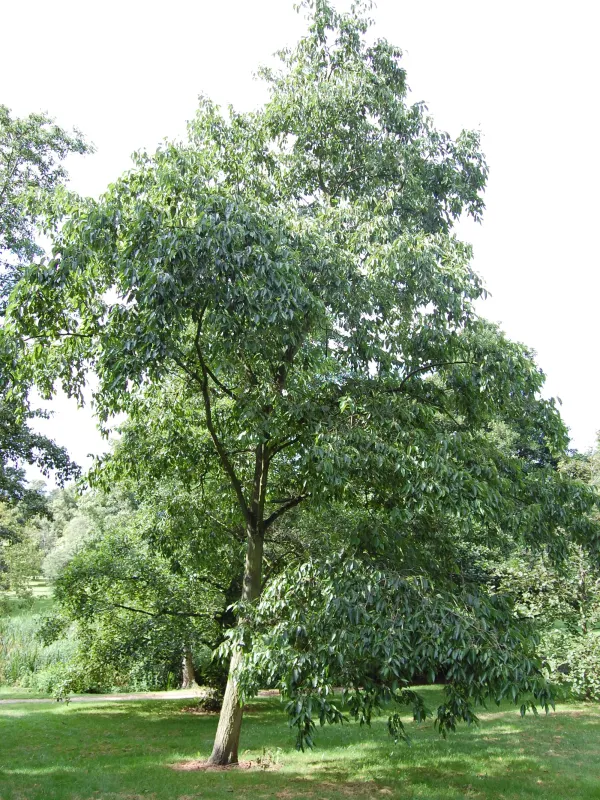
Spath's Alder (Alnus spaethii) is a distinctive hybrid species within the Betulaceae family, resulting from the crossbreeding of Japanese and Caucasian alder. It is highly valued in horticulture for its impressive large, glossy, deep-green foliage and elegant pyramidal habit.
This species is exceptionally well-adapted to damp environments. It thrives in fertile, moisture-retentive soils and is often recommended for planting in low-lying areas or along stream banks where other species might struggle.
Regarding climate, Spath's Alder is robust and hardy, tolerating temperate climates with ease. While it appreciates full sun for optimal leaf development, it possesses enough vigor to perform well in partial shade settings.
Cultivation requires minimal intervention. Regular mulching of the root zone is beneficial to maintain soil moisture consistency. The tree generally does not require intensive pruning, as its natural structure remains aesthetic throughout its lifespan.
Its primary use is in urban and rural landscaping. Due to its resistance to pollution and adaptability, it is an excellent choice for street planting, parks, and restoration projects involving riparian habitats.
Main diseases and pests
Common health issues for Alnus spaethii include leaf spots caused by various fungi. These are usually cosmetic but may impact the visual quality of the foliage if not monitored.
The Alder leaf beetle is a known pest that can cause significant defoliation. Early detection during the spring months is critical for preventing widespread damage to the canopy.
Root pathogens can occur if the planting site lacks proper soil structure or drainage, despite the species' preference for moisture. Ensuring that water can move through the soil profile is essential.
Mildew may develop during periods of high humidity and poor air circulation. Proper spacing during initial planting helps mitigate this risk by ensuring adequate airflow around the leaves.
Sanitation practices, such as removing affected branches and cleaning up debris under the tree, are standard management procedures to reduce the pressure of secondary infections.