
Cockatoo grass
Alloteropsis semialata
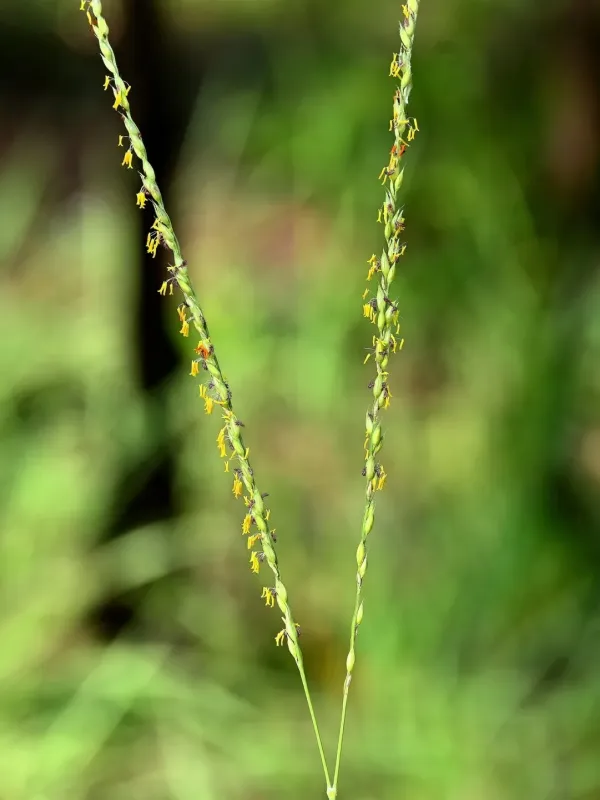
Description
Growing requirements
Alloteropsis semialata, commonly known as Cockatoo grass, belongs to the Poaceae family. It is a perennial grass highly regarded by botanists as a model for studying C4 photosynthesis evolution, as it exhibits a high degree of physiological plasticity.
The plant is native to tropical and subtropical regions of Africa, Asia, and Australia. It is well-adapted to savanna environments, where it thrives in open, sunny habitats with varying rainfall patterns, showing remarkable resilience to seasonal droughts.
This grass generally requires well-drained soils and is capable of surviving in nutrient-poor environments where other species might fail. It grows effectively in soils that are slightly acidic and does not tolerate long-term waterlogging or anaerobic conditions.
Botanically, Cockatoo grass forms dense tufts or tussocks. Its leaves are typically narrow and can be quite fibrous depending on the stage of development, which serves as an adaptation to minimize transpiration in high-temperature environments.
For agricultural purposes, the species serves as a source of pasture for livestock. While its nutritional profile fluctuates throughout the growing season, it remains a vital component of natural grasslands, providing ground cover and preventing soil degradation.
Main diseases and pests
The primary threats to Alloteropsis semialata populations include fungal pathogens, particularly rusts and leaf spots that proliferate during periods of high humidity. These infections can limit the amount of digestible biomass available for grazing.
Pests such as grasshoppers and other chewing insects represent a significant threat to the aerial parts of the plant. Despite this, the species has evolved a strong capacity for vegetative regrowth from its crown, allowing it to withstand recurrent herbivory.