
Alexa wachenheimii
Alexa wachenheimii
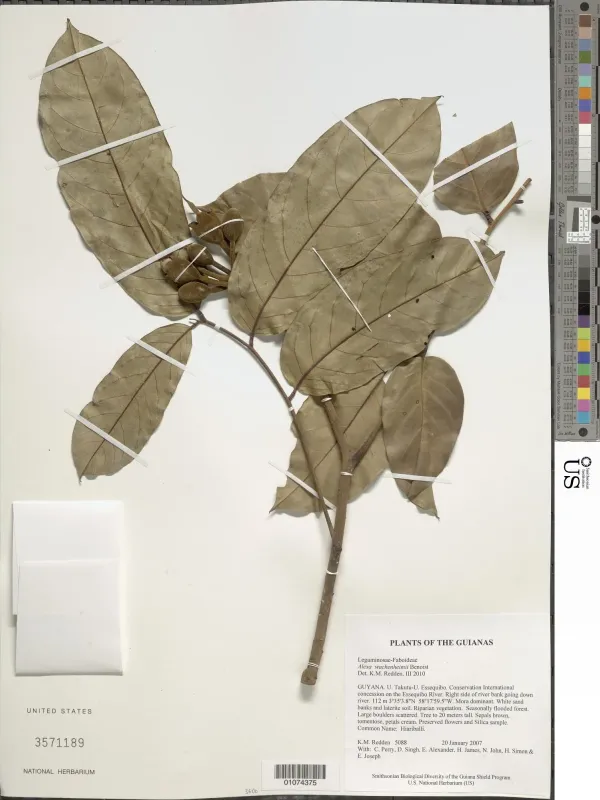
Description
Growing requirements
Alexa wachenheimii is a notable tree species belonging to the legume family (Fabaceae), naturally found in the lush tropical environments of South America. It is a vital component of the lowland rainforest ecosystems in this region.
The species requires a humid tropical climate to thrive, characterized by consistently high temperatures throughout the year and significant rainfall. It is intolerant of cold snaps or prolonged dry periods, which can hinder its physiological processes.
It prefers deep, fertile, and well-drained soils that are rich in organic matter. Proper soil composition is essential for the development of its root system, which must be protected from prolonged stagnant water conditions.
In its native habitat, the tree often grows near river basins, demonstrating a high adaptation to moisture, though it is not a true aquatic plant and requires efficient soil aeration.
Regarding silviculture, the tree necessitates specific light management: seedlings need protection from direct sunlight, while established trees benefit from vertical forest structures that provide dappled light.
Main diseases and pests
The primary threat to Alexa wachenheimii is the ongoing deforestation and habitat fragmentation, which limits its ability to reproduce and maintain genetic diversity within its native range.
The species is susceptible to various tropical wood-boring insects, which can impact the integrity of the stem and branches, especially in weakened or stressed individual trees.
Fungal pathogens represent a significant risk, particularly during periods of high humidity and heat, which promote the spread of leaf spot diseases and wood decay fungi.
Competition from invasive plant species often threatens the survival of young saplings, as they struggle to capture necessary resources in rapidly changing environments.
Lack of environmental monitoring in remote areas often means that pest outbreaks go unnoticed, potentially leading to local decline of the population if left unchecked.