
Tung oil tree
Aleurites fordii Hemsl.
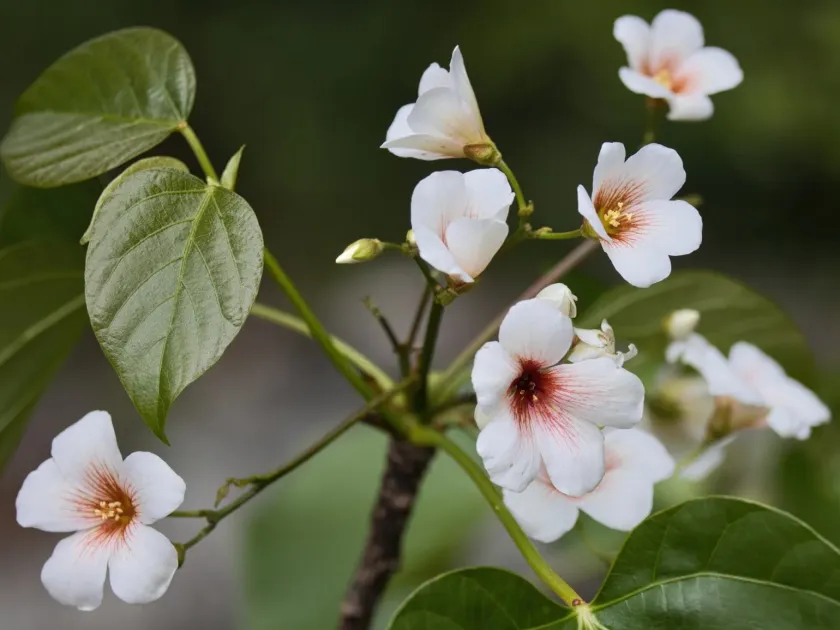
Description
Sowing dates
The reproduction of the Tung oil tree is typically achieved through seeds or grafting onto healthy seedlings. Sowing should occur in spring once the soil temperature reaches at least 12–15 degrees Celsius, as the seeds are quite sensitive to cold conditions.
Before planting, seeds must undergo stratification for 60 to 90 days in damp sand at a temperature of 3 to 5 degrees. This process is essential to break the tough seed coat and significantly improve germination rates, which are otherwise low in untreated seeds.
Seedlings are transplanted to their permanent location at one or two years of age. It is vital to maintain proper planting density, usually 6x6 or 8x8 meters, to ensure each tree has sufficient space for crown development.
Planting pits should be prepared in advance, enriched with organic matter and superphosphate to stimulate initial root system growth. During planting, the root collar must be positioned precisely at the soil surface level.
In the first few years, the trees require meticulous maintenance of the near-trunk area, regular irrigation, and soil loosening to prevent competition from weeds and ensure proper oxygenation of the roots.
Growing requirements
The Tung oil tree, a member of the Euphorbiaceae family, is a subtropical species that thrives in warm, humid climates with stable temperatures. An optimal average annual temperature range is 18–22 degrees Celsius.
The plant is highly susceptible to frost, especially during the flowering stage. Even brief temperature drops below -10 degrees Celsius can cause severe damage to the tree's wood and lead to the death of developing buds.
Successful growth requires fertile, well-drained soil with a neutral or slightly acidic pH. Waterlogging in the root zone is extremely detrimental to this crop; therefore, marshy or heavy clay areas are entirely unsuitable for plantation.
The tree prefers well-lit slopes that are protected from strong winds, which can damage the brittle branches. A consistent distribution of rainfall throughout the growing season is a critical factor for productivity.
During peak growth stages, the Tung tree consumes significant amounts of micronutrients. Therefore, on less fertile soils, it is necessary to apply balanced mineral fertilizers containing nitrogen, phosphorus, and potassium.
Yield
The commercial bearing stage of the Tung oil tree typically begins between the 3rd and 5th year under favorable conditions. Peak productivity is usually attained when the tree is between 10 and 25 years old.
Yield depends heavily on the age of the stand, strict adherence to agrotechnical practices, and weather conditions during fruit setting. A mature plantation can yield between 1 to 2 tonnes of dried fruit per hectare.
Tung fruits are drupe-like capsules containing between three and seven seeds rich in high-quality drying oil. The oil content within the seed kernels can reach as high as 60 percent.
Harvest quality is directly influenced by ripening conditions: a sufficient number of sunny days in late summer increases the oil content of the seeds and improves the overall physical and chemical profile of the oil.
Regular crown pruning helps maintain high light penetration to all levels of the tree, which promotes uniform fruit ripening and facilitates the harvesting process, ultimately increasing the total output.
Main diseases and pests
Among the primary diseases, Fusarium wilt is the most dangerous, attacking the tree's vascular system and often leading to rapid plant death if fungicides are not applied in a timely manner.
Fungal leaf spot diseases can significantly reduce the photosynthetic capacity of the tree, which directly affects fruit weight and the final fat content within the seeds.
In terms of pests, sucking insects such as scale insects are the most problematic, feeding on the juices of young shoots and weakening the tree's immune system, making it vulnerable to secondary infections.
Leaf-eating insects can cause severe damage to the foliage during the active growth phase. These pests reproduce quickly, requiring continuous monitoring and integrated pest management strategies.
Control measures involve a holistic approach: using resistant cultivars, performing timely sanitary pruning to remove infected branches, and applying authorized pesticides during critical development phases.
Harvesting
Harvesting of the Tung oil tree begins in autumn when the fruits turn a distinct brown color and start to fall naturally from the branches onto prepared ground.
Fruits are collected manually or with the help of mechanical harvesters. It is critical not to leave fallen fruits on the ground for too long, as high humidity can trigger mold growth on the fruit shell.
After collection, the fruits must be dried in the open air or in special drying facilities until they reach an optimal moisture level. This prevents spoilage of the seeds during extended storage.
Storage of the collected fruits is conducted in well-ventilated rooms with low humidity. Only after full ripening and proper drying is the husk removed to extract the valuable seeds.
Processing of the seeds should occur shortly after extraction to preserve the unique chemical properties of the tung oil, which is highly valued in the paint and varnish industry.