
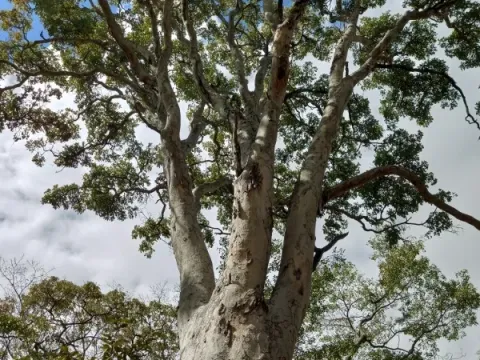
Afrormosia
Afrormosia
Afrormosia (scientific name Pericopsis elata) is a prominent tree species belonging to the Fabaceae family. Widely recognized in the international timber market as "African teak," this species is indigenous to the humid tropical forests of Central and West Africa, thriving in countries such as Cameroon, Ghana, and the Democratic Republic of Congo.
What the section contains

Afrormosia
This species demands specific edaphic and climatic conditions, favoring nutrient-rich, deep soils that offer excellent drainage. As a tropical crop, it thrives in environments characterized by high annual rainfall and consistent, warm temperatures that remain steady throughout the year without significant seasonal drops.
Botanically, Afrormosia is a large, slow-growing tree that can exceed 40 meters in height. Its structure is characterized by a straight, cylindrical bole and a spreading canopy. The slow growth rate is a crucial factor in the physical properties of its wood, resulting in high density and natural durability.
Silvicultural management of Afrormosia requires careful site selection and early-stage protection. Saplings are sensitive to extreme competition and require specific light conditions, often necessitating a nurse-tree system or careful thinning of surrounding vegetation to ensure the development of a healthy, high-quality trunk.
The timber of Afrormosia is highly prized for its exceptional strength, dimensional stability, and resistance to decay and insects. It is extensively used in high-end joinery, luxury furniture, boat building, and flooring, providing a sustainable, high-value alternative to other endangered tropical hardwoods when sourced legally.
The primary threat to Afrormosia is habitat loss and the long-term impact of logging operations that exceed the species' natural regeneration capacity. Due to its slow growth cycle, it is classified as a vulnerable species and is subject to stringent international trade regulations under CITES.
Pathological threats include various fungal pathogens that affect the root systems and vascular tissues of the trees in overly saturated soil conditions. Furthermore, stem-boring insects can cause structural damage to the standing timber, significantly reducing the commercial grade of the wood during the harvest phase.