
Aeginetia pedunculata
Aeginetia pedunculata
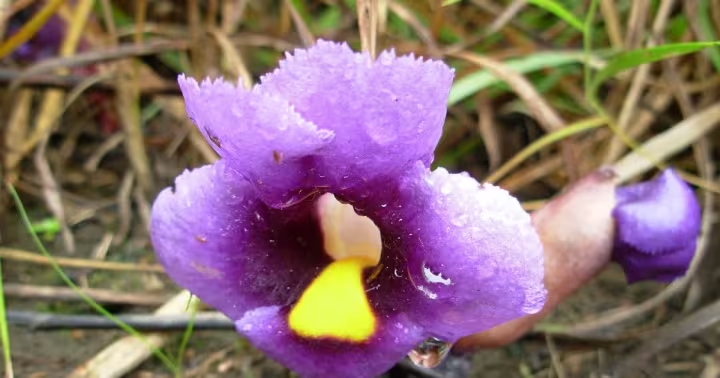
Description
Growing requirements
Aeginetia pedunculata is an obligate root parasite belonging to the Orobanchaceae family. It lacks chlorophyll and relies entirely on its host plant for water, minerals, and organic nutrients, which it extracts using specialized organs called haustoria.
The native distribution of this species spans across tropical and subtropical regions of Asia. It is commonly found in damp, humid environments, often infesting wild grasses and cultivated cereals such as rice and sugarcane, which provide the necessary hosts for its survival.
Botanically, the plant is characterized by its large, showy flowers and the total absence of foliage leaves. The stem is generally short, and the entire plant emerges from the ground only during its reproductive phase to bloom and disperse seeds.
Germination of Aeginetia seeds is strictly triggered by chemical exudates, particularly strigolactones, released by the roots of a compatible host plant. Without these signals, the seeds can remain dormant in the soil for several years, waiting for a suitable host.
From an agricultural standpoint, it has no economic use and is classified as a significant weed. Its parasitic nature diverts essential resources from crop plants, leading to severe yield reductions and stunted plant development in infested fields.
Main diseases and pests
The primary threat posed by Aeginetia pedunculata is its negative impact on cereal production, particularly in paddy fields. By tapping into the host's vascular system, it causes dehydration and nutrient deficiency, making the crops susceptible to other diseases.
Integrated pest management strategies are crucial for controlling this parasite. Crop rotation is the most effective approach, as replacing the host species with non-host crops prevents the parasite from completing its life cycle and reduces the soil seed bank.
Chemical control remains difficult due to the physiological connection between the parasite and the host. Research is currently focused on finding selective herbicides that can target the parasite's developmental stages without causing phytotoxicity to the main crop.
Sanitation practices are vital to prevent the spread of seeds. Since the seeds are extremely small and easily dispersed by wind and irrigation water, farmers must identify and remove infected plants manually before the capsules burst to release mature seeds.
Biological control research explores the use of natural enemies, including specific insects and fungi, which may weaken the parasite. These sustainable methods are being investigated as alternatives to chemical interventions to ensure the long-term health of the ecosystem.