
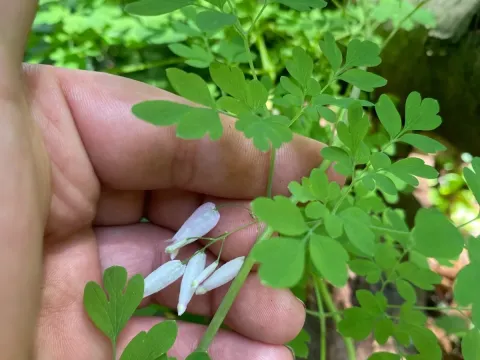
Adlumia
Adlumia
The propagation of Adlumia is typically achieved through seeds, which require stratification to break dormancy and ensure successful germination.
What the section contains


Adlumia
Sowing should take place in late autumn for wintering outdoors or in early spring after chilling the seeds in a refrigerated environment.
Since the seeds are very small, they should be lightly covered with soil rather than buried deep to receive the necessary light exposure.
The germination period can be extended and uneven, requiring patience and a consistently moist growing medium to support early development.
When starting seedlings indoors, use biodegradable pots to minimize root disturbance during the final transplanting process in the garden.
Adlumia, commonly known as climbing fumitory, is a biennial herbaceous climber belonging to the Papaveraceae (poppy) family.
It thrives in partial shade conditions, preferring cool environments that mimic its natural habitat in moist, rocky woodlands.
The plant demands rich, well-draining soil that is consistently moist; organic matter enrichment is highly recommended for optimal vitality.
As a climbing plant, Adlumia uses its sensitive leaf petioles to anchor itself to fences, trellises, or adjacent shrubbery.
Protection from extreme heat and drying winds is essential, as the foliage is delicate and prone to scorching in direct sunlight.
Fungal pathogens such as powdery mildew or root rot can manifest if the air circulation is poor or if the soil remains excessively waterlogged.
Aphids are the most common insect pests, feeding on the tender tips and potentially causing the leaves to curl or yellow prematurely.
Spider mites may become problematic during periods of low humidity, leading to stippling on the leaves and a general decline in vigor.
Slugs and snails frequently target the succulent juvenile leaves of the plant, which can result in significant aesthetic damage.
- Maintain appropriate spacing to promote airflow.
- Monitor foliage weekly for signs of infestation.
- Apply mulch to keep root zones cool and retain soil moisture.