
Fairchild actinidia
Actinidia x fairchildii Rehder
Description
Growing requirements
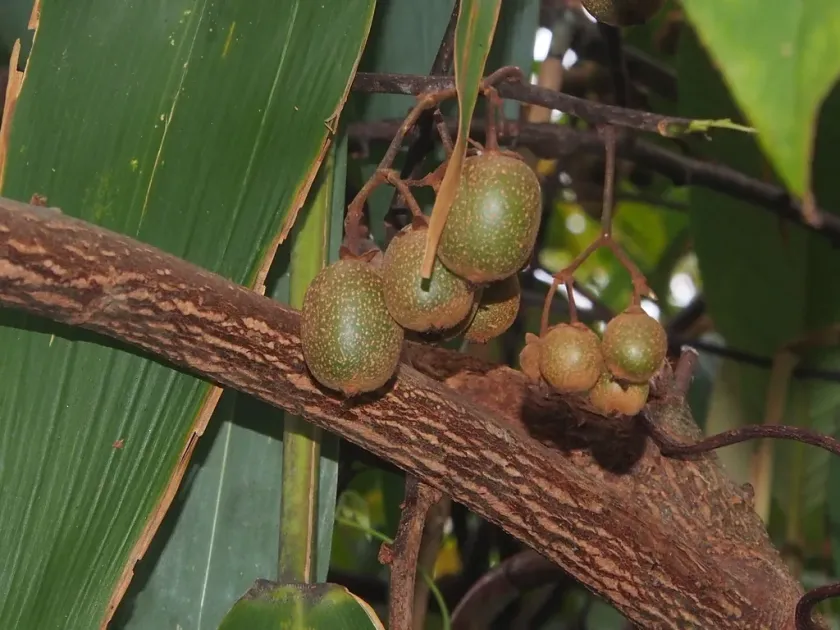
Fairchild actinidia (Actinidia × fairchildii) is a distinct interspecific hybrid originating from a cross between Actinidia arguta and Actinidia purpurascens. Belonging to the Actinidiaceae family, it manifests as a vigorous, woody vine characterized by rapid growth rates and dense foliage, making it a unique botanical specimen.
The successful cultivation of this species requires a location with partial shade or filtered sunlight, as intense exposure can dehydrate the leaves. Soil conditions are critical: the vine thrives in fertile, well-draining, slightly acidic to neutral loam that remains consistently moist without becoming waterlogged.
Being a climbing vine, Fairchild actinidia mandates the installation of sturdy, permanent supports such as trellises or arbors. Proper spacing is necessary to allow for optimal air circulation, which is essential for the plant's overall health and the prevention of humidity-related physiological stress.
In terms of climate, the species shows moderate hardiness but prefers regions without severe, prolonged frost. In cooler zones, protective mulching around the root zone is highly recommended to maintain soil temperature and moisture levels, especially for young vines that are still establishing their structure.
Maintenance practices center on annual pruning performed during late winter or summer to manage the vine's reach and promote fruiting. By removing dead or crossing branches, the gardener can improve light penetration into the interior of the plant, which enhances the overall development of the vine.
Yield
The agricultural value of Fairchild actinidia is primarily derived from its fruit production. The berries are valued for their high vitamin C content and unique flavor profile, often utilized in artisanal food processing or consumed fresh, providing a valuable source of nutrients in orchard or home garden settings.
Main diseases and pests
The primary threats to this crop involve fungal pathogens that flourish in stagnant air and damp conditions. Managing the canopy through strategic pruning and ensuring adequate drainage around the root system are the most effective prophylactic measures to keep the vine resilient against common garden diseases.