
Hybrid purple actinidia
Actinidia purpurea x Actinidia arguta
Description
Growing requirements
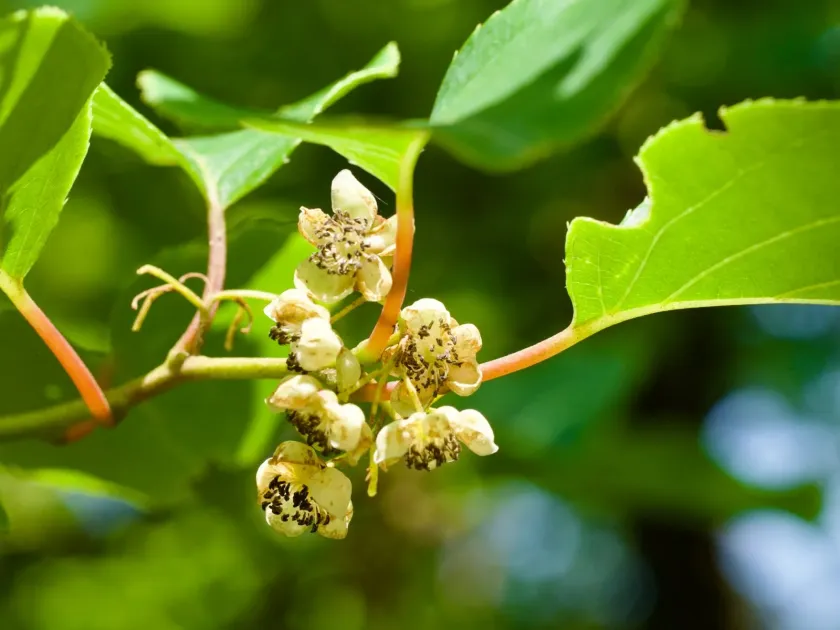
Hybrid purple actinidia (Actinidia purpurea x Actinidia arguta) is a robust, perennial deciduous vine belonging to the Actinidiaceae family. It is a highly valued horticultural cultivar developed to combine the cold hardiness of arguta species with the aesthetic and nutritional qualities of purple-fleshed varieties.
This plant thrives in locations with full sun to partial shade. Protection from strong, drying winds is essential, as the vine's rapid growth and thin leaves can suffer damage in exposed conditions. Ideally, planting near southern-facing walls or fences provides the necessary microclimate for optimal development.
The soil requirements for this crop involve well-drained, fertile, and slightly acidic conditions. Actinidia plants are sensitive to waterlogging, which can cause root rot; therefore, ensuring high permeability in the planting pit is a critical step in the successful establishment of the vine.
Consistent moisture is key to success, particularly during the peak growing season when the vine produces numerous succulent shoots and berries. Mulching the base of the vine is highly recommended to maintain soil moisture levels and suppress weed competition throughout the warmer months.
Trellising is non-negotiable for hybrid actinidia, as the plant is a vigorous climber that needs proper support to structure its biomass. Regular pruning, performed in late winter or summer, helps maintain the plant's shape, improves air circulation, and encourages better fruit coloration through increased light exposure.
Yield
The primary use of the hybrid purple actinidia is for the production of vitamin-rich berries, which are highly regarded for their unique flavor profile and health benefits. These fruits are typically consumed fresh, although they also perform exceptionally well in gourmet jams, jellies, and various culinary applications.
Main diseases and pests
Cats are arguably the most significant pest for young vines, as they are strongly attracted to the scent of the plant, which often leads to the destruction of bark and new growth. Protective mesh or wire cages placed around the trunk for the first two or three years are standard procedures for growers.
Common pathological issues include leaf spots and fungal infections, which are more prevalent in environments with stagnant air or poor drainage. Maintaining a proper training system and avoiding overcrowding within the vine canopy are the best defensive strategies against such botanical health concerns.