
Trailing Ground-berry
Acrotriche prostrata
Description
Growing requirements
Acrotriche prostrata, commonly known as the trailing ground-berry, is a hardy evergreen shrub belonging to the Ericaceae family, specifically the Epacridaceae subfamily. It is native to the southeastern parts of Australia, particularly thriving in coastal heathlands.
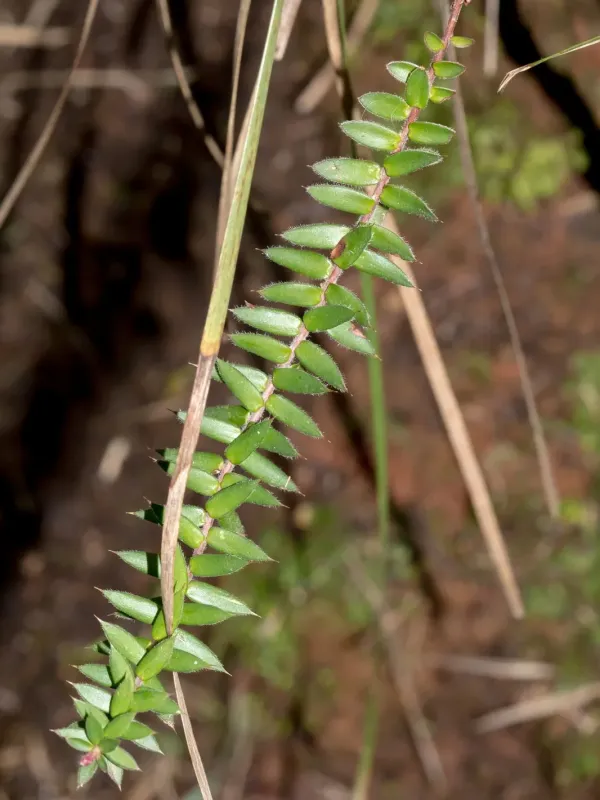
The plant is characterized by its prostrate growth habit, forming low-lying mats of foliage that spread along the ground. Its leaves are small, narrow, and often tipped with a sharp point, reflecting its adaptation to dry and nutrient-poor environmental conditions.
Cultivation of this species requires well-draining, acidic, and sandy soil. It is poorly suited for heavy clay soils, which can lead to root suffocation. Incorporating organic matter into the substrate is essential to support the natural mycorrhizal associations required for growth.
Climate requirements include mild to cool temperatures and sufficient humidity. While the plant can tolerate some light exposure, it thrives best in locations with partial shade, especially during the peak heat of the Australian summer.
Regular maintenance is minimal once the plant is established. However, irrigation must be carefully managed to maintain consistent moisture without inducing waterlogging, which is the most frequent cause of mortality in cultivated specimens.
Main diseases and pests
The most significant threat to Acrotriche prostrata is Phytophthora root rot, a soil-borne pathogen that thrives in wet, warm conditions. This disease is highly destructive and necessitates strictly controlled watering practices to prevent outbreaks.
Pests such as scale insects and aphids may occasionally infest the dense foliage of the plant. Integrated pest management, focusing on early detection and the use of natural predators, is preferred over the application of chemical pesticides.
Nutrient deficiency is another common issue, manifested as yellowing of leaves (chlorosis). Because this species is adapted to low-phosphorus soils, care should be taken to use fertilizers specifically formulated for native Australian plants to avoid root damage.
Competitive weeds can quickly overwhelm young plants, as their growth rate is relatively slow. Mulching the area around the plants can help suppress weeds and maintain soil moisture, provided the mulch is kept away from the crown to prevent decay.
Frost sensitivity, while moderate, can cause damage to new, succulent growth. In regions prone to heavy frost, protective covering or selecting microclimates within the garden is necessary to ensure the plant survives the winter months.