
Acaciella glauca
Acaciella glauca
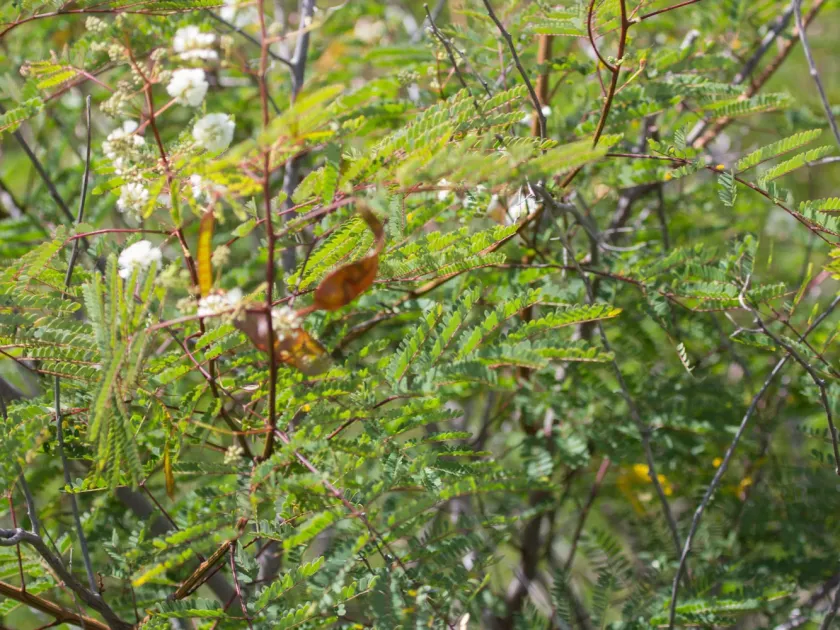
Description
Sowing dates
Acaciella glauca is primarily propagated through seeds. Because the seeds possess a hard, protective coat, scarification is essential prior to sowing to ensure rapid and uniform germination in the field.
In its native range, planting is timed with the beginning of the rainy season, which provides the necessary moisture for the establishment of the seedlings' root systems before the dry season begins.
For nursery production, seeds are sown into individual containers to facilitate root development and minimize transplant shock when moving plants to their permanent locations.
Spacing between plants should be approximately 1.5 to 2 meters to ensure adequate airflow and prevent competition for light and water as the shrubs develop their canopy.
The optimal temperature range for germination and early vegetative growth is between 22 and 28 degrees Celsius, which supports vigorous development of the young plants.
Growing requirements
Acaciella glauca belongs to the Fabaceae family and is known for its fast-growing nature. It is a nitrogen-fixing shrub that plays a vital role in improving soil fertility in agricultural systems.
The species thrives in well-drained soils, specifically sandy loams or light loams. It does not tolerate waterlogging, as excessive soil moisture can easily lead to root rot and other fungal diseases.
High sunlight exposure is crucial for this species. While it is moderately drought-tolerant, consistent access to moisture is necessary to achieve the maximum possible biomass for fodder production.
As a tropical and subtropical plant, it has no frost tolerance. It must be protected from freezing temperatures, which can be fatal to the above-ground portions of the shrub.
Soil nutrient management is important, with responses to phosphorus and potassium fertilization showing significant improvements in branching and overall foliage production.
Yield
The primary agricultural use of Acaciella glauca is as a high-protein forage source for livestock. Its leaves and tender shoots are highly nutritious and provide essential supplementation for ruminants.
Biomass yield is highly dependent on pruning frequency. Systematic cutting of the branches stimulates lateral growth, allowing for multiple harvests within a single growing season.
Under optimal conditions and intensive management, the species can yield between 5 and 10 tons of dry matter per hectare, making it a valuable candidate for tropical forage systems.
Beyond its use as animal feed, the species is effective as a cover crop or green manure, contributing to soil health through its organic matter contribution and nitrogen-fixing ability.
Its ability to shade the soil effectively suppresses weed growth, which significantly reduces the need for manual or chemical weed control in established plantations.
Main diseases and pests
The most common threats to this crop include fungal infections that manifest as leaf spots, particularly in humid, poorly ventilated conditions where foliage remains wet for extended periods.
Pests, such as various weevils and leaf-eating caterpillars, can cause significant damage to young shoots, potentially reducing the overall quality and quantity of the forage yield.
Integrated pest management strategies, such as maintaining correct planting density and removing infected branches, are recommended to minimize the impact of disease and insect outbreaks.
Root-knot nematodes can pose a challenge in depleted or sandy soils, leading to stunted growth and yellowing of the leaves, which requires soil health monitoring to prevent.
Regular field scouting is essential to identify early signs of stress or infestation, allowing farmers to intervene quickly and preserve the productivity of the forage plots.
Harvesting
Harvesting is typically conducted manually or using mechanical mowers. It is important to ensure a clean cut that does not splinter the woody stems to maintain the plant's health.
The ideal time for harvesting is during the peak of the vegetative growth phase, specifically before the plant enters its flowering stage, to ensure the highest protein content.
Harvested material can be fed to livestock immediately in a fresh state or processed into hay through controlled drying in ventilated areas to preserve its nutritional value.
Rotational harvesting is recommended to ensure that individual plants have enough recovery time to regenerate their foliage between cuts, preventing over-exploitation of the stand.
Proper harvesting techniques ensure the longevity of the plantation, allowing the shrubs to remain productive for several years under consistent management practices.