
Acaciella angustissima
Acaciella angustissima
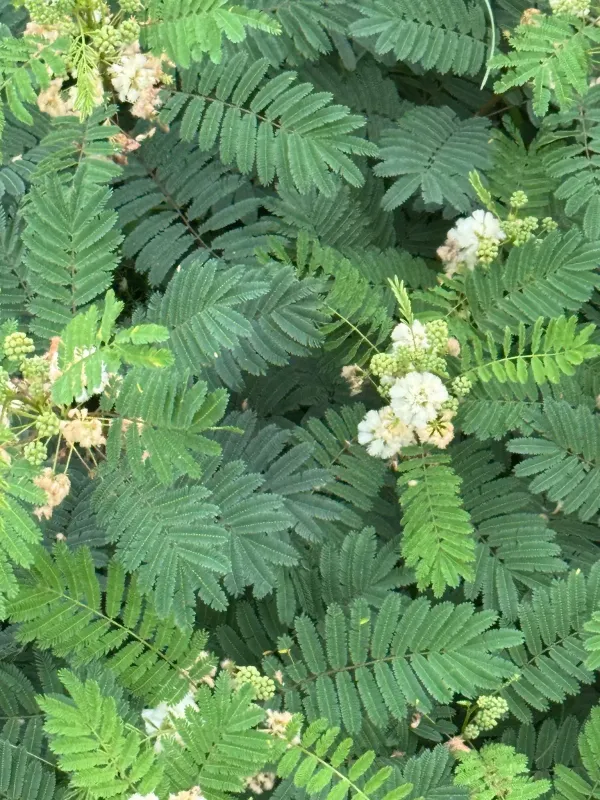
Description
Sowing dates
Sowing Acaciella angustissima requires careful preparation, as the seeds have a hard coat that often inhibits germination. Scarification is highly recommended to improve water uptake, and the use of specific rhizobial inoculants can significantly boost the plant's nitrogen-fixing capacity from the very beginning.
The optimal timing for planting depends on local climatic conditions, typically following the onset of the rainy season in tropical regions or after the risk of frost has passed in milder climates. Direct seeding is common, though greenhouse-raised seedlings may be used for establishing more uniform stands in smaller areas.
Spacing requirements vary depending on the intended use; denser spacing (approximately 0.5–1 meter) is generally preferred for biomass or forage production, while wider spacing is utilized for wood production. Proper row orientation should be considered to ensure maximum light penetration for all plants.
The seeds should be sown at a shallow depth of 1–2 cm. Excessive depth can prevent emergence, while planting too shallowly may lead to desiccation. Consistent soil moisture during the first few weeks is crucial to ensure successful establishment of the root system.
Weed management during the initial growth phase is essential, as the seedlings are relatively slow-growing and can be easily outcompeted. Regular inter-row cultivation or mulching can help protect the young plants until they gain sufficient height and vigor to shade out weeds.
Growing requirements
Acaciella angustissima is a perennial legume originating from North and Central America, well-regarded for its extreme adaptability. It flourishes in a variety of soil types, including those that are rocky, acidic, or nutrient-poor, making it an excellent candidate for land reclamation projects.
One of its primary strengths is its exceptional ability to fix atmospheric nitrogen, which enhances soil fertility for itself and surrounding plants. This characteristic, combined with a deep taproot system, gives the plant high drought tolerance, allowing it to survive in areas where many other crops would fail.
The plant is highly photophilic and requires full sun exposure to maintain high productivity. While it is quite resistant to heat, it is sensitive to severe cold, limiting its cultivation to tropical, subtropical, and warm temperate zones where frost is minimal or non-existent.
Regarding soil, it prefers well-drained environments but is notably tolerant of varying moisture levels. It can withstand short periods of waterlogging, although long-term soil saturation should be avoided to prevent root diseases and ensure healthy nodulation by nitrogen-fixing bacteria.
Overall, Acaciella angustissima is a low-input crop that requires little maintenance once established. Its ability to thrive under minimal management makes it a sustainable option for rural farmers looking for reliable sources of fodder or biomass with low financial overhead.
Yield
The primary agricultural use of Acaciella angustissima is as a high-protein forage crop. Its foliage is rich in nutrients, providing essential sustenance for livestock, particularly ruminants, during dry seasons when other sources of grazing material may be scarce.
Beyond forage, this species is increasingly valued in agroforestry systems for the production of biomass for fuel. Its rapid growth rate and ability to coppice—regenerating stems from the base after cutting—ensure a steady supply of wood for charcoal, construction, or paper pulp production.
The plant also provides significant environmental benefits, including soil erosion control and stabilization of slopes. As a nectar-producing plant, it supports healthy honeybee populations, adding an extra layer of value for agricultural operations that incorporate beekeeping.
Yield productivity is greatly enhanced by regular harvesting cycles. Pruning not only provides the necessary biomass but also stimulates the plant to produce new, tender shoots, which are often of higher nutritional quality for grazing animals compared to older, woody stems.
Management of soil fertility through periodic application of phosphorus can further improve biomass yields. By maintaining an active and healthy stand, farmers can achieve multiple harvests annually, ensuring a consistent output throughout the growing season.
Main diseases and pests
Acaciella angustissima is generally robust and less prone to severe disease outbreaks than many intensive food crops. However, dense stands in humid conditions may be susceptible to fungal infections that manifest as leaf spotting, which can reduce the overall quality of forage.
Insect pests, particularly various beetle and caterpillar species, can feed on the tender leaves and shoot tips. In many cases, natural predators are sufficient to keep pest populations below economic damage thresholds, particularly when a diverse ecosystem is maintained.
Cultural management is the primary defense against threats; maintaining adequate spacing and pruning regularly ensures better air circulation within the canopy. This reduces humidity levels around the foliage, making the environment less hospitable for fungal pathogens.
Integrated pest management (IPM) strategies are recommended if significant outbreaks occur. This includes the use of biological control agents and selective, environmentally friendly pesticides that preserve beneficial insects like pollinators and natural enemies of the pests.
Regular field scouting is advised during peak growth phases. Detecting early signs of infestation or disease allows for localized interventions, which prevents widespread damage and maintains the longevity of the plant stand across the entire plot.
Harvesting
Harvesting for forage is performed using mechanical cutting or manual pruning. To ensure the plant remains productive, it is essential to leave enough stem base for the plant to regenerate. Harvesting at the right stage of maturity maximizes the protein content of the foliage.
When harvesting for timber or fuel, the stems are typically cut after several years of growth once they have reached the target diameter. Coppicing techniques allow for repeated harvests from the same rootstock, making the system highly efficient and cost-effective over the long term.
Seed collection requires careful observation of the maturation cycle. Pods should be harvested when they turn brown but before they begin to shatter and disperse their seeds. This ensures a higher recovery rate and minimizes losses to the ground.
Post-harvest handling of seeds involves drying them in a cool, shaded environment to preserve viability. Once dried, they should be stored in airtight containers to prevent moisture absorption and pest contamination until they are needed for the next planting season.
Mechanization of the harvest process is highly recommended for larger plantations. Utilizing appropriate machinery for cutting, bundling, and transporting the biomass can significantly improve the efficiency of the operation and lower the cost of production per ton of harvestable material.