
How to choose fertilisers for flowers
Plants need nutrients to grow and develop fully. Calcium, potassium, phosphorus, magnesium and nitrogen are important trace elements, and any shortage shows immediately in a plant's condition and appearance.
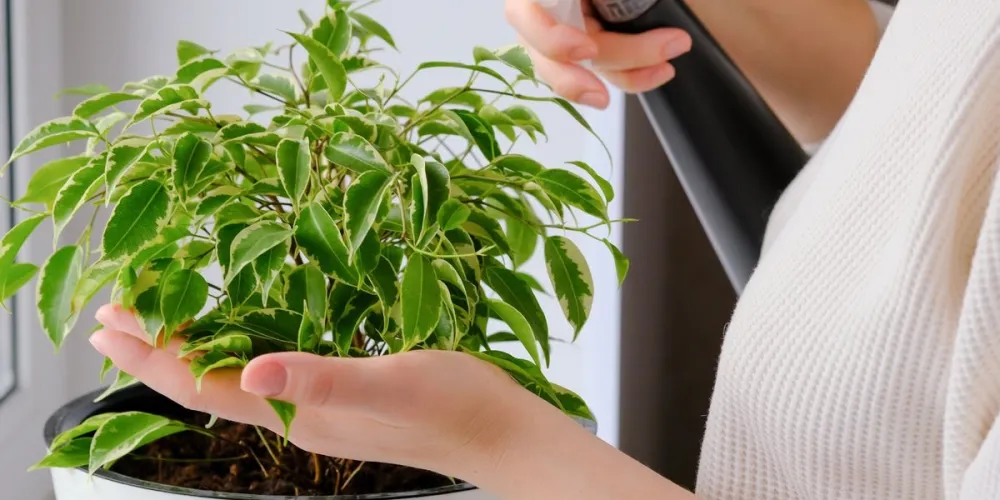
Plants need nutrients to grow and develop fully. Calcium, potassium, phosphorus, magnesium and nitrogen are important trace elements, and any shortage shows immediately in a plant's condition and appearance. These are the components behind healthy growth and flowering in both garden and indoor plants.
Weak stems, faded colour, dropped leaves and the onset of disease are all signs that the plant is short of feeding. When using fertilisers for flowers, take into account the variety, the plant's condition, its stage of development and the rules of care.

Types of fertiliser
Fertilisers are either synthetic or natural.
Mineral
Mineral fertilisers consist of salts and dissolve in water. The plant absorbs them easily, but they also travel quickly into the deeper soil layers, beyond the reach of the roots.
Features of this type:
-
the feed comes as granules, powder, capsules or solutions. Always study the composition when buying, and look for a note that it contains no chlorine or nitrates;
-
a fertiliser contains one or several nutrients. The label must state which they are and in what proportion;
-
a universal product suits many flowers. Those who favour particular species, however, should buy specialised formulations;
-
liquid minerals are more popular than dry ones because they are ready to use straight away. They serve not only for watering but also for spraying foliage, though they cost considerably more than granular formulations;
-
mineral fertilisers are applied in spring, summer and autumn. The main thing to remember is that an excess is far worse than a shortage.
Slowed leaf growth and spots appearing on the foliage are a sign that you should stop adding nutrients to the soil for a while.
Organic
Peat, manure, poultry droppings, compost and tree bark are organic matter. The risk of overdosing is small, because they release nutrients to the flowers slowly; on the other hand, they only begin to work several days or weeks after being added to the substrate.
Features of natural fertilisers:
-
organic matter is safe and non-toxic, suits any substrate and improves its fertility. The plant receives plenty of oxygen and moisture, and its resistance and yield both improve;
-
this kind of feed can be bought or gathered from your own garden, from the woods and elsewhere. It should be sterilised before being added to the soil;
-
a small drawback of natural nutrients is the unpleasant smell. It lasts a few hours and then disperses;
-
when repotting, a mixture of soil with humus or compost is often used. Fertiliser is applied once a month.
For plants that need no special feeding programme, a universal feed will do. It contains the important trace elements and organic additives needed to improve soil structure. There is no need to calculate proportions — just follow the instructions.
Universal fertilisers are divided into groups: for foliage plants, for flowering plants, for indoor plants and for outdoor plants. Using them benefits root development, leaf growth and the length of flowering.

Applying fertiliser
Even healthy flowers need nutrients, because they draw the useful substances out of the soil fairly quickly. If that shortfall is not made good, the planting will die.
Six simple rules should be followed when feeding:
-
During dormancy — from November to March — the soil is saturated with micro- and macronutrients.
-
Food waste and home-made fertilisers are ruinous for flowers.
-
Plants that are diseased or infested with pests are not fed.
-
All synthetic and natural components are applied to a substrate that was watered two or three hours beforehand.
-
A mineral solution is prepared immediately before feeding, because some elements break down quickly.
-
Plants are fed not only by watering at the root but also by spraying the leaves. The second method needs less solution. The day after the treatment the leaves are rinsed with clean water.
It is better to feed a plant with universal mineral substances, applying organic matter from time to time. The main thing is to keep an eye on the condition of the planting.
Editorial team agronom.info
Materials are prepared by the portal's agronomists and editors. We use only trusted sources: Ukrainian agricultural universities, variety registries, open scientific publications.
Related articles

Not yet comments. Be the first!
Comments · 0