
How to Choose a Hose for Drip, Manual, and Pump Irrigation
Watering on a plot can be done in different ways: through a drip system, manually with a sprayer, or using a pump from a tank, well, borehole, or reservoir. Therefore, when choosing a hose, it is important to consider not…
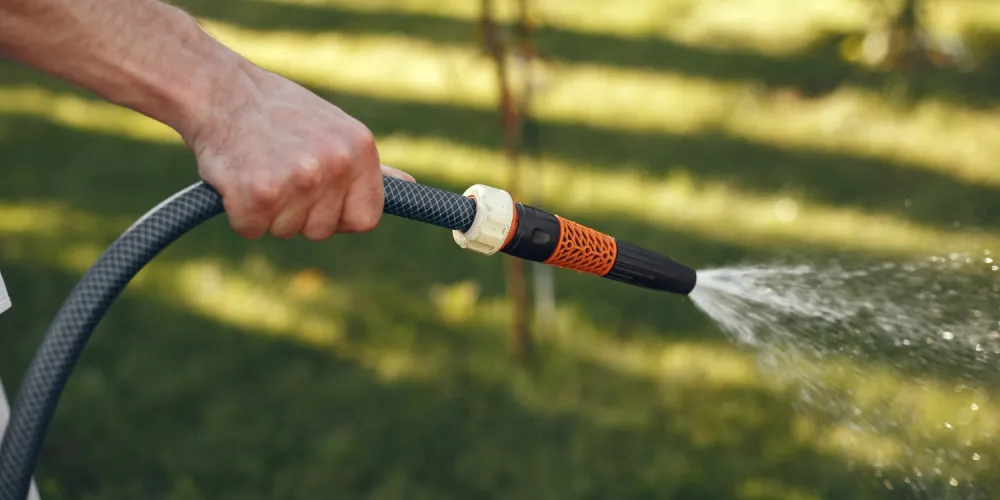
Watering on a plot can be done in different ways: through a drip system, manually with a sprayer, or using a pump from a tank, well, borehole, or reservoir. Therefore, when choosing a hose, it is important to consider not only its length and diameter, but also the operating conditions, water pressure, material flexibility, and resistance to kinking. If you need a reliable option for regular use, it is worth paying attention to products made by a hose manufacturer, since such products are usually designed for specific loads and different use scenarios in the household.
For a vegetable garden, greenhouse, or garden, one universal hose is not always the best solution. Drip irrigation requires a stable water supply at low pressure, manual watering depends on how convenient it is to move around the plot, while pump irrigation creates increased load on the hose walls. That is why, before buying, it is advisable to understand in advance where, how often, and with what equipment the hose will be used.
Hose for drip irrigation
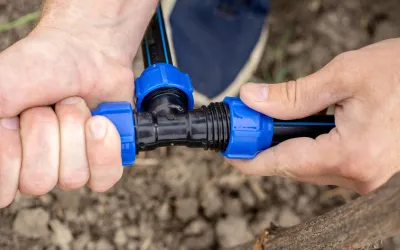
Drip irrigation is used where water needs to be supplied gradually and precisely to the root zone of plants. It is convenient for greenhouses, garden beds, berry plantations, shrubs, and young seedlings. In such a system, what matters most is not high throughput, but even water distribution.
For drip irrigation, hoses and tapes are usually chosen that hold their shape well, do not crack in the sun, and are suitable for connection to the main line. If the plot is large, you need to take into account the length of the rows and pressure loss over distance. The longer the line, the more carefully you should approach the diameter and material quality.
Main requirements for a drip irrigation hose:
- UV resistance;
- compatibility with fittings and drippers;
- stable operation at low pressure;
- no sharp kinks at turns;
- sufficient strength for seasonal use;
- easy system flushing.
Hose for manual watering
Manual watering remains one of the most convenient ways to care for plants, especially if the plot is small or the crops require different watering modes. For this option, flexibility, low weight, and comfort in use are important. The hose often has to be carried, pulled between beds, and connected to nozzles, sprayers, and watering guns.
A hose that is too stiff will be inconvenient for daily use. One that is too soft may kink, block the water flow, and wear out quickly. Therefore, for manual watering, it is better to choose reinforced models that remain flexible but do not lose their shape under pressure.
Length is also important. A short hose will limit the working radius, while an excessively long one will be heavy, difficult to store, and may reduce water pressure. The optimal option is selected according to the size of the plot with a small reserve, so that the connection does not have to be constantly moved.
Hose for pump irrigation
Pump irrigation is used when water is supplied from a barrel, reservoir, well, borehole, pond, or another source. In this case, the load on the hose is higher than with a regular connection to the water supply. It is especially important to consider working pressure, diameter, wall thickness, and type of reinforcement.
For supplying water from a pump, you should not choose the thinnest and lightest hose. Under increased pressure, it may expand, kink, or fail more quickly. If the pump is used regularly, it is better to choose a strong reinforced hose designed for pressure water supply.
For the suction line, a regular watering hose is usually not suitable. A special pressure-suction hose is needed here, one that does not collapse when drawing water and can withstand operation with pumping equipment. This option is especially relevant for households where water is taken not from the central water supply, but from open or autonomous sources.
Hose diameter and water pressure
The diameter directly affects the volume of water that passes through the hose per unit of time. For manual watering on a small plot, a standard garden diameter is often sufficient. For pump supply, long lines, and fast filling of tanks, a larger internal passage may be required.
If you choose a hose that is too narrow for a powerful pump, the equipment will operate inefficiently, and the pressure in the system may be distributed incorrectly. If you take a hose that is too wide for weak pressure, the stream will be weak, especially over a long distance.
When selecting the diameter, you need to consider the water source, the distance to the watering area, pump power, and type of nozzle. For drip irrigation, compatibility with the main line and drip elements is important; for manual watering, convenience matters; for pump irrigation, throughput and pressure resistance are key.
Material and reinforcement
The hose material determines its flexibility, service life, and behavior at different temperatures. PVC hoses are often used for garden and vegetable garden watering because they are affordable, convenient, and available in different strength options. Thermoplastic elastomer hoses tolerate temperature changes well, remain more elastic in cool weather, and are suitable for intensive seasonal use.
Reinforcement increases the strength of the product. It helps the hose withstand pressure, twist less, and retain its working shape longer. For simple manual watering, you can choose a lightweight reinforced model, while for pump supply, it is better to consider stronger multilayer options.
It is also worth paying attention to UV resistance. If the hose often lies in the sun, low-quality material can quickly become stiff, crack, or lose elasticity.
Length and storage convenience
The hose length should match the actual distance from the water source to the farthest point of the plot. Some reserve is needed, but it should not be excessive. The longer the hose, the heavier it is and the more difficult it is to coil, carry, and store.
For a greenhouse, it is often more convenient to use a separate short hose or a stationary drip line. For a garden or vegetable garden, a longer option with a reel or holder can be chosen. For pump irrigation, it is important to avoid unnecessary length if it reduces water supply efficiency.
It is better to store the hose coiled, without sharp bends or constant pressure on the walls. For winter, it is advisable to drain the water from it and store it in a dry place, especially if the material is not designed for frost.
Mistakes when choosing a watering hose
One common mistake is buying a hose based only on price. An inexpensive model may be suitable for occasional watering of a small flower bed, but it can quickly fail when used with a pump or during constant use on a large plot.
Another mistake is ignoring working pressure. Hoses may look similar on the outside, but their strength and purpose differ. If you use a regular garden hose where a pressure hose or a pressure-suction hose is needed, its service life will be noticeably shorter.
You should also not forget about connections. Even a high-quality hose will work poorly if the fittings, adapters, and nozzles are chosen incorrectly. Leaky connections reduce pressure, cause leaks, and make daily watering more difficult.
Editorial team agronom.info
Materials are prepared by the portal's agronomists and editors. We use only trusted sources: Ukrainian agricultural universities, variety registries, open scientific publications.
Related articles
Not yet comments. Be the first!
Comments · 0