
Fitting a door handle: step-by-step instructions and advice
Find out how to fit a door handle yourself: step-by-step instructions, advice on choosing and maintaining one, and solutions to the usual problems. Save on a tradesperson without losing quality of installation.
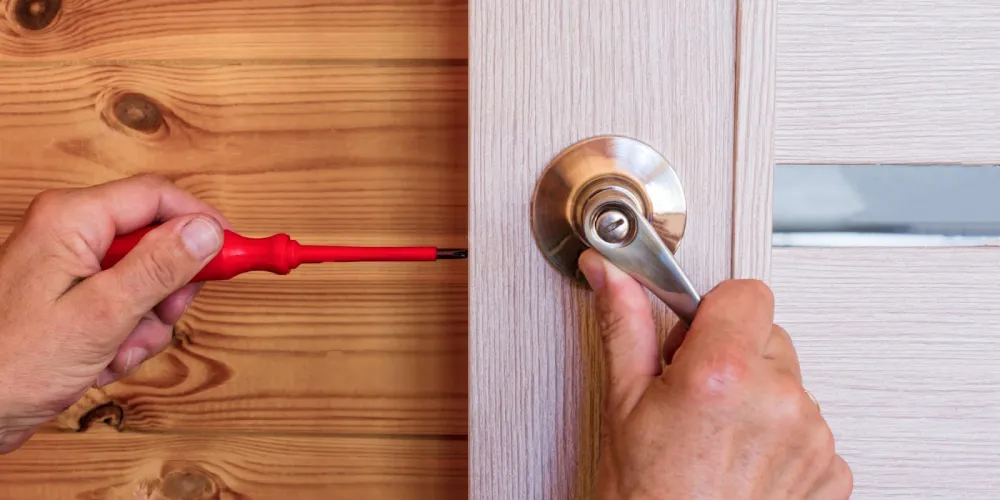
Fitting a door handle: the basics and what matters
A door handle is not merely a functional part but an important element of an interior, affecting both the safety and the convenience of a door. Fitting it correctly guarantees that it will last and that the door will keep its looks.
Why correct fitting matters
A properly fitted door handle provides:
- Reliable opening and closing without undue effort
- Better security for the room
- A long service life for the mechanism
- An undamaged door leaf
- An attractive appearance
A brief overview of door handle types
Before fitting, it is important to choose the right type of handle. The main kinds are:
- Lever handles: the classic choice for interior doors
- Knob handles: often used together with locks
- Pull handles: popular on entrance and sliding doors
- Flush handles: recessed into the door leaf for a minimalist look
- Handles with a lock: combined devices for extra security
The type you choose depends on the kind of door (interior, entrance, uPVC), its construction and your own taste in design. A well-chosen and well-fitted handle will improve how the door works and underline the style of your interior.
Preparing to fit a door handle
Good preparation is the key to fitting a handle successfully. This stage covers choosing tools and materials as well as picking a handle to suit your door.
Tools and materials you will need
- Drill or cordless screwdriver: for making holes in the door
- A set of drill bits: various diameters for different handle types
- Screwdrivers: cross-head and flat for fixing the parts
- Pencil: for marking out
- Tape measure or rule: for accurate measurements
- Spirit level: to keep the fitting straight
- Fitting template: often supplied with the handle
- Chisel: for trimming the lock mortice (if required)
- Safety glasses and gloves: to work safely
Choosing the right handle for different doors
When selecting a door handle, consider the following:
- Type of door:
- Interior doors suit light lever or knob handles
- Entrance doors call for sturdy, vandal-resistant handles, often with a lock
- uPVC doors need special handles that account for the profile
- Handle material: choose between brass, stainless steel, aluminium or plastic depending on the interior design and how heavily the door is used
- Size and shape: these should match the door and be comfortable in the hand
- Mechanism:
- The classic lever mechanism for most doors
- A knob mechanism for doors with locks
- A sliding mechanism for the corresponding door types
- Design: pick a handle that harmonises with the overall style of the room
Careful preparation and the right choice of handle will make fitting much easier and will ensure your new door furniture works well and lasts.
Step-by-step fitting instructions
The general process
- Preparation: Remove the old handle if there is one. Clean the surface of the door.
- Marking out: Use the template, or measure and mark the hole positions.
- Drilling: Drill the required holes, working carefully.
- Fitting the mechanism: Insert the lock case or latch into the door.
- Mounting the handle: Attach the handle on both sides of the door.
- Checking: Make sure the handle works correctly.
Fitting to an interior door
When fitting a handle to an interior door, bear in mind:
- The thickness of the door — usually less than an entrance door
- The light construction — avoid excessive pressure when drilling
- The type of latch — most often a simple spring mechanism
For interior doors, light-action lever handles are recommended.
Fitting to an entrance door
Fitting a handle to an entrance door needs particular care:
- Use reinforced fixings
- Check the thickness of the door — a special set of extensions may be needed
- Fit additional seals for better insulation
- Where there is a lock, make sure the handle is compatible with the locking system
Fitting to a uPVC door
When working with a uPVC door, remember:
- Use handles made specifically for uPVC profiles
- Drill carefully so as not to damage the internal reinforcement
- Keep the fitting airtight to preserve the door's insulating properties
- Do not overtighten the fixings, or the profile may deform
Important: Whatever the type of door, always follow the handle manufacturer's instructions and observe safety precautions when working with tools.
Fitting particular types of door handle
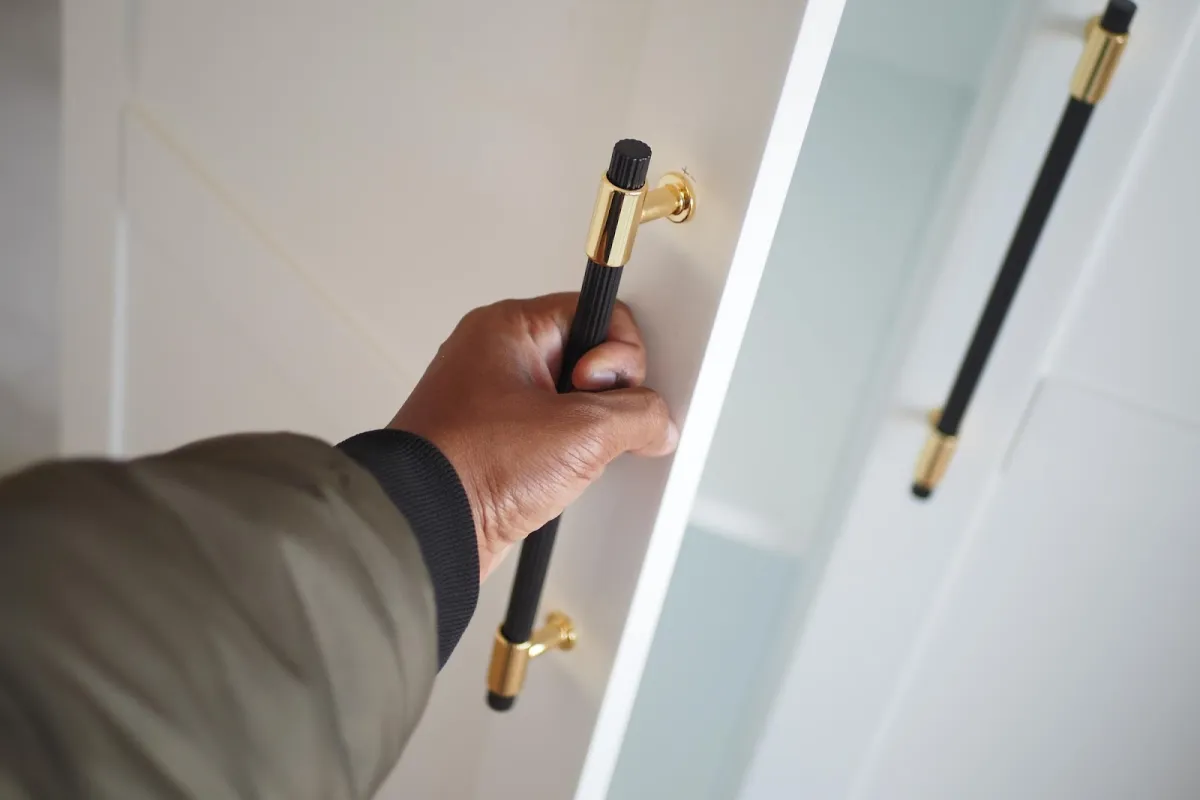
Fitting a handle with a lock
Fitting a door handle with a lock demands particular care and extra steps:
- Preparation: Make sure the door is suitable for a lock (sufficient thickness, no obstructions inside).
- Marking out: Use the template supplied with the lock to mark the holes accurately.
- Drilling: Drill the holes for the handle and the lock cylinder. Take care not to damage the door.
- Fitting the lock case: Insert the case into the prepared mortice in the edge of the door.
- Fitting the cylinder: Install the lock cylinder mechanism.
- Fixing the handle: Attach the handle on both sides of the door, connecting it to the lock mechanism.
- Fitting the escutcheons: Secure the decorative plates.
- Checking operation: Make sure the handle and lock work correctly.
Important: When fitting a handle with a lock, pay particular attention to the compatibility of all components and to their correct position, so that the mechanism works reliably.
Fitting a flush handle
Flush handles require a recess to be cut in the door leaf. The process runs as follows:
- Marking out: Mark the area for the recess clearly on the door.
- Cutting the recess:
- Use a chisel or a dedicated router bit to cut an even recess of the required depth.
- Work carefully so as not to damage the door surface beyond the marked area.
- Preparing the holes: Drill the holes needed for the handle mechanism.
- Fitting the mechanism: Insert the handle mechanism into the prepared recess.
- Mounting the handle: Place the handle in the recess and secure it.
- Finishing: If necessary, cover the visible edges with decorative trim.
Tip: Before starting, make sure the door is thick enough for a flush handle. Use protective tape around the working area to prevent accidental damage to the door surface.
When fitting particular types of handle, always follow the manufacturer's instructions and use the appropriate tools. If you have no experience of this kind of work, it is worth calling in a professional to ensure correct fitting and long, reliable operation.
Common mistakes when fitting door handles, and how to avoid them
Fitting a door handle may look like a simple job, but even small mistakes can lead to serious problems. Here are the most common ones and how to prevent them.
1. Inaccurate marking out
Problem: Imprecise marking can leave the handle skewed or cause the lock to malfunction.
Solution: Always use the template supplied by the manufacturer, or measure and mark the positions carefully before drilling. Check every measurement twice.
2. Mismatched sizes
Problem: Choosing a handle that does not match the door thickness can leave the fixing insecure or parts of the mechanism protruding.
Solution: Measure the thickness of the door before buying. Many manufacturers offer extensions for different door thicknesses.
3. Overtightening the fixings
Problem: Doing the screws up too tightly can damage the door or the handle mechanism.
Solution: Tighten the fixings gently, without excessive force. Use a hand screwdriver for the final turn.
4. Ignoring the manufacturer's instructions
Problem: Every model of handle may have its own fitting particularities; ignoring them leads to poor operation.
Solution: Read the manufacturer's instructions carefully before you start and follow them step by step.
5. The wrong tools
Problem: Using unsuitable tools can damage the door or the handle.
Solution: Use the tools the manufacturer recommends. Make sure drill bits and screwdrivers match the size of the fixings.
6. Skipping the pre-fitting check
Problem: Fitting a faulty handle or using an incomplete set of parts will cause trouble in use.
Solution: Before fitting, check that all the handle's parts are present and sound. Test the mechanism before the final assembly.
7. Disregarding the door material
Problem: Different door materials (wood, metal, uPVC) call for different approaches.
Solution: Take the door material into account when choosing the handle and the fitting method. Use special fixings where necessary.
Conclusion: By avoiding these common mistakes you can ensure the handle is fitted correctly, which guarantees long and reliable service. If you doubt your skills, it is better to call in a professional for a quality job.
What fitting a door handle costs
The price of fitting a door handle varies with a number of factors. Here are the main ones that affect the cost, together with average market rates.
What affects the price
- Type of door: Fitting to an interior door is usually cheaper than to an entrance or specialist door.
- Complexity of the mechanism: Simple lever handles cost less to fit than handles with a lock or electronic systems.
- Door material: Working with wooden doors may cost differently from metal or uPVC.
- Additional work required: If the door needs adjusting, old furniture needs replacing or the leaf needs repair, the total will rise.
- Region and the fitter's level: Prices vary considerably by region and by the tradesperson's qualifications.
Average market rates
Here are approximate prices for fitting various types of door handle:
Type of job / Approximate cost
Simple lever handle on an interior door: 500 – 1,500 roubles
Handle with a lock on an interior door: 1,000 – 2,500 roubles
Fitting a handle on an entrance door: 1,500 – 3,000 roubles
Flush handle (excluding the price of the handle): 2,000 – 4,000 roubles
Electronic handle with a code lock: 3,000 – 7,000 roubles
Note: the prices given are approximate and may vary by region and by the particular tradesperson.
How to keep costs down
- Compare quotes: Get several offers from different tradespeople or companies.
- Do several at once: If handles are needed on several doors, you may get a discount for the volume of work.
- Choose your timing: Outside the renovation season (usually in winter) prices may be lower.
- Prepare it yourself: Where possible, do the preparatory work yourself (removing the old handle, for instance).
- Supply the materials: Sometimes it is cheaper to buy the handle yourself and hand it to the fitter.
Conclusion: When budgeting for a door handle, count not only the price of the handle itself but the cost of fitting it. A quality handle, properly fitted, will serve for years, so economising on the fitting is not always justified. Look for the best balance of price and quality for your needs and means.
Moving into a new home or lost your keys? Order an emergency lock change and be confident in the security of your home
Caring for and maintaining door handles
Proper care keeps door handles looking good and ensures long, reliable service. Here are a few tips to keep yours in excellent condition.
Regular cleaning
Regular cleaning prevents dirt building up and potentially damaging the mechanism.
- Metal handles: Use a soft cloth dampened in warm soapy water. Avoid abrasive cleaners.
- Wooden handles: Wipe with a dry soft cloth. Use dedicated wood care products if needed.
- Plastic handles: A wipe with a damp cloth and drying is enough.
Important: After wet cleaning, always dry the handle thoroughly to prevent corrosion.
Lubricating the mechanism
Regular lubrication keeps the mechanism running smoothly and prevents wear.
- Every 6 to 12 months apply a small amount of lubricant to the moving parts.
- Use silicone grease or a product made for door locks.
- Avoid WD-40 and similar products, as they can wash out the existing lubricant.
Checking and tightening the fixings
Over time the fixings can work loose, leaving play in the handle.
- Check the fixing screws from time to time and tighten them if necessary.
- Do not overtighten, or you may damage the door or the handle mechanism.
Protection from the weather
This matters especially for external door handles:
- Use protective coatings or lacquers to prevent corrosion.
- In coastal areas, service them more often because of the salt air.
- In humid areas, check the mechanism for rust more frequently.
Timely repair and replacement
Do not ignore signs of wear or damage:
- If the mechanism starts to squeak or stick, lubricate it.
- If lubrication does not help, consider replacing the internal mechanism.
- If the outer part of the handle is badly worn or damaged, replace it completely.
Further tips
- Do not overload the handle: Avoid hanging heavy objects on it or using it as a support.
- Be careful with cleaning products: Some aggressive cleaners can damage the handle's finish.
- Protect it during renovation: Mask the handle with painter's tape when decorating.
Conclusion: Regular care and timely maintenance will considerably extend the life of your door handles, preserving both function and appearance. Follow these simple tips and you can avoid replacing them prematurely and save money in the long run.
Conclusion: fitting a door handle
Fitting a door handle may look like a simple job but, as we have seen, it calls for attention to detail and certain skills. Let us sum up the key points to remember.
Key takeaways
- The right choice: Selecting a suitable handle for the type of door and your needs is the first step to a successful job.
- Preparation: Having the necessary tools and preparing thoroughly makes the work much easier.
- Accuracy: Careful measuring and marking out is the key to positioning the handle correctly.
- Following instructions: Every type of handle may have its own particularities, so read the manufacturer's instructions carefully.
- Care: Treating the door and the mechanism gently prevents damage and makes the fitting last.
The advantages of professional fitting
Although many door handle jobs can be done yourself, in some cases calling a professional is justified:
- Experience and skill: Professionals have wide experience of different doors and handles.
- Specialist tools: Tradespeople have all the equipment needed for a quality job.
- A quality guarantee: Professional fitting often comes with a warranty on the work.
- Time saved: What might take you several hours, a professional will do far faster.
- Difficult jobs: With non-standard doors or complex mechanisms, a specialist's experience can be indispensable.
When to call a specialist
Consider bringing in professionals in the following cases:
- When fitting complex electronic systems or biometric locks.
- If the door needs significant modification for the new handle.
- When working with expensive or antique doors.
- If you have no experience with tools or no time to do it yourself.
- When fitting handles to several doors at once, especially in commercial premises.
Final advice: Whether you decide to fit the handle yourself or to call in professionals, remember that a quality installation is an investment in the safety and comfort of your home or office. A properly fitted handle not only improves how the door works but adds aesthetic value to your interior.
We hope the information in this article helps you make the right choice and keeps your door handles working reliably for years to come.
Editorial team agronom.info
Materials are prepared by the portal's agronomists and editors. We use only trusted sources: Ukrainian agricultural universities, variety registries, open scientific publications.
Related articles



Not yet comments. Be the first!
Comments · 0