
How to choose a substrate for pepper - advice from an agronomist
100% organic with Organic Standard certification. Suitable for growing pepper and most vegetable crops
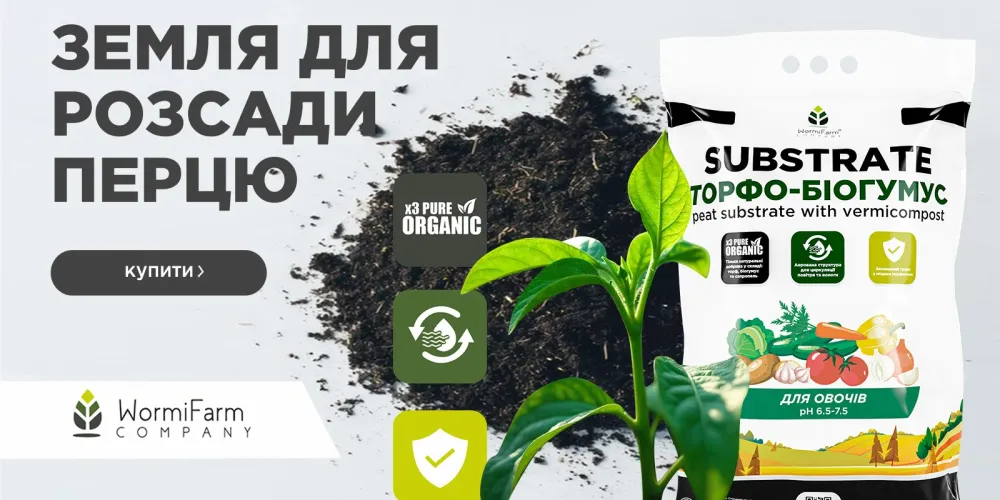
Growing peppers is a process that requires patience and attention to detail. This culture is quite picky about the conditions, especially about the soil. Often it is the wrong substrate that causes poor development or death of plants. Universal mixtures that seem convenient are usually not suitable for such a fastidious culture. To get healthy seedlings and lay the foundation for the future harvest, it is important to choose the soil correctly. Below are some practical tips that will help you avoid common mistakes.
Why should you choose a specialized soil for vegetables instead of a universal one
The root system of pepper is delicate and especially sensitive to lack of air and stagnation of moisture. If the substrate is too dense or has inappropriate acidity, it leads to a deterioration of the condition of the plants.
Among the most common consequences:
- retardation of growth even with sufficient watering;
- yellowing of leaves due to lack of oxygen for the roots
- increased risk of fungal infections;
- weak rooting after transplanting.
This is why it is recommended to use a specialized soil for vegetable crops - with a structure that provides aeration and a neutral pH level. If you plan to buy soil for vegetables, give preference to compounds with an organic basis. Such substrates support microflora, do not deplete the soil and contribute to the development of strong seedlings.
What should be an effective substrate for peppers
The soil for pepper should be not only light and structural, but also fully nutritious. That is why organic soil for vegetables from the company WormiFarm is not just a mixture of components, but a balanced system developed taking into account the needs of vegetable crops.
Its main advantage is the optimal ratio of macro-, meso- and microelements necessary for the development of vegetable seedlings. This balance provides plants with access to the entire spectrum of nutrients at various stages of growth — from germination to fruit formation.
The composition of the substrate also includes:
- Biohumus is the main source of nutrition, which provides the plant with readily available forms of nitrogen, phosphorus, potassium, trace elements and other organic substances. It stimulates the development of the root system, increases resistance to stress and promotes rooting after transplanting.
- Peat - creates an air-permeable structure that retains moisture without the risk of overwetting. Thanks to this, the roots have constant access to oxygen.
- Sapropel is a natural source of minerals and mesoelements, such as calcium, magnesium, sulfur, which are critically important for the stable development of vegetable crops. It also improves the absorption capacity of the substrate and supports active microflora.
The substrate does not contain chemical stimulants, but thanks to the natural origin of the components, it ensures sustainable growth and development of crops without additional feeding in the starting period.
A universal solution for vegetable crops
The substrate WormiFarm is universal in application. Its natural formula is suitable for a wide range of vegetable crops: onions, garlic, carrots, cucumbers, zucchini, tomatoes, etc. Such organic soil for vegetables provides stable nutrition, maintains optimal humidity and promotes the formation of a healthy root system. This is a practical solution for those who grow vegetables both in open ground and in greenhouse conditions.
How to apply the substrate correctly
To achieve the desired result, follow a few basic rules:
- For sowing seeds: use a substrate without impurities, filling cassettes or pots completely with it.
- When transplanting seedlings: it is recommended to fill ⅔ of the hole with substrate, the rest with ordinary soil, and mix it slightly.
- For mature plants: add a layer of substrate to the root zone before watering.
Tip: do not overmoisten - pepper reacts sensitively to stagnant water. Watering is carried out when the top layer of the soil dries up noticeably.
Typical mistakes when growing pepper
Even with good seeds and proper watering, the result may turn out to be far from expected. Often the reason is a number of typical mistakes that are easy to fix:
- Incorrectly selected moment for sowing. Sowing too early in the cold period leads to stretching of seedlings and weakening of immunity.
- Insufficient lighting. Pepper is a light-loving crop, and the lack of light in the first weeks of development seriously affects the quality of seedlings.
- Too frequent feeding at the start. An excess of fertilizers in the early phase of growth can lead to unbalanced development: active leaves — weak roots.
- Use of substrates not adapted to the culture. Soil with the wrong structure or acidity creates stress for young plants and inhibits development.
- Ignoring sterility. The use of untested mixtures or the reuse of old soil increases the risk of infection of seedlings with pathogens.
In most cases, problems with seedlings begin due to a bad start - and the substrate itself plays a key role here. A quality soil with a well-balanced composition, as in WormiFarm, helps to avoid 80% of common errors and creates a favorable environment for development. It remains only to take care of the light and the timing of sowing.
To summarize: the right soil is more important than meets the eye. WormiFarm substrate is a well-thought-out basis for strong plants and peace of mind for the result.
Editorial team agronom.info
Materials are prepared by the portal's agronomists and editors. We use only trusted sources: Ukrainian agricultural universities, variety registries, open scientific publications.
Related articles

Greenhouse Photosynthesis Simulator: Light and CO2 Impact Calculator for Plants
Watermelon Market 2026. The Best High-Profit Watermelon Varieties.
From scratch to its own brand: How DOLYA-2019 Farm is building a niche agribusiness on pumpkin seeds
Not yet comments. Be the first!
Comments · 0