
Indian groundcherry
Physalis indica
Description
How to tell it apart
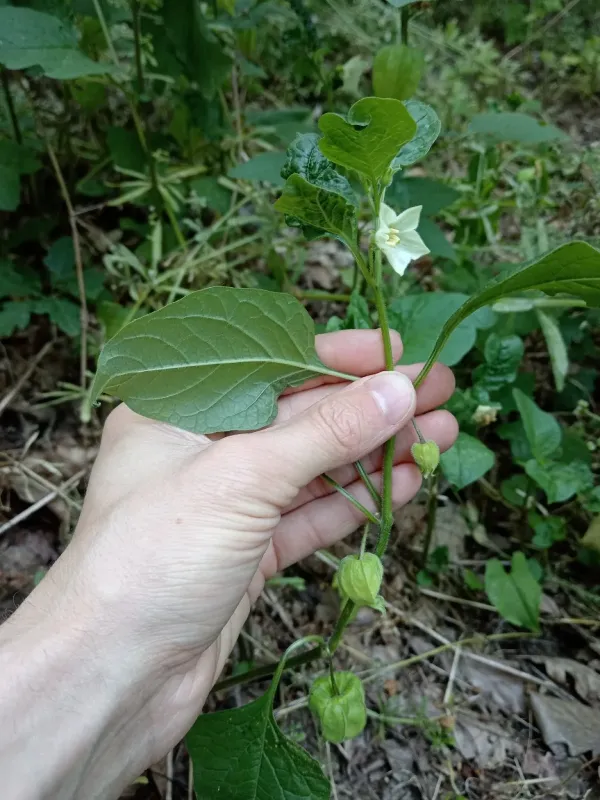
Indian groundcherry (Physalis indica) is an annual herbaceous plant belonging to the Solanaceae family. It features a branched stem and simple, alternate leaves that are typically ovate with entire or serrated margins.
The most distinctive feature is the bladder-like fruiting calyx that expands significantly after flowering, completely enclosing the berry. Unlike cultivated physalis varieties, the fruits of this weed are small and typically considered inedible or toxic.
The plant possesses a deep taproot system, which contributes to its high competitiveness and resilience in various environments. The flowers are solitary, axillary, and possess a pale yellow to whitish corolla, often with a dark center.
The seeds of Indian groundcherry have high viability and can persist in the soil seed bank for several years. This ability makes it a persistent nuisance in fields, requiring long-term management strategies.
As a thermophilic plant, it thrives during the warm summer months. It displays rapid vegetative growth, allowing it to quickly dominate open spaces in agricultural landscapes or neglected patches of soil.
Where it grows
This weed is commonly found in row-crop fields, including maize, sunflowers, and potatoes. It prefers fertile, moist soil conditions and frequently invades roadsides, fallow lands, and irrigation ditches.
Indian groundcherry aggressively occupies niches in vegetable crop rotations. Its adaptability allows it to thrive in diverse soil types, ranging from sandy loams to heavier clays, provided there is adequate moisture.
The presence of this weed is particularly problematic in fields of other nightshade crops. Because they share biological requirements, managing this weed without harming the main crop is a significant agronomic challenge.
In recent years, it has expanded into irrigated agriculture. The consistent water supply facilitates its growth, turning it into a dense weed carpet that suppresses the development of the primary agricultural crop.
It is also a common occupant in orchards and vineyards where maintenance may be less frequent. If left unchecked, it can quickly colonize large areas, becoming a dominant component of the local vegetation.
Harm it causes
The primary harm caused by Indian groundcherry is intense competition for nutrients, light, and water. Its deep root system allows it to access resources that would otherwise be available to the crop, leading to stunted growth.
Infestation leads to significant reductions in crop yield and quality. Furthermore, the plant acts as an alternative host for various viral diseases that are transmitted by insect pests, threatening the health of nearby crops.
The presence of this weed interferes with mechanized harvesting operations, increasing loss and contaminating the harvested grain or fruit with plant debris, which increases moisture levels and storage costs.
Research suggests that Indian groundcherry can exhibit allelopathic effects, releasing compounds into the soil that inhibit the germination and early development of neighboring crop species.
- Reduction in overall crop yield due to resource competition.
- Increased risk of pest and disease outbreaks in the field.
- Added production costs due to the necessity for mechanical or chemical intervention.
How to control
Cultural control methods include deep fall plowing, which buries seeds at a depth where they fail to germinate. Inter-row cultivation during the growing season is an effective way to suppress young plants before they reach maturity.
Crop rotation remains the most effective long-term strategy. Rotating row crops with small grains helps disrupt the weed's life cycle and provides different competitive conditions that are less favorable for this species.
Chemical control involves the use of systemic herbicides. In crops like corn, pre-emergence herbicides are often effective at suppressing the development of seedlings, reducing the pressure early in the season.
Sanitation is critical; ensuring that seeds are not spread by contaminated machinery or irrigation water is essential. Weeds on field edges must be destroyed before they produce viable seeds to prevent new infestations.
An integrated approach combining mechanical weeding and targeted herbicide application is recommended. Managing the weed population below the economic threshold is the primary goal of any robust crop protection program.
Taxonomy
- Latin name
- Physalis indica
- Family
- Паслён чёрный
- EPPO code
- PHYIN