
Cutleaf groundcherry
Physalis angulata
Description
How to tell it apart
Cutleaf groundcherry (Physalis angulata) belongs to the Solanaceae family. It is an annual herbaceous plant with branched, erect stems that can reach heights of 30 to 100 cm.
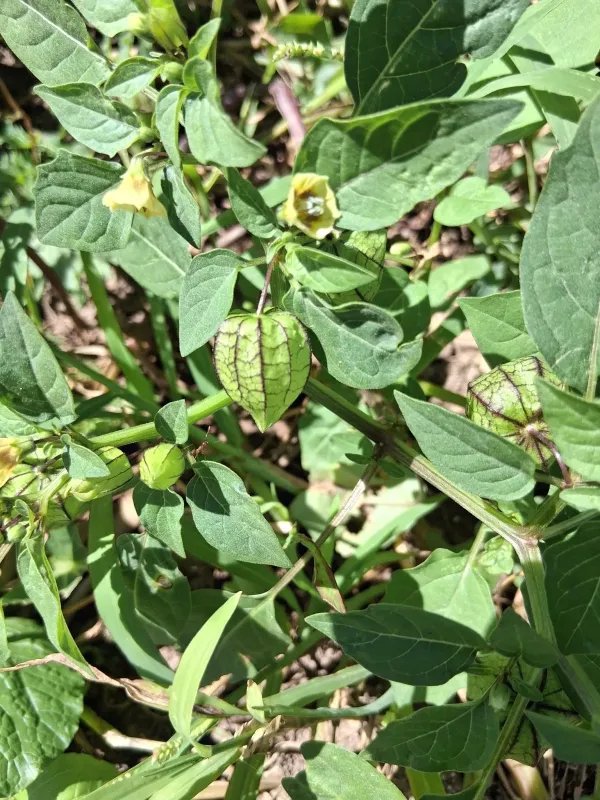
The leaves are alternate, ovate to oblong in shape, with distinct angular teeth along the margins, which is the primary characteristic that gives the species its name.
The flowers are solitary, axillary, and possess a pale yellow corolla, often featuring darker spots in the throat. The calyx expands significantly after flowering, forming a bladder-like husk around the fruit.
The fruit is a juicy, many-seeded berry, typically yellow or orange when mature, completely enclosed by the papery, inflated calyx.
The seeds are small, kidney-shaped, and brownish-yellow, with a pitted or reticulated surface texture that allows them to remain viable in the soil for several years.
Where it grows
This weed thrives in sunny, warm locations with fertile, well-drained but moist soils. It is commonly found near water bodies, in floodplain areas, and on disturbed sites.
In agricultural settings, Cutleaf groundcherry is a persistent weed in row crops, particularly in corn, soybeans, sunflowers, and various vegetable production fields.
The species is highly adaptable to human-disturbed habitats, frequently colonizing field edges, roadsides, and abandoned land near agricultural infrastructure.
Seed dispersal is facilitated by water movement, agricultural machinery, and birds that consume the berries and transport seeds across long distances.
Under irrigation, this weed grows vigorously, developing deep root systems and dense foliage that can easily outcompete slow-growing crops for essential resources.
Harm it causes
The primary damage results from intense competition for light, water, and soil nutrients, leading to reduced crop vigor and significantly lower yields.
As a member of the Solanaceae family, it serves as an alternative host for various viral diseases, such as mosaic viruses, and fungal pathogens like late blight.
The presence of this weed complicates mechanical harvesting operations, as the thick, succulent stems can clog machinery and reduce the efficiency of field work.
Contamination of harvested products with berries and seeds degrades the quality of the yield, often requiring additional cleaning, sorting, and processing steps.
High seed production capacity ensures that once established, the weed rapidly builds a persistent soil seed bank, making long-term control a challenging necessity.
How to control
Effective management begins with proper crop rotation strategies that avoid planting susceptible Solanaceous crops in the same field consecutively.
Cultural control methods include thorough tillage, such as deep plowing to bury seeds, and timely cultivation between rows to eliminate young weed seedlings before they mature.
Preventative measures involve mowing field borders and non-cropped areas to prevent the plant from reaching the flowering and fruiting stage.
Chemical control involves the use of selective herbicides; however, efficacy is highest when applications are timed to target the weed during its seedling stages.
It is essential to consult local pesticide guidelines to select products that provide effective control while remaining safe for the primary crop being cultivated.
Taxonomy
- Latin name
- Physalis angulata
- Family
- Паслён чёрный
- EPPO code
- PHYAN