
Petiolate loosestrife
Lythrum petiolatum
Description
How to tell it apart
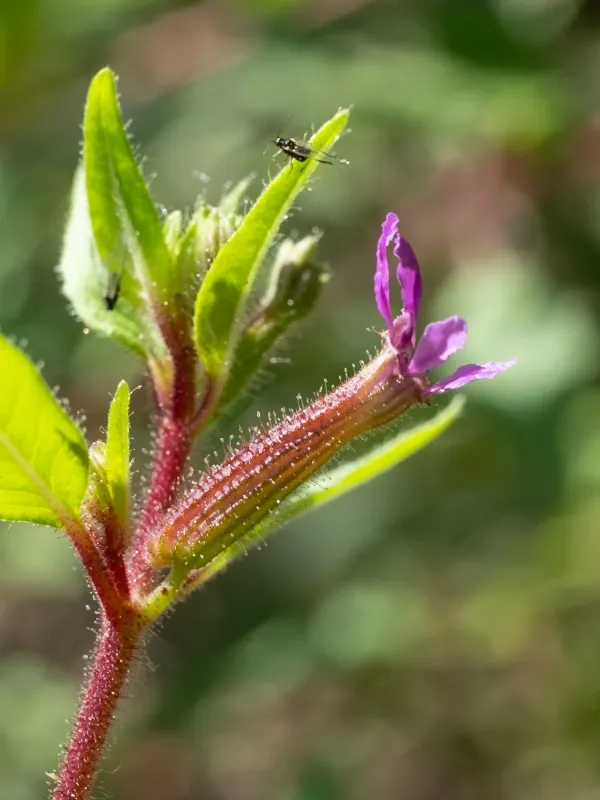
Petiolate loosestrife (Lythrum petiolatum) is a member of the Lythraceae family, recognized as an annual herbaceous weed with an upright, branching stem.
Its leaves are distinctively petiolate (having short stalks), lanceolate in shape, and typically arranged alternately or oppositely along the stem.
The plant produces small, pinkish-purple flowers clustered in the leaf axils, which makes it identifiable during its peak flowering season.
It possesses a strong taproot system that allows it to thrive in various moisture conditions, reaching deeper soil nutrients compared to many other weeds.
The fruit is a dry capsule that splits upon maturity to release numerous tiny seeds, facilitating rapid colonization of available habitats.
Where it grows
Petiolate loosestrife primarily inhabits wetland areas, riverbanks, marshes, and low-lying, damp environments where water accumulates.
In agricultural settings, it is commonly found in rice paddies, irrigated fields, and areas with poor drainage that result in soil waterlogging.
It thrives in disturbed moist soils, frequently colonizing ditches, canal banks, and depressed zones within cropland fields.
Seed dispersal is highly efficient via water movement, though it is also spread through contaminated farm machinery and agricultural equipment.
The weed demonstrates a high level of environmental plasticity, allowing it to adapt to fluctuating water levels in wet field conditions.
Harm it causes
The primary harm caused by petiolate loosestrife is its aggressive competition with crops for essential resources like water, space, and mineral nutrients.
By forming dense patches, the weed effectively crowds out crop plants, significantly reducing overall biomass and potential yield in infested areas.
The plant's canopy creates substantial shading, which inhibits the photosynthetic activity of smaller crop seedlings during their critical growth stage.
Its high water demand can exacerbate drought stress on crops, particularly in fields where moisture balance is already difficult to maintain.
Additionally, the weed can act as an alternative host for various pests and pathogens, increasing the risk of disease spread within the field.
How to control
Effective management requires a combination of cultural practices, such as land leveling and improving drainage systems to prevent water saturation.
Mechanical control through timely cultivation and tillage is vital to eliminate young seedlings before they develop a resilient root system.
Chemical control using selective post-emergence herbicides is often necessary for larger infestations in cereal crops and other compatible fields.
Strategic crop rotation is recommended to disrupt the life cycle of the weed and minimize the long-term seed bank accumulation in the soil.
Strict sanitation measures for machinery moving between fields are essential to prevent the further spread of seeds into non-infested areas.
Taxonomy
- Latin name
- Lythrum petiolatum
- Family
- Прочие
- EPPO code
- LYTPE