
Polygonum multiflorum
Reynoutria multiflora
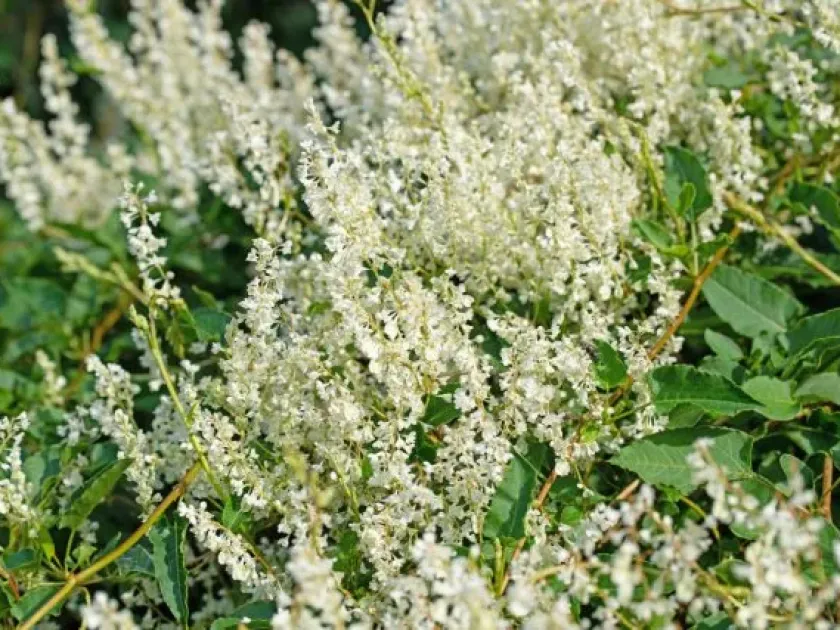
Description
How to tell it apart
Polygonum multiflorum, also known as Fo-ti, is a perennial herbaceous plant from the Polygonaceae family, characterized by its aggressive climbing habit.
The leaves are broad, heart-shaped with acuminate tips, and typically have a smooth surface, providing a dense canopy when the plant matures.
The stems are twining and can grow several meters in length, allowing the plant to climb over fences, shrubs, and other vegetation with ease.
It features a woody, tuberous root system that grows deep into the ground, storing significant energy reserves that make the plant difficult to eradicate.
Botanically, it is a rhizomatous perennial that relies heavily on vegetative reproduction, making small root fragments capable of starting new infestations.
Where it grows
This weed thrives in moist environments, particularly along riverbanks, woodland edges, and uncultivated areas near agricultural operations.
It frequently colonizes waste ground, abandoned fields, and roadsides, spreading rapidly through its extensive underground rhizome network.
Polygonum multiflorum is highly adaptable to various soil conditions, including poor or compacted soils where other vegetation might struggle to survive.
In farming landscapes, it often invades field margins and shelterbelts, gradually encroaching into the main cropping areas over several seasons.
The plant shows a high tolerance for varying light conditions, enabling it to establish in partially shaded forest margins or fully exposed agricultural land.
Harm it causes
The primary impact of this weed is the suppression of crops due to its dense, fast-growing canopy that blocks out sunlight from competing plants.
Its vigorous root system competes aggressively for soil moisture and nutrients, causing significant yield losses in adjacent crops during the growing season.
Infestations create physical barriers for machinery, leading to frequent clogging of agricultural equipment and increasing maintenance costs for farmers.
The weed acts as an invasive species that disrupts local ecosystems by displacing native flora and creating monocultural stands that lack biodiversity.
Allelochemicals released by the plant into the soil can further inhibit the germination and growth of desirable vegetation in the immediate area.
How to control
Physical control, while challenging, involves excavating the entire root system, as any remaining tubers will readily sprout and regenerate the plant.
Repeated mowing or cutting of the stems during the growing season can help exhaust the energy stored in the roots, eventually weakening the infestation.
Chemical control using systemic herbicides is the most effective way to address large-scale infestations by ensuring the poison reaches the roots.
Integrated management practices, such as deep ploughing combined with competitive crop planting, are necessary to prevent the resurgence of the weed.
- Application of glyphosate-based herbicides
- Deep mechanical cultivation
- Consistent mowing before flowering
- Site monitoring to prevent regrowth
Taxonomy
- Latin name
- Reynoutria multiflora
- Family
- Гречишка вьюнковая
- EPPO code
- POLMU