
Reynoutria compacta
Reynoutria compacta
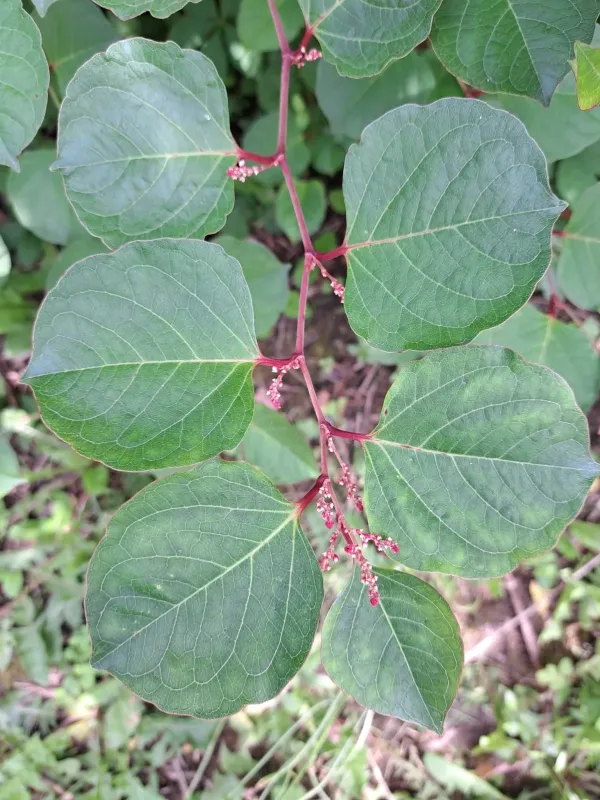
Description
How to tell it apart
Reynoutria compacta, a member of the Polygonaceae family, is a perennial herbaceous plant known for its aggressive growth. It features a robust rhizome system and hollow, node-bearing stems that resemble bamboo, typically reaching heights between 40 and 100 cm.
The leaves are leathery with a broadly ovate shape and a pointed tip, displaying a deep green color. During late summer, the plant produces dense, paniculate inflorescences composed of small, delicate white or pinkish flowers.
A defining characteristic of this species is its compact, bushy growth habit, which distinguishes it from larger relatives like Reynoutria japonica. Its underground root system is highly invasive, capable of penetrating deep into the soil and spreading rapidly.
Propagation occurs primarily through vegetative means, as even small fragments of rhizomes can root easily when in contact with moist soil. While seed production is possible, vegetative spread remains the primary driver of its invasion.
This species is a notorious invasive plant that quickly colonizes open areas, displaces native vegetation, and forms dense, impenetrable monocultures that block out sunlight completely.
Where it grows
Reynoutria compacta prefers moist, well-drained soils and is commonly found in wastelands, along riverbanks, railway embankments, and roadsides where disturbances occur frequently.
In agricultural settings, it poses a significant threat to private gardens, abandoned fields, and perennial plantations, particularly where deep soil cultivation is not practiced regularly.
The plant demonstrates high adaptability to various climatic conditions and thrives in both full sunlight and partial shade, allowing it to colonize diverse environments successfully.
Human activity is the main vector for its spread, often involving the transportation of contaminated soil, compost, or construction waste that contains hidden, viable rhizome segments.
Within crop fields, it competes fiercely with cultivated plants for water, nutrients, and space, eventually overtaking the crop through its rapid growth and density.
Harm it causes
The primary damage caused by this weed is the severe suppression of cultivated plants through intense competition for essential resources, including light, water, and soil nutrients.
The powerful rhizomes can cause structural damage to building foundations, asphalt roads, and drainage systems, leading to costly repair requirements for landowners.
Through the release of allelopathic compounds into the soil, the plant inhibits the germination and growth of neighboring species, functioning as a natural herbicide against biodiversity.
The dense thickets created by the plant provide a sheltered environment for various pests and fungal pathogens, which can then spread to nearby agricultural crops.
Eradication is extremely challenging and labor-intensive because even the smallest overlooked piece of root can regenerate into a new plant, restarting the infestation cycle.
How to control
Mechanical control methods include systematic mowing or manual digging of rhizomes; however, removing the foliage alone is insufficient and only provides temporary suppression.
Successful eradication requires consistent exhaustion of the root system through repetitive cutting of all regrowth over several seasons, which eventually depletes the plant's stored energy reserves.
Chemical control is most effective using systemic herbicides, particularly glyphosate, applied during the peak flowering stage to ensure the chemical is translocated deep into the rhizomes.
A precision technique involves injecting herbicide solutions directly into the hollow stems, which minimizes impact on surrounding plants and significantly increases the concentration of the active ingredient reaching the roots.
Following chemical treatment, ongoing monitoring is essential for several years, as dormant buds on deep rhizomes may emerge even after long periods of apparent inactivity.
Taxonomy
- Latin name
- Reynoutria compacta
- Family
- Гречишка вьюнковая
- EPPO code
- POLCK