
Broom-like knotweed
Polygonum scoparium
Description
How to tell it apart
Broom-like knotweed (lat. Polygonum scoparium) is a perennial herbaceous plant belonging to the Polygonaceae family, known for its distinct broom-like structure.
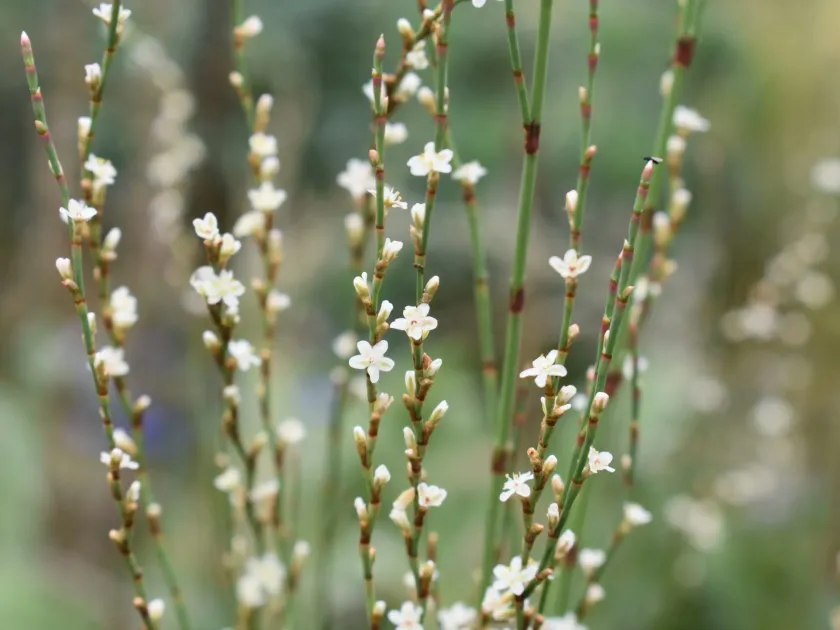
The plant features thin, rigid, and heavily branched stems that look like a whisk, which is the primary identifier for this weed species in field conditions.
Leaves are typically very small or reduced to scales, an evolutionary adaptation that allows the plant to thrive in arid and semi-arid environments.
It produces small flowers arranged in loose, panicle-like inflorescences at the tips of the numerous woody branches, ensuring efficient reproduction.
The root system is remarkably robust, characterized by deep penetration that allows the plant to access moisture far below the topsoil layers.
Where it grows
Broom-like knotweed is typically found in dry, sandy soils, wastelands, roadsides, and abandoned agricultural lands with little to no vegetative cover.
In modern agricultural settings, it tends to infest fields that suffer from improper crop rotation or those that have been left fallow for extended periods.
It thrives in open, sunny locations and is rarely found in dense, shaded crop stands, as it struggles to compete under low-light conditions.
The plant is common in areas where the soil structure has been disturbed, allowing its seeds or rhizome fragments to establish quickly without competition.
Its ability to adapt to nutrient-poor soils makes it a significant risk factor for newly developed lands and recently reclaimed agricultural zones.
Harm it causes
The primary damage caused by Polygonum scoparium is resource competition, specifically for deep soil moisture, which is vital during dry spells.
Its vigorous root system outcompetes agricultural crops, significantly reducing the availability of nutrients and water for the desired plants during the growing season.
Massive infestations can drastically reduce crop yields by suppressing the growth and development of young seedlings through competition for space and light.
During harvest, the woody stems of the weed obstruct harvesting machinery, leading to reduced operational efficiency and increased wear on equipment.
Furthermore, the presence of these weeds can harbor specific pests and diseases that may transmit to economically important crops, exacerbating losses.
How to control
Controlling Broom-like knotweed requires a multi-faceted approach, combining mechanical soil manipulation with chemical management strategies.
Deep plowing or mechanical cultivation is essential to expose the roots to desiccation and prevent the spread of vegetative reproductive organs in the soil.
Adopting effective crop rotation practices that include competitive cover crops can help shade out the weed and limit its ability to establish or spread.
Chemical control usually involves the use of systemic herbicides applied at the active growth stage to ensure the chemicals reach the deep root systems.
- Deep fall plowing to disrupt root systems.
- Use of herbicides before crop planting on infested fields.
- Integrated weed management programs to reduce the seed bank.
- Prompt removal of weed patches on field margins to prevent spreading.
Taxonomy
- Latin name
- Polygonum scoparium
- Family
- Гречишка вьюнковая
- EPPO code
- POLSO