
Prostrate knotweed
Polygonum ramosissimum
Description
How to tell it apart
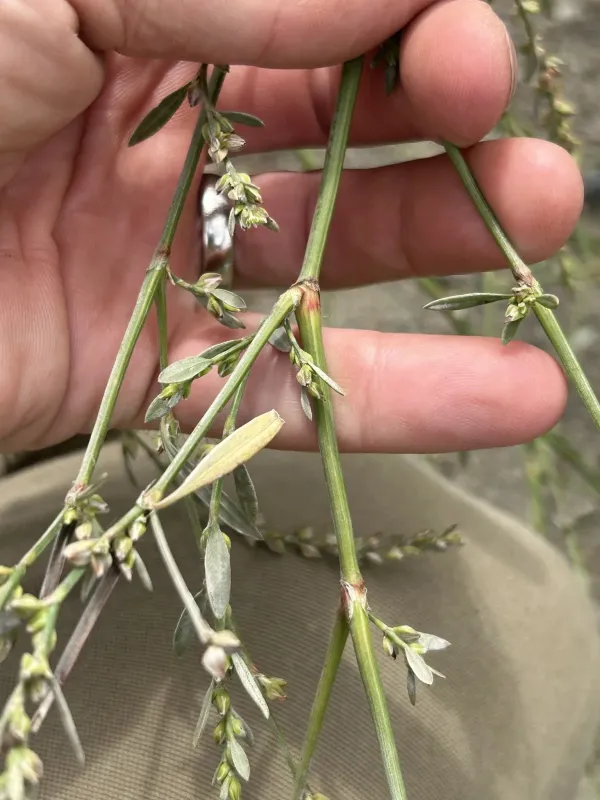
Prostrate knotweed is an annual herbaceous plant belonging to the Polygonaceae family. It features a highly branched, erect or spreading stem that typically reaches heights between 20 and 80 centimeters.
The leaves are narrow, lanceolate or linear, and possess short petioles. The flowers are small, greenish-white or pinkish, clustered in axillary inflorescences distributed along the upper branches of the plant.
It possesses a strong taproot system, which allows the plant to efficiently extract moisture and nutrients from the soil, making it a competitive weed in various agricultural environments.
The seeds are triangular nuts, dark brown or black in color with a matte surface. The plant's bushy appearance during the flowering phase is a distinct characteristic that aids in field identification.
As an early spring annual, this weed develops rapidly during the warm season, producing a large volume of seeds that can persist in the soil seed bank for several years.
Where it grows
Prostrate knotweed is widely distributed in temperate regions, preferring open areas with high light intensity. It is commonly found in fields, along roadsides, near drainage ditches, and on waste ground.
The weed poses a significant threat to row crops, small grains, and vegetable gardens. Due to its ecological plasticity, it thrives on a variety of soil types, including sandy, nutrient-poor, or saline soils.
It frequently colonizes disturbed soil, rapidly occupying bare patches in fields or landscapes. It is resilient enough to establish itself in depleted soils where other vegetation might struggle to survive.
In cultivated fields, the weed tends to grow in patches but can quickly spread across the entire area if left unmanaged. Field edges and roadsides serve as primary reservoirs for infestation.
Seed dispersal is facilitated by both wind and agricultural equipment, emphasizing the importance of machinery cleaning between field operations to prevent further spread.
Harm it causes
The primary damage caused by prostrate knotweed is its intense competition with crops for water, nutrients, and sunlight, particularly during the critical early stages of crop development.
Its vigorous branching habit creates dense mats that shade out young crop seedlings, leading to reduced stand density and potential yield losses if the infestation is heavy.
The presence of this weed complicates mechanical harvesting and reduces the overall quality of the harvested produce. Contamination with knotweed seeds often requires additional cleaning steps post-harvest.
Furthermore, the plant can act as an alternative host for various crop pathogens and pests, which can migrate to the crop and increase the overall disease pressure within the field.
Massive weed infestations accelerate soil moisture depletion, stressing the crops and making them more susceptible to drought and other environmental challenges throughout the growing season.
How to control
Effective agricultural management starts with thorough pre-planting soil preparation. Deep tillage and stubble cultivation help to destroy initial flushes of the weed and bury seeds deep in the soil.
During the growing season, inter-row cultivation in row crops is an effective mechanical method to suppress the weed while simultaneously improving soil aeration and moisture retention.
Chemical control involving systemic herbicides is often necessary for severe infestations. Application should be timed when the weed is in the active growth stage to ensure maximum efficacy.
Strategic crop rotation is essential for long-term population management. Rotating crops with different growth cycles disrupts the life cycle of prostrate knotweed and prevents it from dominating the field.
- Use of shallow harrowing to encourage seed germination before crop planting.
- Ensuring the use of certified, clean seed to prevent introduction of weed species.
- Regular mowing of non-crop areas to prevent seed production and spread.
Taxonomy
- Latin name
- Polygonum ramosissimum
- Family
- Гречишка вьюнковая
- EPPO code
- POLRA