
Erect knotweed
Polygonum erectum
Description
How to tell it apart
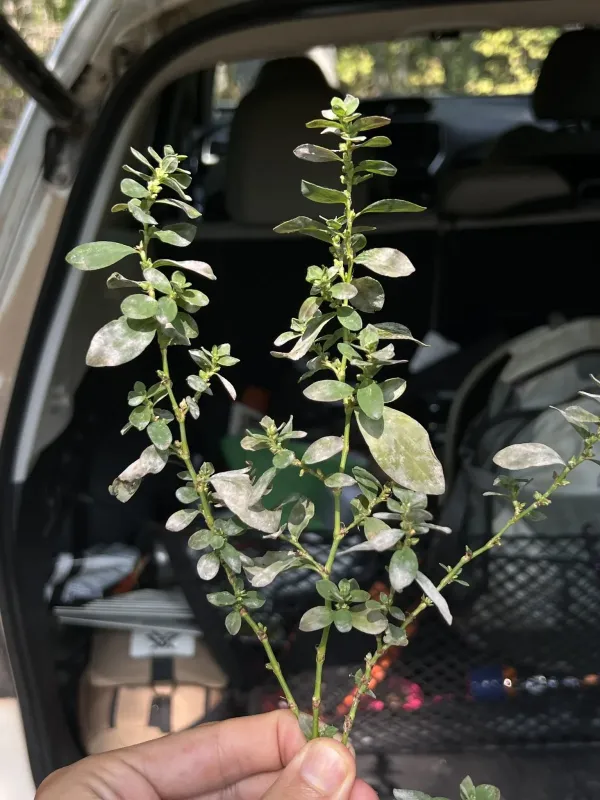
Erect knotweed (Polygonum erectum) belongs to the Polygonaceae family. It is an annual herbaceous plant characterized by an erect or ascending stem that typically reaches a height of 20 to 50 centimeters.
The leaves are elliptical or obovate in shape and are arranged alternately along the stem. The flowers are small, greenish-white or yellowish, and are clustered in leaf axils, which serves as a key diagnostic feature for this species.
The root system consists of a deep taproot that allows the plant to thrive in compact soils and endure harsh environmental conditions, including periods of drought or mechanical stress.
The seeds of the weed are dark brown, three-sided, and have a matte surface. They remain viable in the soil for several years, ensuring the plant's long-term presence in infested areas.
The plant exhibits a long flowering period from June until late autumn, which enables each specimen to produce a significant quantity of seeds, thereby replenishing the soil seed bank continuously.
Where it grows
Erect knotweed is widely distributed throughout temperate regions. It typically colonizes compacted soils, such as roadsides, footpaths, pastures, waste areas, and poorly maintained garden plots.
In agricultural settings, this weed is particularly problematic in row crops and fields where soil structure has been degraded or where cultivation practices have been neglected during the growing season.
Because the plant tolerates trampling very well, it often becomes the dominant weed in areas surrounding livestock farms and equipment storage, where high traffic keeps the soil densely packed.
The weed is highly adaptable to various soil moisture levels, allowing it to rapidly occupy niches in both dry and periodically waterlogged agricultural environments.
Seed dispersal occurs through mechanical transport, wind, and water runoff during heavy rainfall, which facilitates the spread of the weed from non-crop areas into cultivated fields.
Harm it causes
The primary damage caused by erect knotweed is its fierce competition with crops for mineral nutrients, moisture, and sunlight, which leads to significant yield losses if not managed properly.
Due to its ability to form dense patches, the weed shades out crop seedlings, severely inhibiting their growth and development during the early and most critical stages of the season.
The presence of dense infestations complicates the operation of agricultural machinery, as the stems and roots can interfere with soil preparation and harvest equipment efficiency.
Erect knotweed can serve as an alternative host for various pests and fungal pathogens, potentially acting as a reservoir that facilitates the infection of neighboring commercial crops.
The organic residue and potential allelopathic effects of the weed on the soil may reduce the quality of the harvested produce, lowering its market value and overall farm profitability.
How to control
Effective management of erect knotweed requires an integrated approach that combines cultural practices, mechanical control, and selective chemical interventions tailored to the specific crop.
The foundation of control is robust soil preparation, including deep plowing with moldboard inversion, which buries seeds to a depth from which they cannot emerge as seedlings.
Maintaining a well-planned crop rotation is crucial for disrupting the weed's life cycle and preventing its population density from reaching thresholds that significantly impact crop production.
Chemical control is effective using systemic herbicides, such as those containing 2,4-D or dicamba, applied when the weed is in its early growth stages for maximum efficacy.
- Conducting regular field monitoring to identify and eradicate small patches of knotweed early.
- Using high-quality, certified seed to prevent the introduction of weed seeds onto the farm.
- Performing timely inter-row cultivation in row crops to disrupt weed development.
- Mowing or removing weeds in non-cropped areas before they enter the flowering phase.
Taxonomy
- Latin name
- Polygonum erectum
- Family
- Гречишка вьюнковая
- EPPO code
- POLER