
Silver-sheathed knotweed
Polygonum argyrocoleon
Description
How to tell it apart
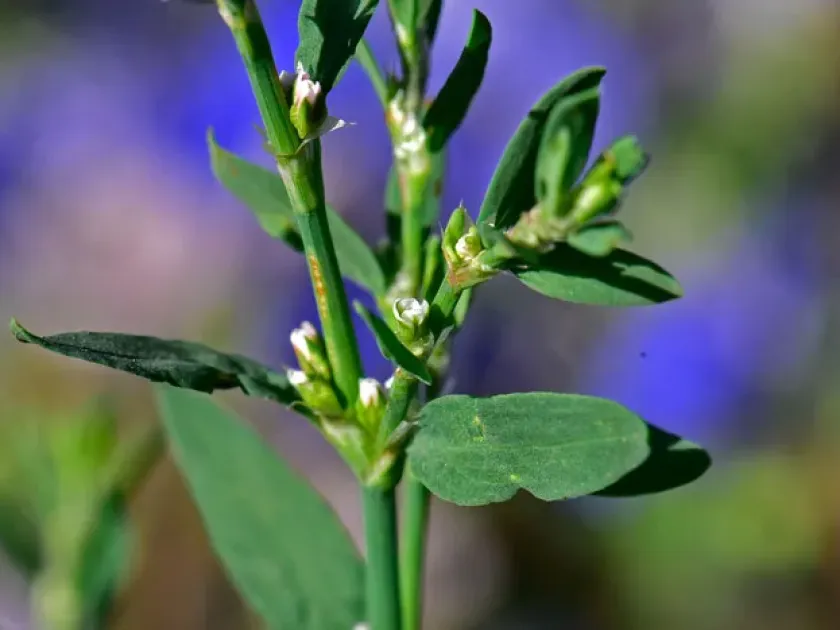
The silver-sheathed knotweed (Polygonum argyrocoleon) belongs to the Polygonaceae family. It is an annual herbaceous plant characterized by an erect or branched stem reaching heights between 20 and 60 centimeters.
The name of the plant is derived from its distinctive membranous ochreae (sheaths) at the nodes, which have a silvery-white edge, providing a reliable diagnostic feature for identification in the field.
Its leaves are narrow, linear-lanceolate in shape, and arranged alternately along the stem, allowing the plant to optimize light capture during the growing season.
The flowers are small, pinkish, and arranged in loose spike-like inflorescences at the tips of the stems and branches, which helps distinguish it from other knotweed species.
The fruits are dark, triangular, smooth achenes produced in large quantities, ensuring the plant's high reproductive success and ability to spread rapidly in cultivated areas.
Where it grows
This weed is commonly found in arable fields, row crops, grain fields, as well as on fallow land, roadsides, and neglected agricultural areas.
It prefers well-lit, relatively dry habitats, making it a frequent colonizer in steppe and semi-arid agricultural zones where competition for moisture is the primary limiting factor.
The species thrives on light-textured soils such as sandy or loamy soils, though it shows considerable plasticity in its ability to adapt to varying nutrient levels.
In cultivated fields, it exploits gaps in the crop canopy, becoming particularly problematic in thin or poorly established stands where light penetration to the soil surface is high.
Dispersal is primarily seed-driven; seeds can easily contaminate harvest machinery and crop storage facilities, leading to persistent infestations over several years.
Harm it causes
The primary damage caused by the silver-sheathed knotweed is the significant reduction in crop yield due to intense competition for water, sunlight, and soil nutrients.
By consuming valuable soil moisture, this weed can drastically diminish the productivity of cereal and technical crops during critical stages of plant development.
Infestation hinders mechanical harvesting operations, as the plant debris can clog machinery, leading to increased operational costs and potential losses in grain quality due to impurities.
It serves as an alternative host for various agricultural pests and fungal pathogens, which can then spread to crops, necessitating additional pesticide applications.
The plant's aggressive growth habit can suppress crop seedlings in the early vegetative phase, potentially leading to sparse stands that require reseeding or yield loss.
How to control
Agricultural control methods include deep primary tillage, such as moldboard plowing, which buries seeds deep enough to prevent successful germination in subsequent growing seasons.
Inter-row cultivation is highly effective in row crops, as it mechanically disrupts the weed seedlings before they reach reproductive maturity and set new seeds.
Crop rotation strategies that include a mix of winter and spring crops are essential for breaking the life cycle of the silver-sheathed knotweed and reducing the soil seed bank.
Chemical control focuses on the use of systemic herbicides applied during the early growth stages of the weed, usually targeting the 2-4 leaf stage for maximum efficacy.
- Application of broad-spectrum herbicides in cereal crops.
- Use of pre-emergent herbicides in specific cropping systems.
- Maintaining field boundaries clean to minimize external seed influx.
Taxonomy
- Latin name
- Polygonum argyrocoleon
- Family
- Гречишка вьюнковая
- EPPO code
- POLAG