
Prostrate knotweed
Polygonum achoreum
Description
How to tell it apart
Prostrate knotweed (Polygonum achoreum), often referred to as erect knotweed in some classifications, is an annual herbaceous weed belonging to the Polygonaceae family.
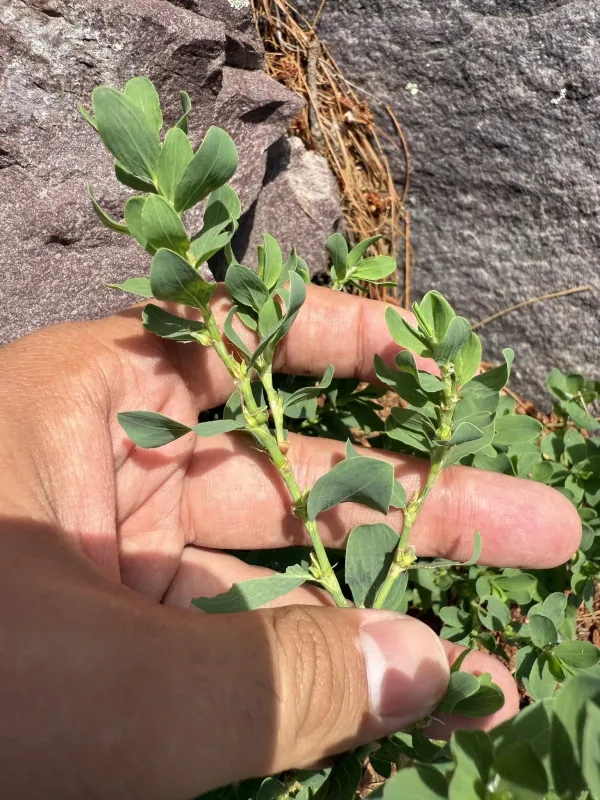
It is characterized by its prostrate, matted growth habit, with stems that branch densely from the base. The stems are typically green and can sometimes show reddish tinges.
The leaves are alternate, elliptical to obovate in shape, and possess very short petioles. This morphological trait helps distinguish it from other related knotweed species.
Small flowers are clustered in the leaf axils. They have a greenish color with white or pinkish margins, blooming throughout the summer season and producing abundant seeds.
The fruits are dark, matte, three-angled achenes that are highly resistant to degradation, allowing the seeds to remain viable in the soil for several years.
Where it grows
This weed is a common ruderal species that thrives in compacted soils. It is frequently found along roadsides, footpaths, driveways, and in high-traffic agricultural areas.
In farming, prostrate knotweed is a persistent issue in row crops, especially during the early stages of crop development before canopy closure occurs.
It shows a high tolerance for varying soil conditions, including saline or compacted ground, making it a difficult weed to eradicate in marginalized field edges.
The plant's ability to survive in human-disturbed areas allows it to colonize field borders, from where it slowly encroaches into the main cropping areas via contaminated equipment.
It is well-adapted to survive in open, sunny locations where competition from taller vegetation is minimal or has been removed by human activity.
Harm it causes
Prostrate knotweed acts as a significant competitor for resources, particularly water and nitrogen, in the early stages of crop growth when the crop is most vulnerable.
Its dense, mat-like growth habit can effectively shade out smaller crop seedlings, significantly reducing their vigor and overall yield potential by restricting sunlight.
The presence of this weed creates logistical challenges during mechanical operations, as its tough stems can interfere with tillage equipment and harvest machinery.
By producing a large bank of resilient seeds, the weed ensures its presence for future seasons, requiring a long-term strategy for successful containment and management.
Beyond direct competition, it can serve as a host for various insects and pathogens, potentially spreading diseases to the primary crops in the field.
How to control
Mechanical control through deep tillage and regular inter-row cultivation is vital for disturbing the root systems and preventing the weed from establishing a firm foothold.
Chemical control involves the timely application of selective herbicides targeting broadleaf weeds. It is most effective when the weeds are in the seedling or early vegetative stage.
Adopting a robust crop rotation strategy helps to suppress the weed by varying the timing of tillage and the canopy characteristics of the chosen crops.
Prevention is key, which includes cleaning machinery before moving between fields and maintaining weed-free buffers around the perimeter of agricultural land.
- Use of pre-emergent or post-emergent herbicide applications.
- Enhancing crop competition through optimal planting density.
- Timely mechanical removal in inter-row spaces.
- Rigorous sanitation of equipment and borders.
Taxonomy
- Latin name
- Polygonum achoreum
- Family
- Гречишка вьюнковая
- EPPO code
- POLAH