
Persicaria viscosa
Persicaria viscosa
Description
How to tell it apart
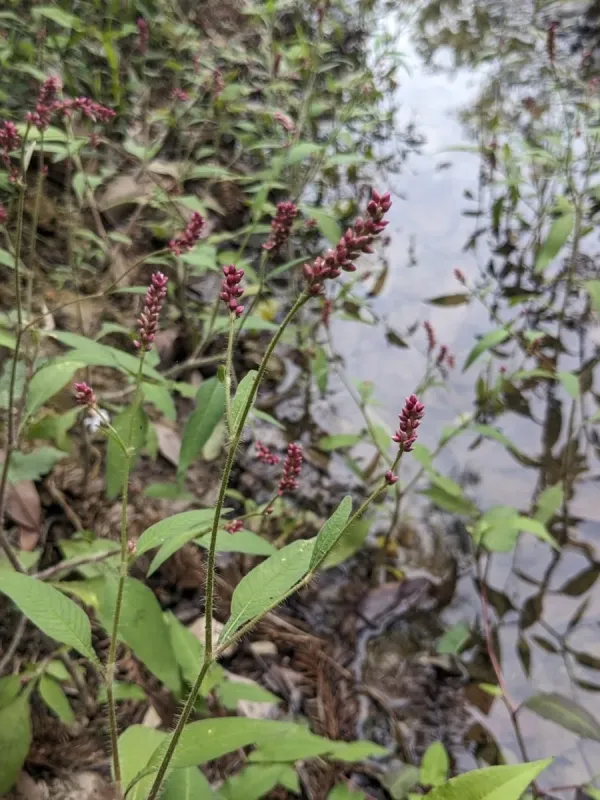
Persicaria viscosa, known commonly as sticky smartweed, is an annual herbaceous plant belonging to the Polygonaceae family, typically found in moist environments.
The plant is distinguished by its stems and leaf petioles covered in dense, glandular hairs that secrete a sticky substance, making the plant adhere to dust and debris.
It features a branching stem that can grow up to 1 meter in height, usually with an erect or ascending habit, allowing it to occupy significant space in crop fields.
The leaves are lanceolate, alternate, and have a distinct morphology common to the smartweed genus, with a texture that is often rough to the touch due to the glands.
Small flowers are arranged in terminal spikelike inflorescences, appearing pink or whitish, which eventually produce dark, glossy, three-angled seeds that are highly persistent.
Where it grows
Sticky smartweed thrives in damp and nutrient-rich habitats, frequently occurring along riverbanks, ditches, and in marshy areas where soil moisture remains high.
In agricultural systems, it is a significant nuisance in irrigated fields, particularly in paddy rice production or areas with poor drainage that result in waterlogged soil conditions.
The species shows a high adaptation to heavy, clay-based soils that maintain moisture for extended periods, providing a perfect seedbed for germination.
Seed dispersal is largely facilitated by water currents, allowing the plant to rapidly invade cultivated plots through contaminated irrigation water.
It is commonly found infesting vegetable crops and small grains that require or tolerate frequent watering, making it a persistent challenge for farmers in such zones.
Harm it causes
The primary damage caused by Persicaria viscosa is the intense competition for sunlight, water, and soil nutrients, which directly impacts crop growth rates.
By forming dense, sticky clusters, the weed can significantly reduce the potential yield of crops, particularly during the early stages of development when competition is most severe.
The physical presence of the plant interferes with harvesting operations, as the succulent, sticky stems can clog combine harvesters and increase the moisture content of the harvested grain.
The microclimate within a patch of sticky smartweed is typically more humid, encouraging the proliferation of fungal pathogens and pests that can spread to the main crop.
High seed production ensures that the weed creates a substantial seed bank in the soil, leading to continuous re-infestation of fields year after year if not managed.
How to control
Effective control starts with proper field preparation, utilizing tillage techniques that help bury seeds or expose them to desiccation prior to planting crops.
Regular cultivation and inter-row weeding are essential mechanical steps to disrupt the growth of young plants and prevent them from reaching maturity.
Management of water resources, including the maintenance of drainage ditches, is crucial to prevent the spread of seeds into agricultural zones through water supply channels.
- Application of non-selective herbicides in non-crop areas to eliminate seed sources.
- Usage of selective herbicides suitable for the specific crop variety as part of a weed management plan.
- Rotation with drier-land crops to break the life cycle of this moisture-loving weed species.
Chemical control programs should be executed during the early vegetative stages to maximize efficiency, always adhering to the recommended label rates and environmental safety guidelines.
Taxonomy
- Latin name
- Persicaria viscosa
- Family
- Гречишка вьюнковая
- EPPO code
- POLVI