
Virginia knotweed
Persicaria virginiana
Description
How to tell it apart
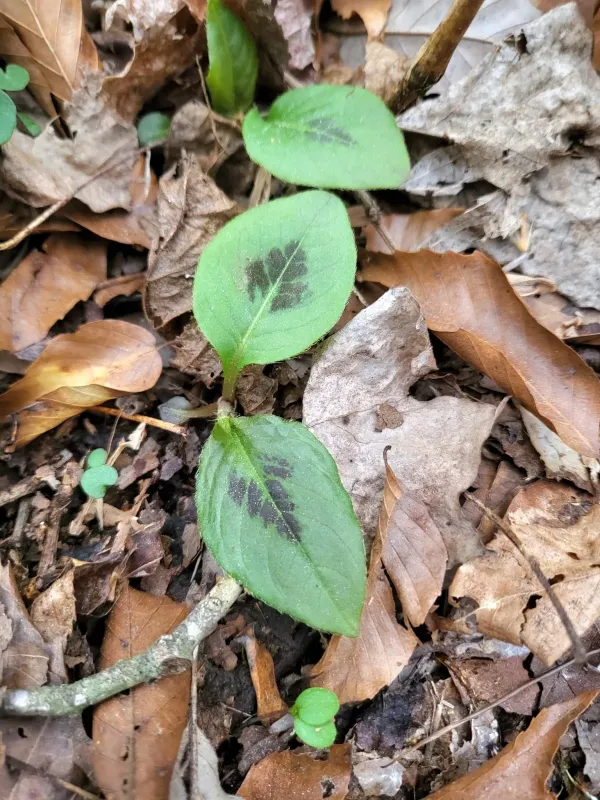
Virginia knotweed (Persicaria virginiana) is a perennial herbaceous plant belonging to the Polygonaceae family. It is easily recognized by its alternate, elliptical leaves that often feature a distinctive dark V-shaped mark on the leaf surface.
The stems of the plant are erect, sometimes reaching up to one meter in height. The stems are slightly pubescent (hairy) and possess noticeable nodes, which is a key diagnostic feature for field scouting.
The root system of this species is strong and persistent, allowing the plant to spread effectively through vegetative means as well as through seed dispersal. It forms dense colonies that can quickly dominate a specific area.
Flowers are small and bloom in thin, spike-like racemes. These spikes are relatively slender and extend from the ends of the stems, making the plant identifiable even in the absence of broad leaves.
Like many members of the knotweed family, the presence of ocrea (sheaths around the stem at leaf nodes) is a critical feature to observe when identifying this species in the field.
Where it grows
Virginia knotweed prefers moist, shaded environments. It is commonly found in river floodplains, damp woodlands, and along the edges of forest clearings where the soil moisture remains consistently high.
In agricultural settings, it is often found in irrigated fields, orchards, and gardens. It has a high tolerance for low-light conditions, which allows it to thrive in the margins of densely planted crops.
The plant frequently spreads along irrigation ditches, drainage systems, and road banks. From these areas, it often encroaches into cultivated land, taking advantage of soil disturbances.
It is well-adapted to various soil types as long as there is an adequate moisture supply. Its ability to grow in shady spots makes it a problematic weed in orchards or agroforestry systems.
Primary dispersal occurs through wind-borne or water-carried seeds, as well as through movement of contaminated soil or machinery from infested riparian buffer zones.
Harm it causes
The main impact of Virginia knotweed is its role as a competitive weed. It competes vigorously with crops for water, sunlight, and soil nutrients, often stunting the development of nearby cultivated plants.
It creates thick stands that can suppress native or crop seedlings. In pastures and forage fields, it reduces the overall quality of the forage due to its competitive nature and biomass production.
The plant can act as an alternate host for several plant pathogens and pests, potentially increasing the disease pressure in adjacent vegetable or broadleaf crop fields.
During harvesting, the presence of Virginia knotweed poses a nuisance. Its tough, fibrous stems and high biomass can clog agricultural machinery, leading to operational delays and increased maintenance.
Economic damage is caused not only by direct yield loss but also by the increased expenditures required for chemical and mechanical weed management programs throughout the season.
How to control
Effective management begins with cultural practices such as deep tillage to disrupt the root systems. Ensuring fields are well-drained can also reduce the suitability of the habitat for this species.
Regular cultivation in row crops is essential to control populations before they reach the flowering stage, thus preventing seed bank enrichment for the following growing seasons.
Chemical control is most effective when using systemic herbicides (e.g., glyphosate) applied to actively growing plants. Treatment timing is crucial; applications should ideally occur before the plant begins to bolt.
In selective cropping systems, specific broadleaf-targeted herbicides may be utilized. However, integrated pest management (IPM) strategies are recommended due to the plant's potential for regrowth from established rhizomes.
- Maintenance of clean field borders and buffer zones.
- Prompt removal of individual plants before they reach reproductive maturity.
- Application of mulch in orchards to suppress germination.
Taxonomy
- Latin name
- Persicaria virginiana
- Family
- Гречишные
- EPPO code
- POLVG